

When the nine gendarmes arrived at the scene, they found the victim dead in bed and his panicked, sobbing wife shut in the bathroom with her children.
The murder soon became headline news, and has continued to generate intense debate and interest in France for 26 years. At its centre is Edwige Alessandri, the joint owner of a supermarket with her husband, Richard. Once described as the black widow, she is now being portrayed as an innocent woman crushed by a miscarriage of justice that highlights fundamental flaws in the legal system.
In the hours after the killing in July 2000, Alessandri told officers that she had been asleep when she was woken by a loud sound and had heard a man say: “Shit, the shot went off. Get out of here.” Seconds later, she felt a liquid trickling down her body. It was the blood of her husband, 42, killed by gunshot to the shoulder and face while next to her in bed.
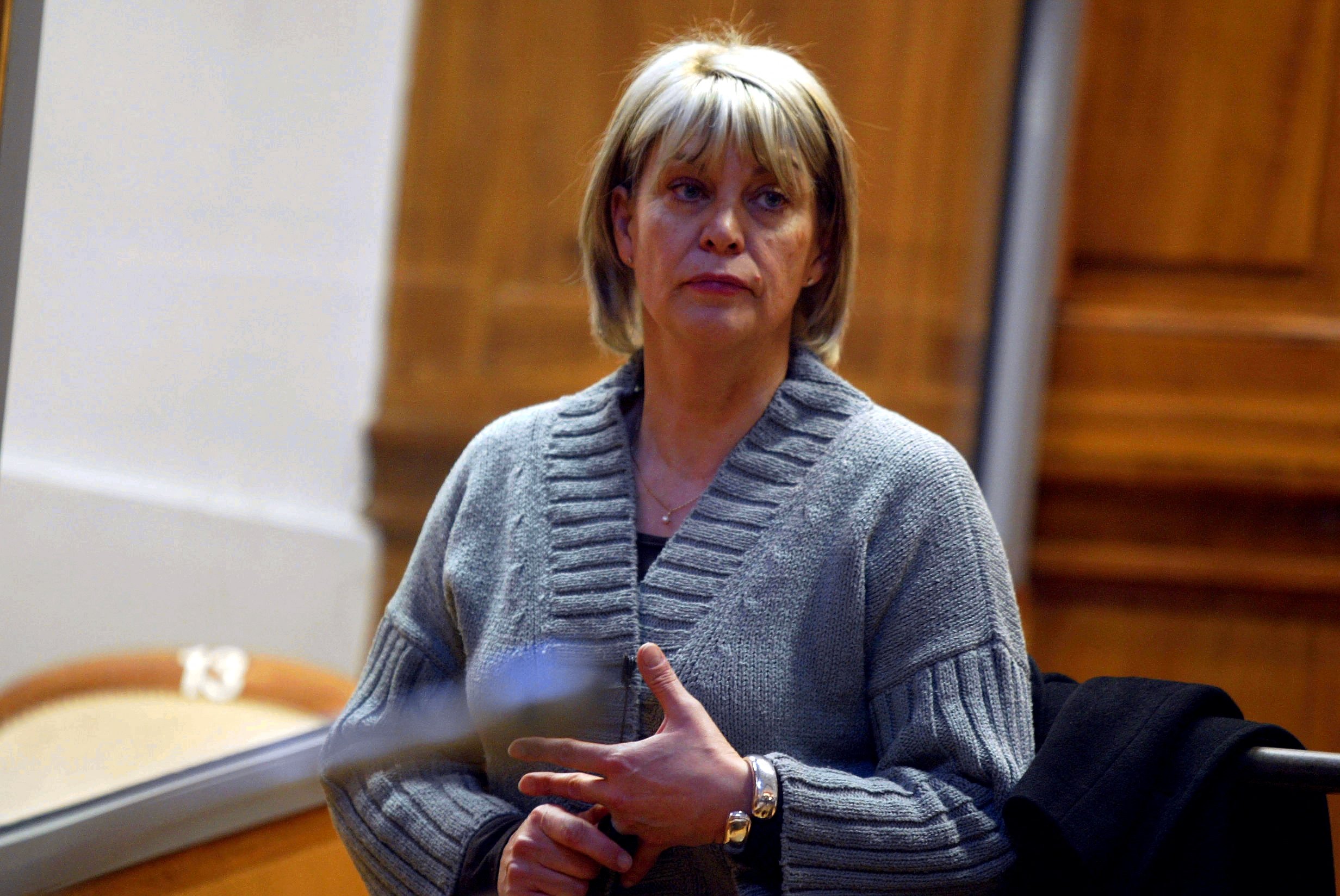
Alessandri said that she woke to a sound before realising her husband had been shot
MAXPPP
Neither the detectives assigned to the case nor the investigating magistrate in charge of the inquiry believed a word of what Alessandri said. They were convinced that after watching a documentary on television with her husband and making love to him afterwards — a condom was found in the bedroom — she had shot him dead at their home in Pernes-les-Fontaines, southern France.
Alessandri was convicted of murder and sentenced to 12 years in prison in 2006. She appealed and was convicted again. The appeal hearing was quashed and a third trial was held. She was convicted once more and given a ten-year sentence. When new evidence came to light, she sought leave for yet another appeal. It was refused.
Now 67, and out of prison, she continues to proclaim her innocence. A book published this week backs her claims. The Two Cigarette Butts: The Truth about the Alessandri Case, by the journalist Geoffrey Le Guilcher, argues that investigators incriminated the wrong person and missed evidence pointing to the real culprit.
The newspaper Le Monde, which published extracts of the book, wrote: “The reader comes to feel a form of sickness in the face of the failings of the legal system.”
Le Guilcher’s book is likely to serve as a warning to admirers of France’s inquisitorial criminal justice system, who say that it is superior to the Anglo-Saxon adversarial model. He highlights the all-importance of the investigating magistrate who leads the inquiry and supervises the police. When the magistrate is competent and unbiased, the system can work well. But if they are not, it can go off the rails.

In the Alessandri case, the magistrate, like the detectives, decided almost immediately that she was guilty, ignored evidence to the contrary and misled the jury at her trial, Le Guilcher says.
The two cigarette butts found in the Alessandris’ garden on the night of the killing are a case in point. The magistrate who oversaw the murder investigation failed to mention them in the report that structured the trial and the appeals that followed. “Their importance was manifestly forgotten,” writes Le Guilcher.
They turned out to be crucial. Years later, the DNA on them was found to match with that of a local burglar, who had been 20 at the time. Alessandri had said all along she thought the murder had happened during a burglary that went wrong. Now there was evidence to substantiate her claims. But by then there had already been three hearings. The courts said there was not enough new evidence to warrant a fourth.
The case against Alessandri was based largely on statements made by Yohann, her son, who was 17 when he was questioned by detectives four months after the killing. Although his initial evidence was broadly the same as his mother’s, he changed his version several times during the latest interrogation, which lasted all night.
First, he said he had killed Richard Alessandri, his stepfather. Shortly after 4.30am, he said he had rushed into the bedroom after hearing a gunshot to find his mother naked by the window and his father dead in bed. Two hours later, he added that the gun had been beside the bed, and that he and his mother had decided to “modify the crime scene” to make it look as though she was innocent. He said he had put the murder weapon in the hedge in the garden.
Officers went to get it. It was not there. Yohann later said he had been pressured into making the statement in fear that he would himself be sent to prison. He retracted all of it.
• Miscarriage of justice managers go to the office ‘every couple of months’
Jean-François Abgrall, a celebrated private detective asked by Alessandri’s parents to carry out his own inquiry, said that Yohann’s evidence recounted “an incoherent fable from beginning to end”, Le Guilcher writes. Yet the investigating magistrate never pointed out the incoherence.
There were other strange investigative methods as well, including the recruitment of a hypnotist to put Alessandri into a trance in the hope she would confess. The episode did not feature in the investigating magistrate’s report. Le Guilcher interviewed the hypnotist, who said that under hypnosis Alessandri had simply confirmed her version of events.