
LETTER FROM BUCHAREST
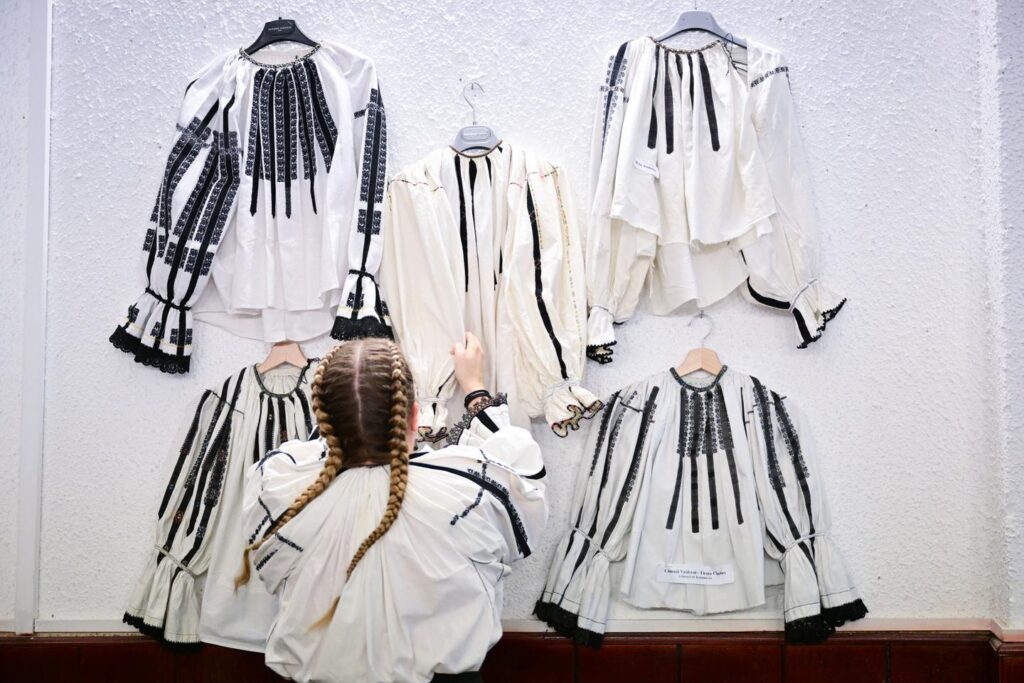
 During an exhibition in Vaideeni, Romania, on June 29, 2024. DANIEL MIHAILESCU / AFP
Painted by Henri Matisse, iconic on Brigitte Bardot and Jane Birkin and later elevated by Yves Saint Laurent, the Romanian blouse – originally worn by local peasant women – has become a work of art in France. In Romania, it has been handed down from generation to generation, carefully stored and folded in a corner of the wardrobe. Washing machines even have a special cycle for the “ie” – pronounced “ee-eh,” from the Latin linea, meaning “linen thread.” In 2022, UNESCO added “the art of the traditional blouse with embroidery on the shoulder – an element of cultural identity in Romania and Moldova,” to the Intangible Cultural Heritage of Humanity list.
Yet in recent years, wearing it with pride has become problematic for some Romanians. While in neighboring Ukraine, the traditional blouse, the vyshyvanka, has become an emblematic cultural symbol to distinguish Ukrainians from their Russian aggressors, the Romanian equivalent is now associated with the far right. This political movement, which is supported by 40% of voters, according to the latest polls, has turned it into a symbol of nationalist and identity-driven politics. The flamboyant far-right Member of the European Parliament Diana Sosoaca wears it at nearly every public appearance.
You have 77.97% of this article left to read. The rest is for subscribers only.