
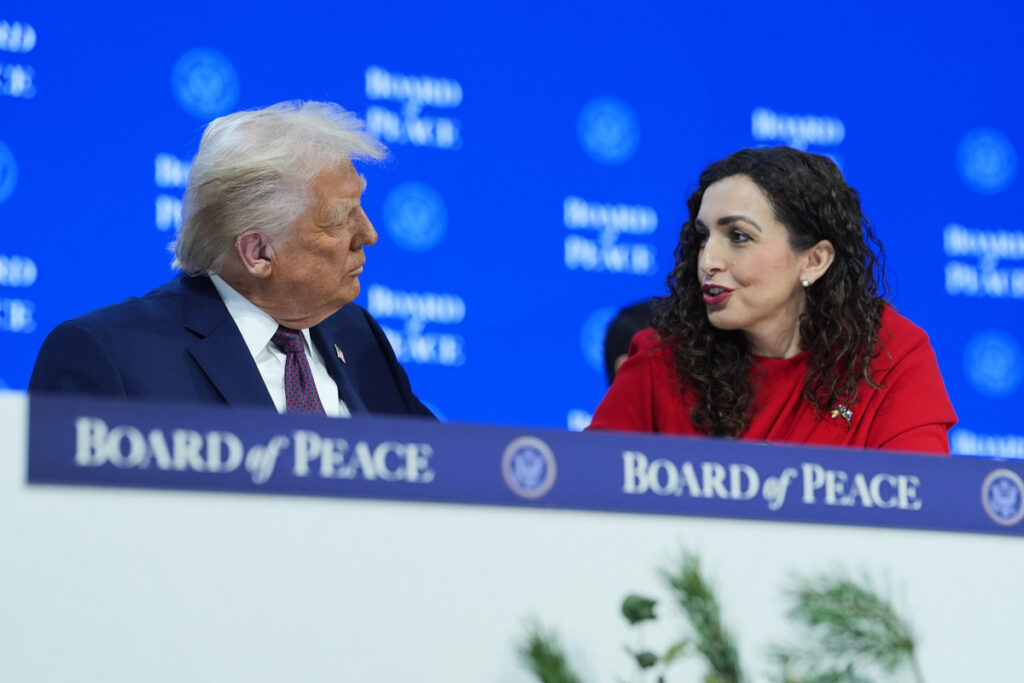
Kosovar President Vjosa Osmani-Sadriu has said President Donald Trump deserves the next Nobel Peace Prize.
When asked by Newsweek on Wednesday if she would nominate Trump for the prestigious accolade, Osmani responded: “Of course, if I’m president [whenever] these things will happen.”
Only certain people can submit nominations for the annual Nobel Peace Prize and nominations close at the end of January. Heads of state are among those able to put a candidate forward and the next winner will be announced in October.
Trump has long and publicly sought a Nobel Peace Prize, styling himself a “peacemaker-in-chief.” The Republican has claimed to have clinched deals that put an end to conflicts across the globe, although onlookers question how many wars he has truly stopped.
Questions around the legality of extensive American strikes on alleged drug boats close to Venezuela, which preceded a U.S. Special Forces operation to capture Venezuelan President Nicolas Maduro and his wife from a heavily protected compound in Caracas last month, still shadow Trump.
Osmani-Sadriu, speaking from the World Governments Summit in Dubai, United Arab Emirates, described Kosovo’s population as “the most pro-American people on Earth” and “very, very grateful for every administration of the United States of America.”
The U.S. led a NATO bombing campaign of Serbia for 78 days in 1999, just a few years after the disintegration of the former Yugoslavia. Former Serbian President Slobodan Milosevic, stripped the largely ethnically Albanian territory of Kosovo of its status as a self-ruling province in 1989. Protests descended into violence, and more than a quarter of a million people were killed between 1989 and 1995, according to U.S. military figures.
Armed fighters with the Kosovo Liberation Army clashed with Serbian forces for years, but the Kosovo War is officially classified as the bloodshed between 1998 and 1999.
A brutal crackdown by Belgrade resulted in a refugee crisis, what NATO has described as a “humanitarian catastrophe” and the ethnic cleansing of Kosovar Albanians.
NATO kicked off its bombing campaign in March 1999, shortly after months of peace talks in France broke down and Milosevic amassed tens of thousands of troops near Kosovo.
The opening salvo of NATO’s Operation Allied Force featured 250 U.S. aircraft, including seven B-52 strategic bombers and six B-2 heavy bombers. Both are able to carry long-range nuclear weapons as well as conventional munitions.
U.S.-led forces from 14 nations later called off airstrikes after Belgrade pulled back its forces from Kosovo. The U.N. set up its Kosovo Peace Implementation Force (Kfor) and NATO sent peacekeepers into Kosovo, which was by then contending with revenge attacks against Serbs.
Kosovo declared independences in 2008 and is recognized by many countries, including the U.S., U.K., France and Albania. Serbia has not recognized its statehood, nor have Russia and China. Violent flare ups between Kosovo and Serbia have intermittently continued in the years since.
“The United States of America gave us hope, alongside partners like the U.K. and European countries,” Osmani-Sadriu said.
The Kosovar leader said she had spoken with Trump four times in “short” but “very meaningful” conversations.
Trump has made “an immense contribution” toward peace in the Western Balkans, Osmani-Sadriu said. “There’s no doubt about him deserving [the Nobel Prize].”
“I know that there are others who might have different opinions, but we see his contribution firsthand,” she added.
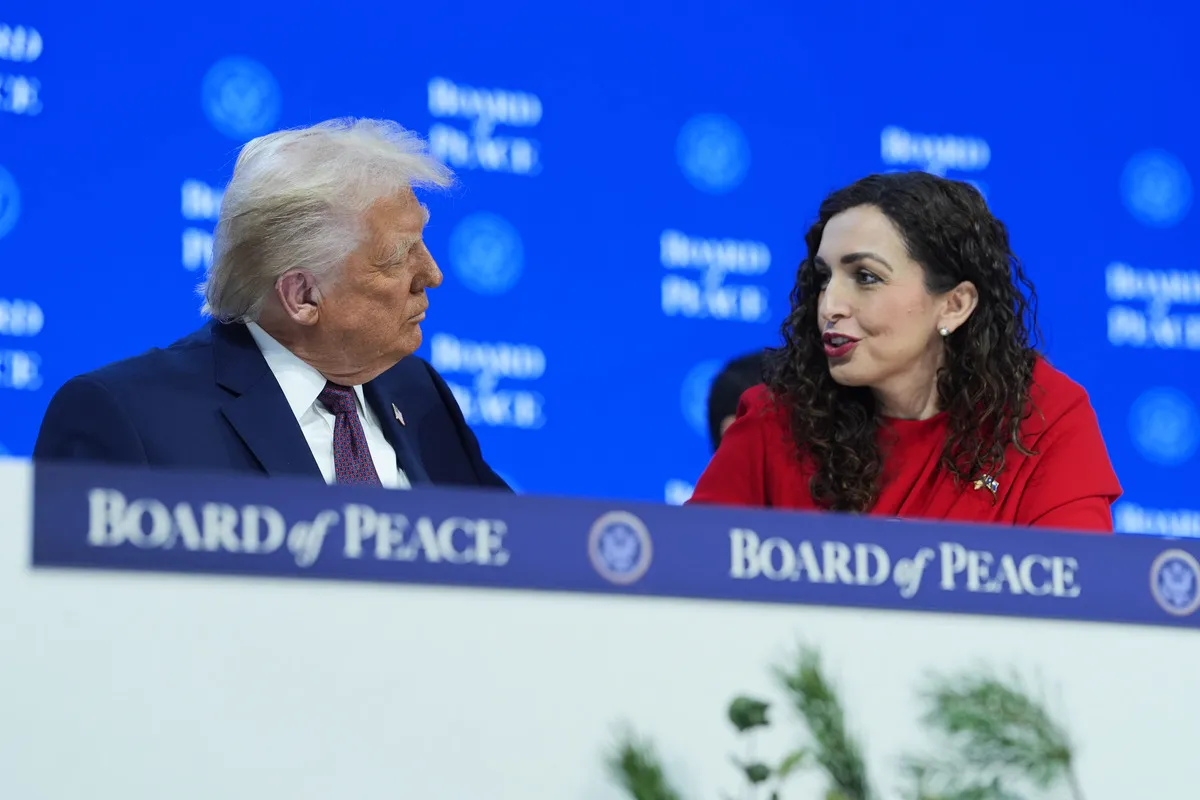
Osmani-Sadriu has previously said Kosovo is “honored” to be a founding member of Trump’s controversial Board of Peace, widely seen as a potential challenger body to the United Nations.
More than 120 people have been killed in American strikes on alleged drug trafficking vessels in little over five months, a campaign that came under increased congressional scrutiny after it emerged two people who had survived an initial strike in September were killed in a follow-up attack. Shipwrecked individuals have specific legal protections, and the broader, lethal crackdown was widely criticized as extrajudicial killings.
Eyebrows were then raised over the legal justification for elite U.S. troops bringing Maduro and his wife, Cilia Flores, to New York to face a raft of charges last month.
In overtures that panicked American allies, the U.S. for weeks refused to rule out using military action to take control of Greenland, which is part of fellow NATO member Denmark. Although Trump appeared to take an armed attack on the Arctic island off the table last month, the suggestion his administration was mulling over a serious violation of international law rippled through NATO.
Osmani-Sadriu, who holds a doctorate in international law from the University of Pittsburgh, dismissed concerns about the administration’s legal standing and said she believed the White House had defended its own national security with its actions against Venezuela.
The Nobel Peace Prize is awarded each year by the Norwegian Nobel Committee. Venezuela’s Machado handed over her medal to Trump last month, a gesture Trump welcomed but which prompted backlash in Oslo.
“Considering your Country decided not to give me the Nobel Peace Prize for having stopped 8 Wars PLUS, I no longer feel an obligation to think purely of Peace,” Trump then said in messages to Norway’s prime minister.