
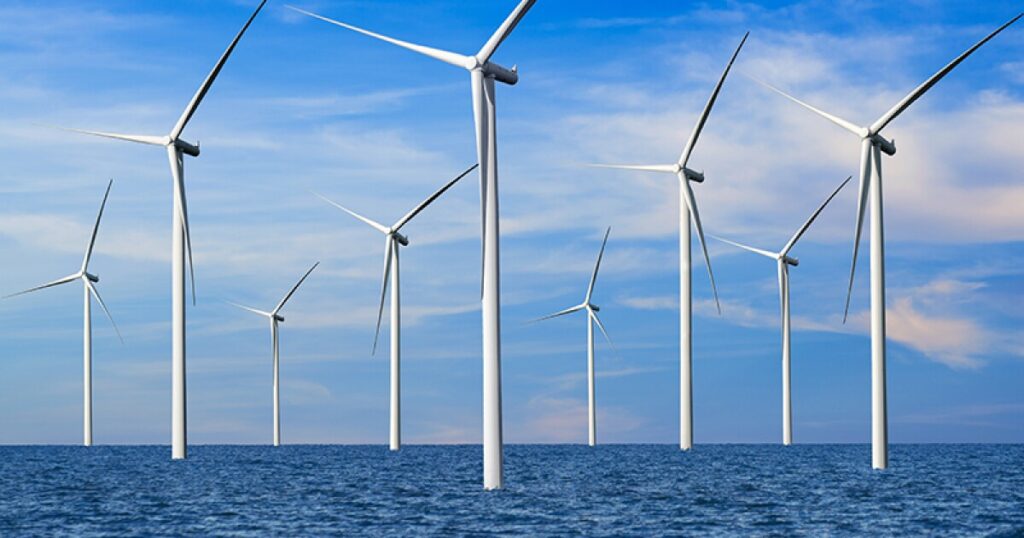
Offshore wind is gaining momentum in Europe after a landmark agreement between 10 countries pledging to build 100 gigawatts of new interconnected capacity in the North Sea by 2050. The pact follows a competitive auction last month for development rights in the UK, where 8.2 GW of fixed-bed offshore wind capacity was awarded — Europe’s largest stand-alone auctioned volume ever. With energy security top of mind — and a desire to wean their countries off imported gas — European governments are settling on policies and support mechanisms they hope will accelerate the build-out of offshore wind power, as uncertainty plagues the sector in other regions. Last week, the UK, Belgium, Denmark, France, Germany, Ireland, Iceland, Luxembourg, the Netherlands and Norway signed a strategic cooperation agreement, dubbed the “Hamburg Declaration,” with the aim of jointly developing offshore wind projects and distributing electricity across the region via a shared grid. The agreement, signed at a summit in Germany, is a political framework to facilitate cross-border project development and improve energy security. It calls for 20 GW of interconnected projects to be built in the 2030s. Concurrent with this agreement, countries joined with dozens of industry players to sign the Joint Offshore Wind Investment Pact, which envisages reducing the cost of electricity from offshore wind by 30% by 2040 and commissioning 15 GW of noninterconnected capacity annually from 2031-40. European countries bordering the North Sea had agreed in 2023 to ramp up offshore wind capacity to 120 GW by 2030, and 300 GW by 2050, to reduce dependence on Russian gas following the 2022 invasion of Ukraine. But development has not kept pace: Analysts at Boston Consulting Group (BCG) estimate countries would need to add 17.2 GW annually on average from 2026-30 to achieve the 2030 target. Just 2.4 GW of capacity has been added annually over the last five years, according to BCG.
Add A Comment