
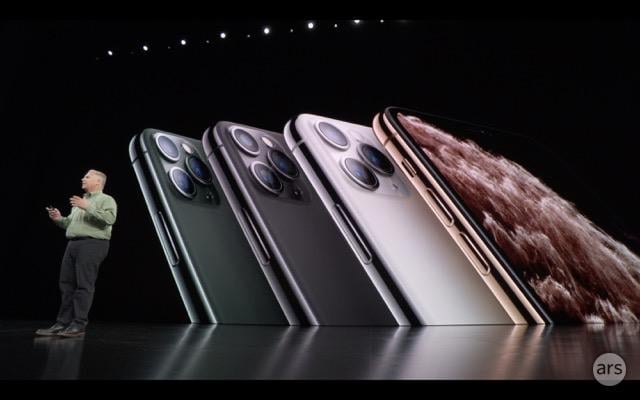
"NASA astronauts have long captured amazing photos from the space station, but having a smartphone on hand will open up a world of video possibilities. This will likely be especially useful when astronauts are conducting an experiment or looking outside a window and see an interesting, transient phenomenon."
https://arstechnica.com/space/2026/02/nasa-will-finally-allow-astronauts-to-bring-their-iphones-to-space/
31 Comments
How’s the Tinder scene in low earth orbit?
It’s not “their” iPhone, it’s an airgapped tighten down device that can only take photos. I don’t understand why signing authority was used for this.
Can’t undock currently please wait for icloud to finish backing up
Youre going to be like 200 miles plus from a tower, reception is going to suck
‘Find My’ will probably run the battery down pretty quick, going 28,000 km/h (17,500 mph)
> the newest camera slated to fly on the historic Artemis II mission around the Moon was a 2016 Nikon DSLR, alongside GoPro cameras that were a decade old
geez I didn’t know the gear they used was so outdated.
This is a great example of tightening up some of the bloat around the qualification process. As long as it stays **impeccably** safety oriented I see this as great progress
Imagine looking down into a phone when you have the entire earth to look at from orbit
so when we go back to the moon does this mean astronauts will have moon pics from the surface on their personal phones?
Fun fact: your GPS will not work on your phone if you take it to the ISS because of weapons export restrictions. Consumer grade GPS chips only work within a range of altitudes and speeds which prevents them from being used to make cheap ballistic or cruise missile guidance systems.
*Edit*: Secondary fun fact: *if* you have the proper authorization and licenses to use the /good chips/ to be able to use GPS/GNSS in space you can even potentially use it all the way out to the Moon. This is a harder problem than it might seem because GNSS satellite signals are not intended to be omnidirectional, they’re intended to be aimed toward the Earth, and the satellites are only in medium altitude orbits, which means the Earth blocks almost the entirety of any given satellite’s signal broadcast. However, there’s a bit of leakage around the edges (due to side lobes in the signal pattern) which is maybe enough to most of the time be able to get a fix, though it requires custom software. Firefly Aerospace tested this on their Blue Ghost lunar lander last year.
Hmmm… lithium battery… in space… hmmm… no problem.. no pressure…
Shouldn’t they allow Galaxy phones instead?
:rimshot:
> NASA will finally allow astronauts to bring their iPhones ( * ) to space
* **CELLPHONES**, or **mobilephones**
iphones would eat up the entire NASA budget, they should bring androids instead
This is so silly to me, because they already have iPads.
THANK GOD IN MERCIFUL HEAVEN AND ALL HIS ANGELS that allowed me to post this joke after the dumb comment word limit.
There’s a pretty famous photo you can find of an iPod casually tossed onto the dash of space shuttle Discovery.
The limitation was they weren’t allowed to bring lithium-ion batteries on board so the iPods had to be retrofitted with alkaline packs.
Fun fact, space is very unfriendly towards modern flash memory. Most laptops sent to the ISS start failing after 3 months. This is because radiation can strike and flip bits of data on flash memory, corrupting the data.
Finally! Now I can follow my dreams
Great, now we can get blurry cellphone UFO videos from space.
Nice! Now we will finally get photos of all the UFOs out there
Doomscrolling reddit in zero g. How would I get any work done?
Acronyms, initialisms, abbreviations, contractions, and other phrases which expand to something larger, that I’ve seen in this thread:
|Fewer Letters|More Letters|
|——-|———|—|
|[DoD](/r/Space/comments/1qwy6dy/stub/o3sx1po “Last usage”)|US Department of Defense|
|[ICBM](/r/Space/comments/1qwy6dy/stub/o3u66bc “Last usage”)|Intercontinental Ballistic Missile|
|[ITAR](/r/Space/comments/1qwy6dy/stub/o3u6de5 “Last usage”)|(US) International Traffic in Arms Regulations|
|[LEO](/r/Space/comments/1qwy6dy/stub/o3u741j “Last usage”)|Low Earth Orbit (180-2000km)|
| |Law Enforcement Officer (most often mentioned during transport operations)|
|Jargon|Definition|
|——-|———|—|
|[Raptor](/r/Space/comments/1qwy6dy/stub/o3szi3p “Last usage”)|[Methane-fueled rocket engine](https://en.wikipedia.org/wiki/Raptor_(rocket_engine_family)) under development by SpaceX|
Decronym is now also available on Lemmy! Requests for support and new installations should be directed to the Contact address below.
—————-
^(5 acronyms in this thread; )[^(the most compressed thread commented on today)](/r/Space/comments/1qvrcu9)^( has 33 acronyms.)
^([Thread #12136 for this sub, first seen 5th Feb 2026, 23:20])
^[[FAQ]](http://decronym.xyz/) [^([Full list])](http://decronym.xyz/acronyms/Space) [^[Contact]](https://hachyderm.io/@Two9A) [^([Source code])](https://gistdotgithubdotcom/Two9A/1d976f9b7441694162c8)
Seems like an increased fire hazard for no benefit
i’ll be curious to find out how the phones cope with all the high energy shit zipping through it that would normally get swallowed by the atmosphere.
Imagine doomscrolling in a space-capable vehicle, goes hard
*Please set your mobile phone to Rocket Mode during takeoff and landing.*
Close, Burlington County .
I gotta wonder what the ubereats and doordash selection will be like
Image getting trolled or reading shit posts from folks floating up in space
“Yo momma so fat I can see her right now from space”
Smart. I’m sure putting out a lithium fire in space is a lot easier.
If anyone is curious, nobody mentioned the iPhone except Berger. I kind of resent that he made me look into that instead of just enjoying an article on NASA’s change to the approval of electronic equipment in space. The article doesn’t even mention that this was a change to the classification of non-mission devices and what is allowed in that category. WTF is happening here lol.
> There are a million ways in which the technology can become mired in the approval process, from radiation characterization of chips to battery thermal and vacuum tests, outgassing concerns, vibe testing, and other qualification concerns. Yes, these requirements exist for a reason. But Isaacman is now telling his team to challenge requirements to ensure they are still needed today.
Most of these things are still a concern for mission critical equipment, they just changed the what and how of the personal devices.