
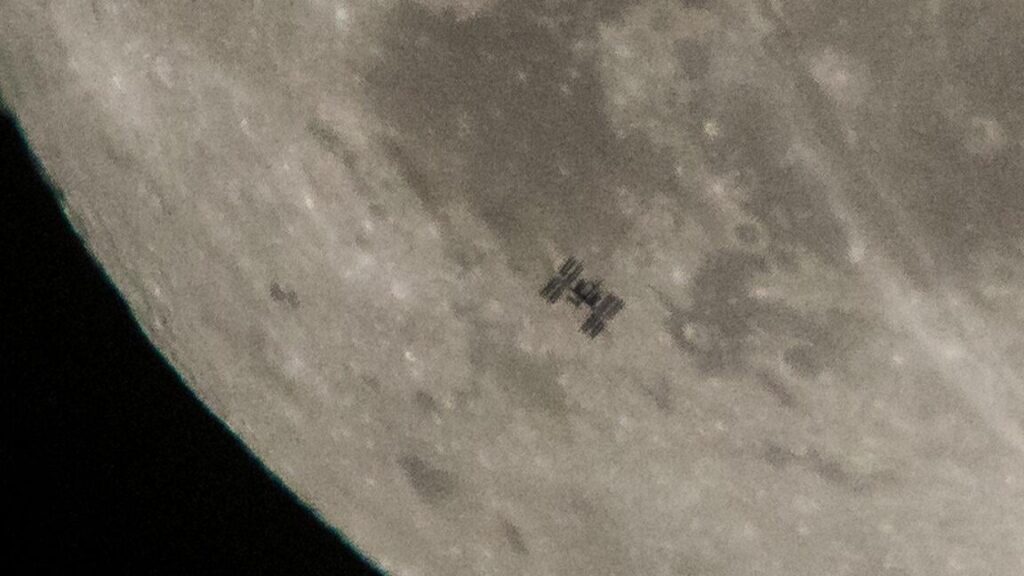
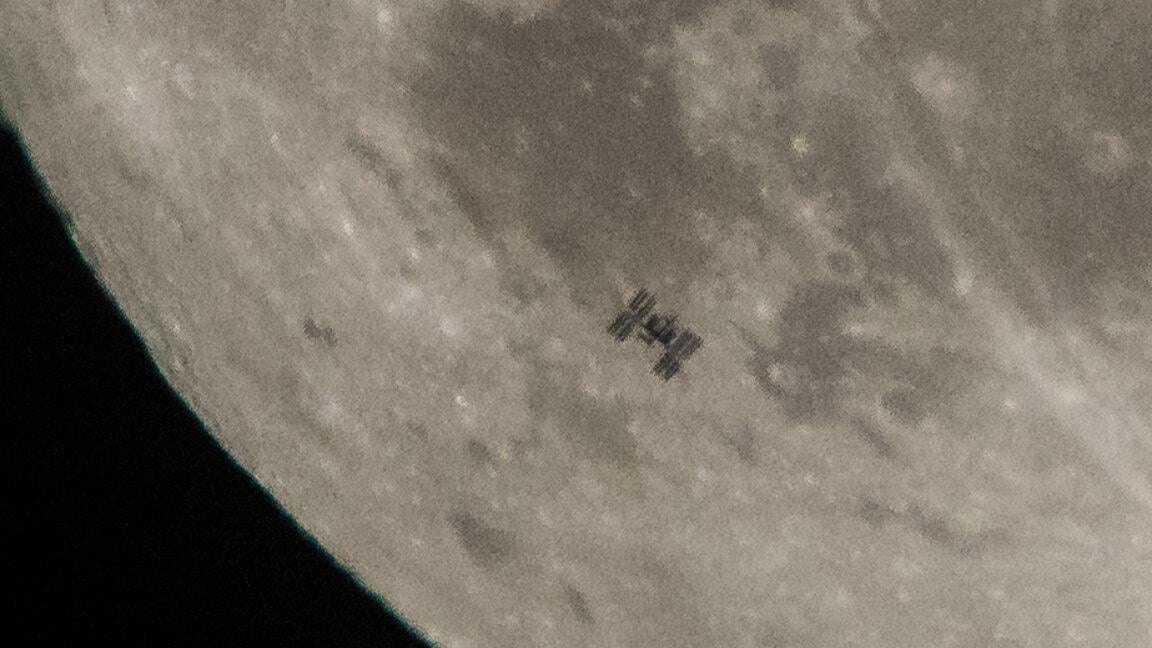
Lawmakers ask what it would take to “store” the International Space Station | NASA shall evaluate the “viability of transferring the ISS to a safe orbital harbor” after retirement.
https://arstechnica.com/space/2026/02/congress-advances-bill-requiring-nasa-to-reconsider-deorbiting-space-station/
24 Comments
>Members of the House Science, Space, and Technology Committee voted to approve a NASA authorization bill this week, advancing legislation chock full of policy guidelines meant to give lawmakers a voice in the space agency’s strategic direction.
>The committee met to “mark up” the NASA Reauthorization Act of 2026, adding more than 40 amendments to the bill before a unanimous vote to refer the legislation to the full House of Representatives. Wednesday’s committee vote was just one of several steps needed for the bill to become law. It must pass a vote on the House floor, win approval from the Senate, and then go to the White House for President Donald Trump’s signature.
>Ars has reported on one of the amendments, which would authorize NASA to take steps toward a “commercial” deep space program using privately owned rockets and spacecraft rather than vehicles owned by the government.
>Another add-on to the authorization bill would require NASA to reassess whether to guide the International Space Station (ISS) toward a destructive atmospheric reentry after it is decommissioned in 2030. The space agency’s current plan is to deorbit the space station in 2031 over the Pacific Ocean, where debris that survives the scorching reentry will fall into a remote, unpopulated part of the sea.
It makes sense to preserve the orbit of the ISS, even if a use for it isn’t available right now. The amount of collective energy required to get it up there is astronomical. The question is, will it ever be useful enough to justify the expense of parking it.
It’s not surprising that congress cannot read. NASA did a white paper where they talked about the options and why they chose deorbit.
[https://www.nasa.gov/wp-content/uploads/2024/06/iss-deorbit-analysis-summary.pdf](https://www.nasa.gov/wp-content/uploads/2024/06/iss-deorbit-analysis-summary.pdf)
I did a video on it here:
[https://www.youtube.com/watch?v=aQ3H6we7cJY](https://www.youtube.com/watch?v=aQ3H6we7cJY)
This idea is good for two reasons.
1. Learning how to boost large orbital objects into a higher, stable orbit would give us very useful knowledge.
2. It allows for future generations the opportunity to repurpose it.
Well worth whatever money is spent on such an endeavor.
Edit: It’s funny that this got a lot of downvotes on this sub.
Do they want Kessler syndrome? Cause that’s how you get Kessler syndrome. The station will end up falling apart from material fatigue or a collision and become a giant debris field.
Is there a scientist on the planet that can pick out a ‘safe orbit’ between us and the moon? As far as I know there isn’t one.
It’s already a Frankenstein of different tech from past decades, it has to come down
Yeah let’s spend tens of billions in launches to provide the delta V to move 400+ tons of space debris waiting to collide with some discarded booster or old spy satelite into a medium orbit that’ll take 1000s of years (or more) to decay. What could go wrong?
“Lawmakers” really seem to hate humanity having access to space.
Its like they want Kessler syndrome because they read somewhere it hurts the poor.
Where it will just fall apart and become a cloud of debris? No. Deorbit it. Move on to something new.
Rookie here.
Would it be possible to, instead of de orbiting back to earth, launch it off into outer space with some kind of slingshot manoeuvre? It’s got some decent solar panels and I’m guessing other recording equipment, cameras etc, could be used as like a Voyager thing but in a different direction?
I now await all the reasons why that’s not possible lol
Thought this was most interesting part:
Going higher would also expose the space station to an increased risk of collision with space junk. The hazards from space debris are most severe at about 500 miles (800 kilometers), according to the engineers who conducted the analysis. “This means that the likelihood of an impact leaving station unable to maneuver or react to future threats, or even a significant impact resulting in complete fragmentation, is unacceptably high.”
…so it could be parked safely in high orbit, but getting it there is a risky journey even if possible to raise the orbit.
I mean it’s the most expensive thing ever built by humans so all options should be on the table–no matter how outrageous.
If NASA wants funding,, like real funding, for the next 10 years, start loading ISS with extra fuel, and set up a sweet remote control command center in Houston.
Then sell the rights to fly it into the ground, to the highest bidder.
FanDuel, you hearing this? Set the burn out altitude at 15 miles and give me $100 on the “under”
NASA needs to learn how to flex. How much would it cost to soft land the ISS on the Moon.
Acronyms, initialisms, abbreviations, contractions, and other phrases which expand to something larger, that I’ve seen in this thread:
|Fewer Letters|More Letters|
|——-|———|—|
|[LEO](/r/Space/comments/1qxs0pp/stub/o3zlckh “Last usage”)|Low Earth Orbit (180-2000km)|
| |Law Enforcement Officer (most often mentioned during transport operations)|
|[TID](/r/Space/comments/1qxs0pp/stub/o3zl1mg “Last usage”)|Total Ionizing Dose of radiation|
|[mT](/r/Space/comments/1qxs0pp/stub/o3z6arr “Last usage”)|~~Milli-~~ *Metric* Tonnes|
|Jargon|Definition|
|——-|———|—|
|[Raptor](/r/Space/comments/1qxs0pp/stub/o3ziso1 “Last usage”)|[Methane-fueled rocket engine](https://en.wikipedia.org/wiki/Raptor_(rocket_engine_family)) under development by SpaceX|
Decronym is now also available on Lemmy! Requests for support and new installations should be directed to the Contact address below.
—————-
^(4 acronyms in this thread; )[^(the most compressed thread commented on today)](/r/Space/comments/1qvk6v0)^( has 59 acronyms.)
^([Thread #12138 for this sub, first seen 6th Feb 2026, 22:08])
^[[FAQ]](http://decronym.xyz/) [^([Full list])](http://decronym.xyz/acronyms/Space) [^[Contact]](https://hachyderm.io/@Two9A) [^([Source code])](https://gistdotgithubdotcom/Two9A/1d976f9b7441694162c8)
Considering the importance of the station, especially historically, I think it’s reasonable to run a couple studies to evaluate whether it can be preserved.
Even if we do end up crashing it on point Nemo, future generations will likely appreciate us doing our due diligence in considering preservation of this incredible artifact.
Can’t we just give it a boost now and again like we have always done?
Wtf would you want “store” an almost 30 year old space station with outdated and obsolete tech, to begin with?
I went on a tour at the Johnson space center, where we got to see Mission Control. The tour guide said there were some systems that still have to run windows XP because they are too out of date for anything newer and it would be too cost prohibitive to replace them.
Study linked in the comments shows that NASA’s estimate is that it would take a craft capable of doing 2x the delta-v planned for the deorbit system to boost the ISS to an orbit that would last at least 100 years.
The biggest issue with increasing delta-v is increasing the amount of fuel that the deorbit vehicle will either launch with or be provisioned with while attached to the ISS, it seems very reasonable that for a marginal increase in cost to the existing contract NASA could have SpaceX design a vehicle that could boost the ISS to that 100-year orbit flown on Falcon Heavy rather than Falcon 9, especially since NASA is already contracting with SpaceX for a Dragon vehicle that will use Falcon Heavy to provision the Lunar Gateway. Falcon Heavy has more than enough capacity and the deorbit vehicle won’t be crewed so there’s no concern with human-rating Falcon Heavy.
The deorbit maneuver is expected to require 9k kg of fuel, the 100 year orbit would require about 20k kg of fuel. Various multiples of 100 years are accomplished with more fuel in increments of about 4k kg per 100 years. Congress could pick an orbit even higher than 100 years if the cost was rational(*).
Before being sent to the 100 year orbit the station would need to be passivated to avoid the chances of an unexpected pressure event causing an explosion. Things like batteries that could rupture would also need to be removed. The ammonia / water cooling loops would probably have to be drained. A substantial amount of unwanted other materials (unneeded crew provisions, experiments, etc. could be jettisoned.
I could imagine a case where one of the modules is used as a cargo container, packed with lots of unneeded material, volatiles, etc., detached, then mated with a deorbit thruster and brought down safely.
At that higher orbit the annual altitude loss would be minimal for the majority of the time Station was there. For 50+ years it would naturally decay by a fairly small portion of it’s altitude and could be safely “ignored” for budgetary reasons. (It’s natural altitude decay is due to interaction with Earth’s trace atmosphere, which doesn’t impose a linear drag; the further away you are from Earth you experience less drag according to a nonlinear function).
The passivated ISS would then be boosted to the 100 year orbit, where it waits for either a decision to be made on reboosting it to a even higher orbit, or deorbiting it safely generations from now. The passivated ISS wouldn’t be habitable and you couldn’t trust the modules to hold pressure. It would be a museum artifact not a crewed installation. But you could probably use it for various purposes (the ridiculous AMS experiment can keep running until it dies a natural death, for example. There are probably scenarios where you could use the docking module as a way to move crew between vehicles bound for Lunar orbit or beyond without having to repressurize the whole Station, etc.
It’s hard to imagine that the cost to deorbit it would be materially higher 50 years from now and there are lots of good reasons (SpaceX Starship, Blue Origin New Glenn, etc.) to imagine that the cost might be substantially less; or that the cost to boost it to an even higher orbit would be substantially less.
It seems obvious that the conservative choice should be to raise the orbit now, and deal with the decision regarding disposing of Station later.
(*) The Russians keep making noises about detaching their part of the station and flying it off to be a new stand-alone Russian Station. I think that’s ludicrous but if they insist, let them go. That’s less mass to raise to a higher orbit.
Lawmakers are probably the least technically savvy group of people there is. And they are the one making laws and deciding what technologies to fund
I hear they’re insisting on storing it in Houston… /s
I have long thought it would be way cooler to put some ion engines on it, and with its insane solar panels, send it into a solar orbit, or even further out for fun.
Also, to leave it intact, with meals, sleeping stuff, etc all just as they are.
Archeologists would absolutely kill for this in 100, 500, 1000 years, etc.
I’m willing to bet that the structure can easily take the 0.00001G or whatever an ion engine would impart.
The titanic sunk 100 years ago, and we’re still going ga ga over that.
Elon already won the money to de-orbit the thing, so of course now they want to do something else with it.