
The year 2025 represented a pivotal period for the National Skills Council, marking a transition from establishing foundational elements to actively shaping the future of Malta’s skills landscape. As we look ahead to 2026, the Council’s focus will shift towards converting this groundwork into meaningful impact for learners, educators, trainers, employers, and the wider economy.
Strengthening the architecture of skills in 2025
One of the most notable achievements of the past year was the development of the National Skills Strategy. Far from being a static document, the Strategy is envisioned as a dynamic framework – one that acknowledges uncertainty, anticipates ongoing changes, and places individuals firmly at the centre of skills transformation. The forthcoming public consultation on the Strategy will be a continuation of our extensive engagement with stakeholders across education, industry, and civil society. This collaborative approach underlines a shared understanding: effective skills policy can no longer operate in isolation.
Another major milestone during 2025 was the revision of subsidiary legislation regarding the Validation of Non-Formal and Informal Learning (VNFIL). This long-anticipated development recognises the diverse contexts in which learning occurs – whether in the workplace, within communities, or through life experience, beyond the confines of formal education. By providing a legislative basis for a robust governance structure, Malta has taken a decisive step towards a more inclusive and adaptable skills system, one that values experience alongside formal qualifications.
The year also saw the launch of the National Career Guidance Network, complemented by a new careers campaign designed to promote emerging roles within the labour market. With an ever-increasing array of choices facing young people and adults alike, effective career guidance has become essential. Strengthening coordination and investing in skills intelligence within the guidance ecosystem are crucial steps towards empowering individuals to recognise their current competencies, identify gaps, look for opportunities, and make informed decisions about their futures.
The Council also prioritised investment in Continuous Professional Development (CPD) for educators and HR professionals. Recognising that adaptability is required at every level, targeted CPD initiatives in 2025 focused on future skills, sustainable leadership, and innovative pedagogies – embedding transversal skills across curricula and training programmes. These efforts highlighted the vital role of educators and HR professionals as agents of transformation.
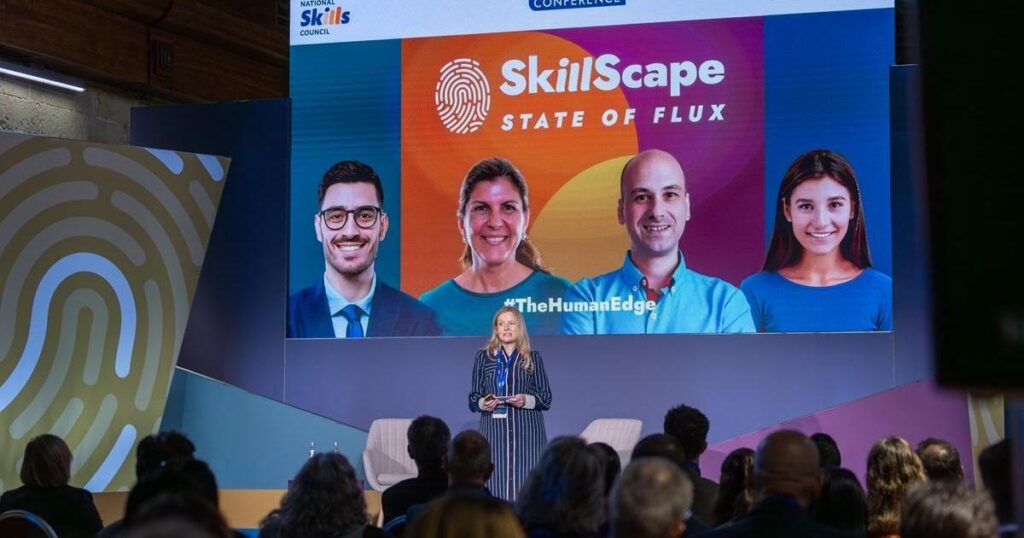
Skillscape, the Council’s flagship annual conference, provided a public forum for these ongoing discussions about skills development. Centred on the theme of flux and transformation, Skillscape 2025 brought policymakers, employers, educators, and learners together to reflect on the changing nature of work and its implications for skills development. Most notably, the conference reinforced the message that, despite technological advancement, the human aspect must remain at the heart of skills policy and practice.
Turning strategy into action in 2026
Having laid the groundwork in 2025, the focus for 2026 will be on actioning – translating our vision into tangible outcomes.
A central priority will be operationalising the National Skills Strategy. This will involve moving from vision to delivery, incorporating foresight into planning, enhancing coordination across institutions, and ensuring that skills intelligence actively informs policy decisions. There will be a particular emphasis on forecasting future demand for skills, rather than simply responding to shortages as they arise.
 Executive Chairman of the National Skills Council, Dr Jeffrey Pullicino Orlando.
The VNFIL framework will enter its implementation phase, with a strong focus on awareness, accessibility, and quality assurance, in partnership with the Malta Further and Higher Education Authority. Legislation alone is insufficient; both individuals and employers must understand, trust, and recognise the value of validation processes. Accordingly, 2026 will see efforts centred on piloting, capacity-building, and ensuring the usability of validation pathways for those who stand to benefit most.
The process which will lead to an update of the relevant policies on career guidance will commence with the aim of prioritising consistent service delivery, professional standards, and closer alignment between guidance and education providers, and employers. The campaign highlighting emerging careers will continue, providing updated insights into roles shaped by digitalisation, the green transition, and demographic changes.
Supporting educators will remain a cornerstone of the Council’s work. In 2026, CPD initiatives will place greater emphasis on future-oriented pedagogy, transversal skills, and the integration of labour market realities into teaching and learning. Empowering educators is seen as one of the most effective ways to ensure that the skills system remains future proof.
Skillscape will continue to evolve as a collaborative platform, moving beyond dialogue to co-creation. By engaging a major international partner – the Future Talent Council – the Council aims to foster partnerships and reinforce shared responsibility for skills development.
A shared responsibility
The challenges ahead are complex, yet eminently surmountable. Success in skills policy depends on collaboration, evidence-based approaches, and a human-centred ethos. As 2026 begins, the National Skills Council reaffirms its commitment to working closely with all stakeholders to ensure that Malta’s skills ecosystem is resilient, inclusive, and ready for the opportunities of the future
The coming year will require focus, courage, and adaptability. By building on the momentum established in 2025, there is every reason to believe that 2026 can be the year in which strategy is truly translated into action.
Written by the Executive Chairman of the National Skills Council, Dr Jeffrey Pullicino Orlando