
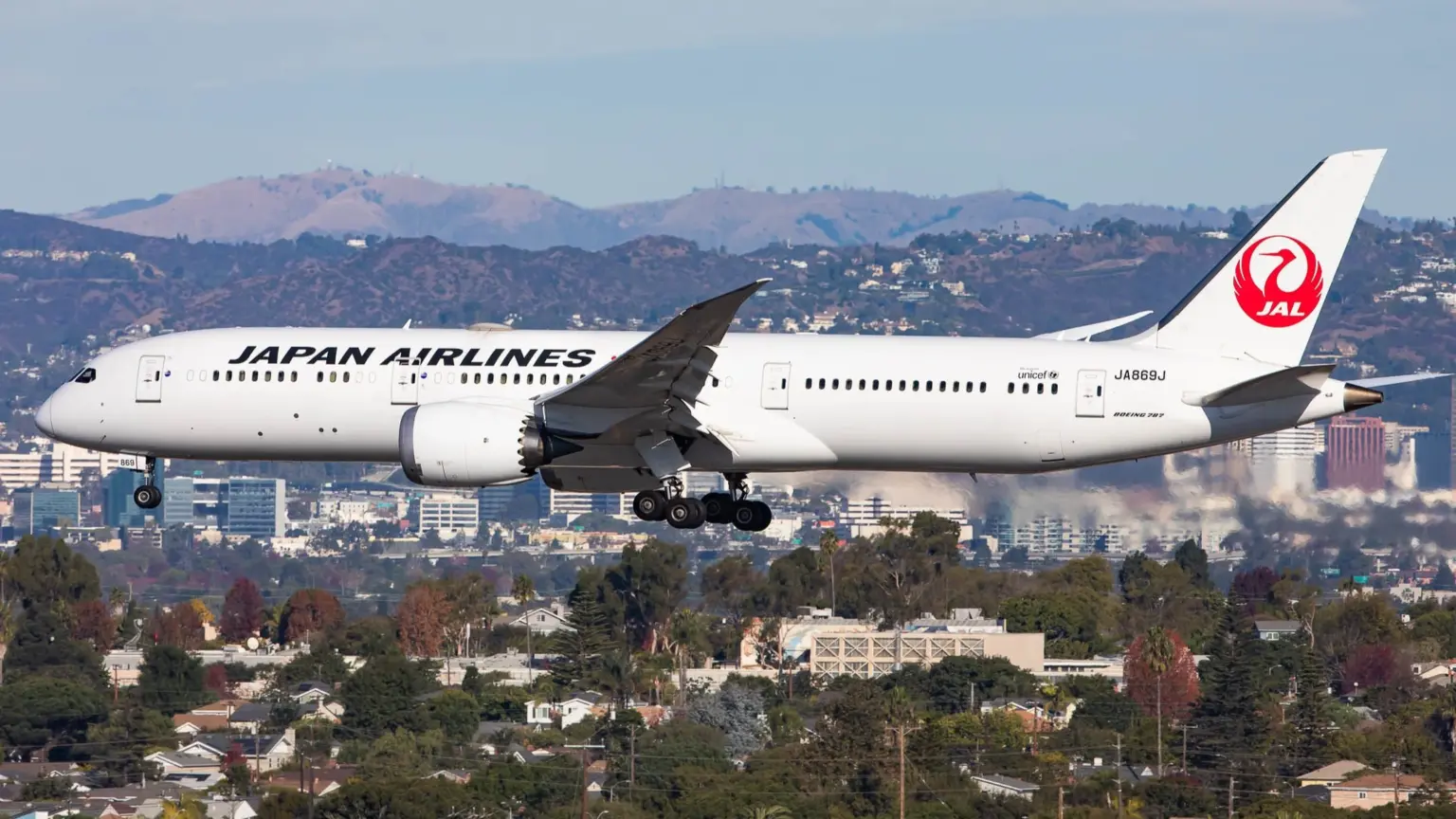
TOKYO- Japan Airlines (JL) is preparing a comprehensive business class upgrade for its Boeing 787-9 fleet, covering both existing aircraft and future deliveries.
Tokyo Haneda Airport (HND) serves as the airline’s primary international hub for Boeing 787 operations and will anchor the rollout of the refreshed cabins.
The initiative will standardize interiors across the 787-9 fleet and introduce a new business class seat.
According to OMAAT, the move reflects a broader strategy to maintain competitiveness as peer airlines deploy next-generation premium cabins.
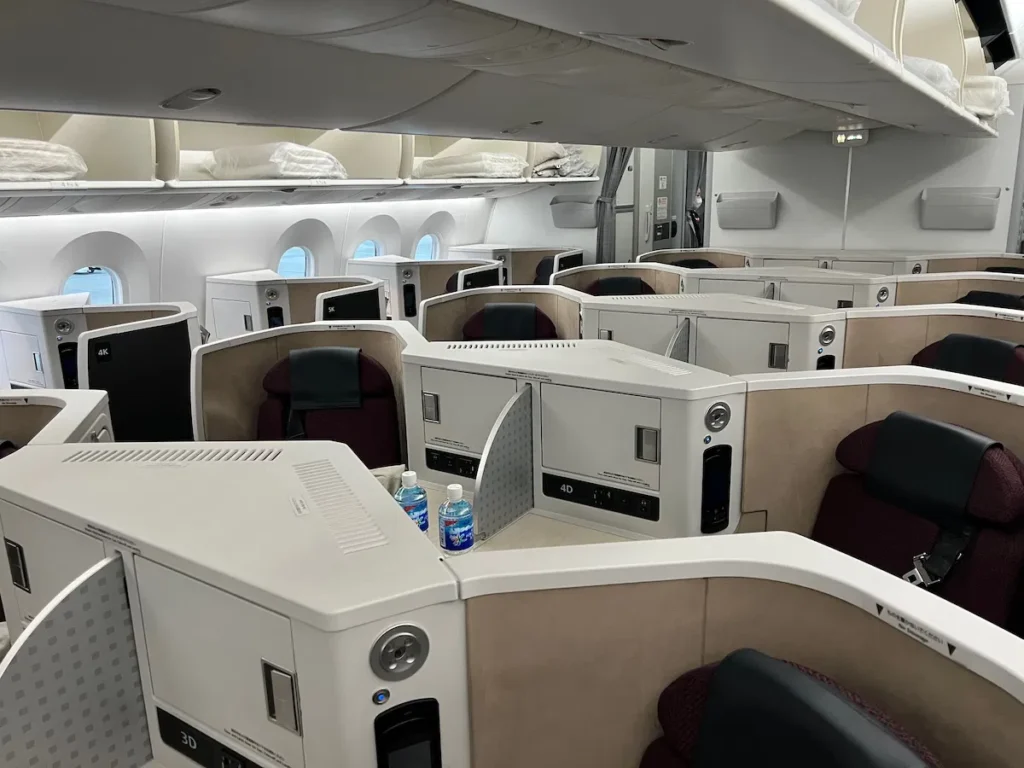 Photo: Japan Airlines
Japan Airlines 787-9 New Business Class
Japan Airlines (JL) has formally announced a partnership with Boeing to upgrade cabin interiors and in-flight connectivity on its Boeing 787-9 aircraft.
The agreement covers 11 in-service 787-9 Dreamliners within the airline’s international fleet.
Japan Airlines currently operates a total of 55 Boeing 787 aircraft, consisting of 23 Boeing 787-8s and 22 Boeing 787-9s.
In addition, the airline has 10 more Boeing 787-9 aircraft on order. The retrofit program is designed to align the interiors of the 11 existing 787-9s with the configuration planned for those 10 upcoming deliveries.
This approach ensures that new and retrofitted aircraft share the same cabin layout, materials, and onboard technology. No changes are planned for the Boeing 787-8 fleet, which will retain its current cabin products.
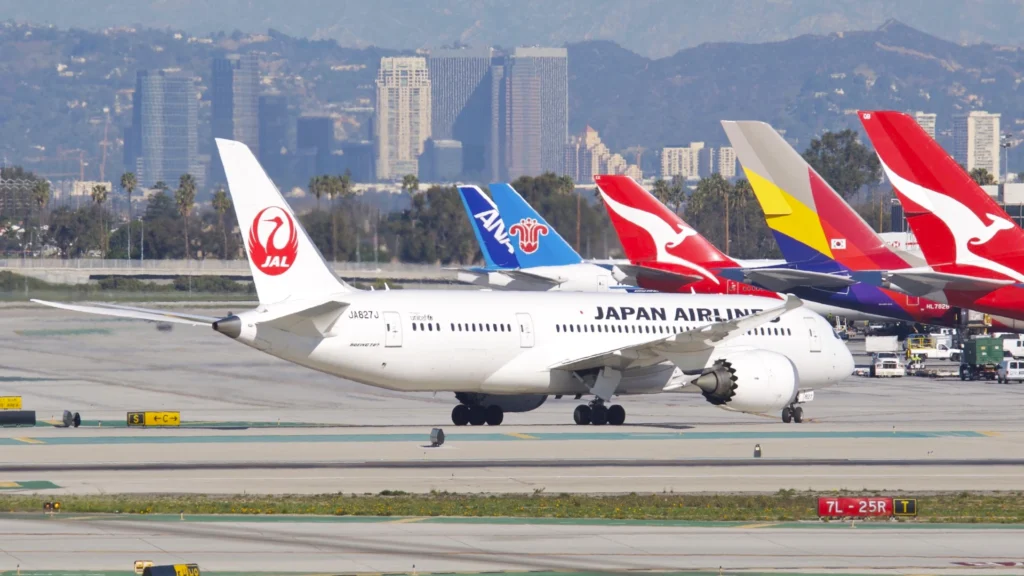 Photo: Aero Icarus | Flickr
Fleet Strategy and ZIPAIR Transfer Plan
As part of its long-term fleet plan, Japan Airlines intends to transfer roughly half of its Boeing 787-9 aircraft to its low-cost subsidiary, ZIPAIR, as new 787-9s are delivered.
This strategy implies that, over time, all Boeing 787-9 aircraft remaining with Japan Airlines will feature the updated cabin standard.
The retrofit program, therefore, supports both brand consistency and efficient fleet segmentation between full-service and low-cost operations.
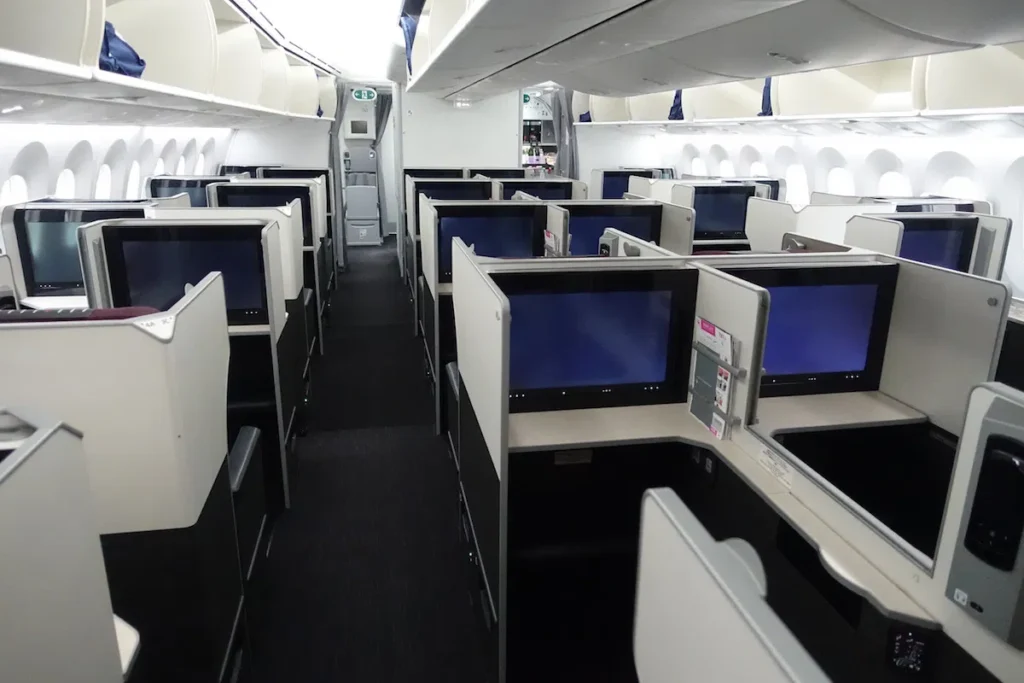 Photo: Japan Airlines
Existing Business Class Seats on the Boeing 787-9
Japan Airlines currently operates two different business class products on its Boeing 787-9 fleet.
Approximately half of the aircraft are equipped with Apex Suites, marketed as Sky Suite II. These seats are arranged in a 2-2-2 configuration and are widely regarded for their spacious layout, high privacy, and overall comfort.
Despite the denser configuration, this product is often ranked among the world’s top ten business class seats.
The remaining 787-9s feature Safran Aries seats, marketed as Sky Suite III. These are reverse herringbone seats in a 1-2-1 layout.
While they provide direct aisle access for every passenger, the seat design is notably narrow compared with other reverse herringbone products and is generally viewed as less competitive in terms of comfort.
The coexistence of these two products has resulted in an inconsistent premium experience across routes.
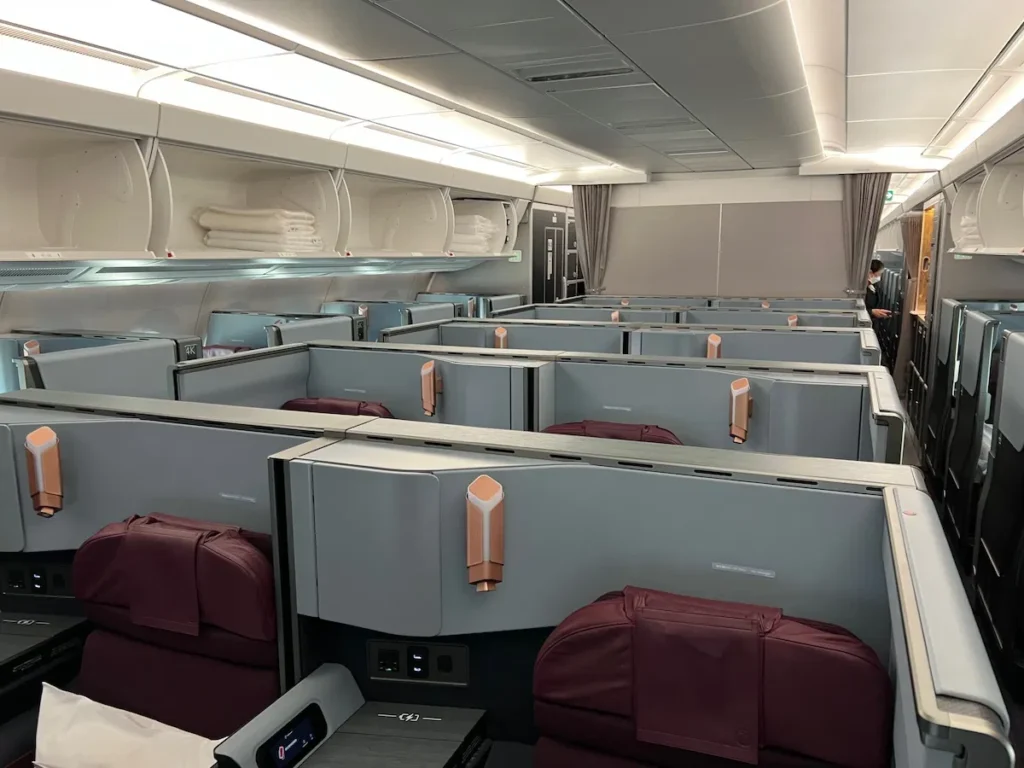 Photo: Japan Airlines
Possible Business Class Seat Selection
Japan Airlines has not yet confirmed which business class seat will be installed on the upgraded Boeing 787-9s. The official announcement states that the aircraft will receive the airline’s “latest cabin interior design.”
Japan Airlines’ most recent cabin concept appears on its Airbus A350-1000 fleet, which features the Safran Unity business class seat.
While this seat is technically compatible with the Boeing 787 platform, no confirmation has been made that it will be selected for the Dreamliner fleet.
Given the direct involvement of Boeing in the retrofit program, another plausible option is the Elevate Ascent seat.
This reverse herringbone seat with a privacy door is specifically designed for the Boeing 787 and offers a more straightforward certification process.
Several airlines have already selected this model for similar aircraft, making it a practical candidate.
At this stage, the airline has not disclosed final specifications, and further details are expected as the project progresses.
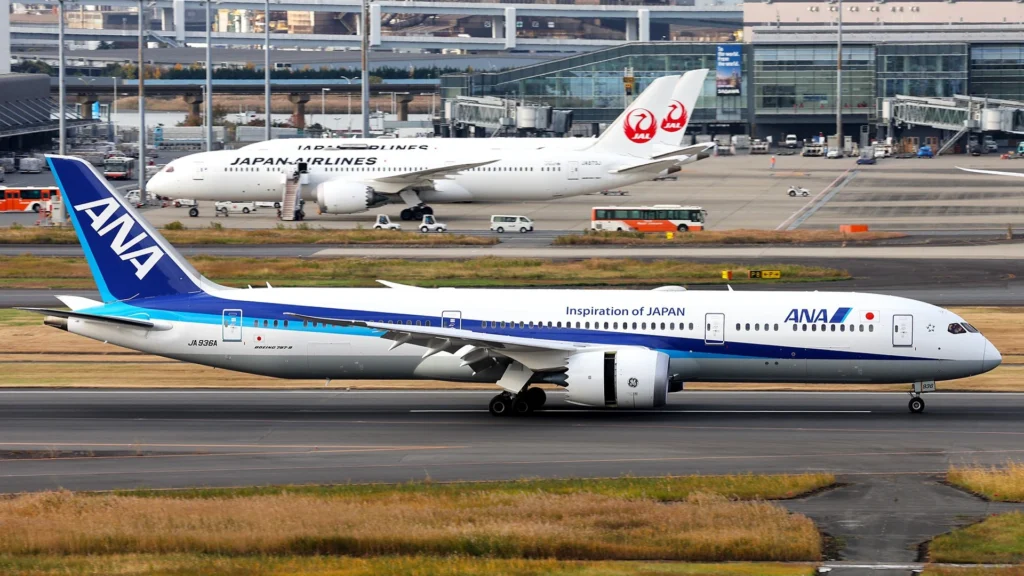 Photo: Aero Icarus | Flickr
Competitive Landscape and Alliance Context
Japan Airlines is a member of the oneworld alliance and faces increasing competition in the premium long-haul segment.
Its primary domestic rival, All Nippon Airways, a Star Alliance carrier, is also rolling out new business class seats across its Boeing 787 fleet.
The decision to invest in a unified and modernized 787-9 business class reflects the need to remain competitive within the Asia-Pacific and transcontinental markets, particularly on routes where product quality strongly influences corporate and high-yield demand.
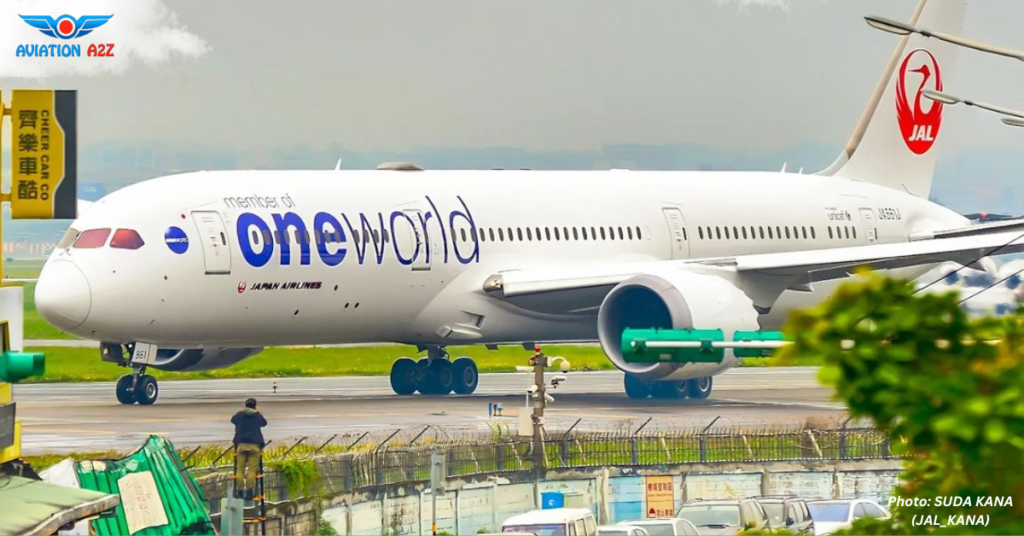 Photo: SUDA KANA
(JAL_KANA)
Bottom Line
Japan Airlines plans to introduce a new business class cabin across its Boeing 787-9 fleet, covering 11 existing aircraft and 10 future deliveries.
The program will standardize interiors, replace inconsistent seat products, and enhance long-haul competitiveness.
While the airline has not yet announced the final seat model, the upgrade represents a significant investment in premium product quality. Further details are expected as the retrofit program advances.
Stay tuned with us. Further, follow us on social media for the latest updates.
Join us on Telegram Group for the Latest Aviation Updates. Subsequently, follow us on Google News