
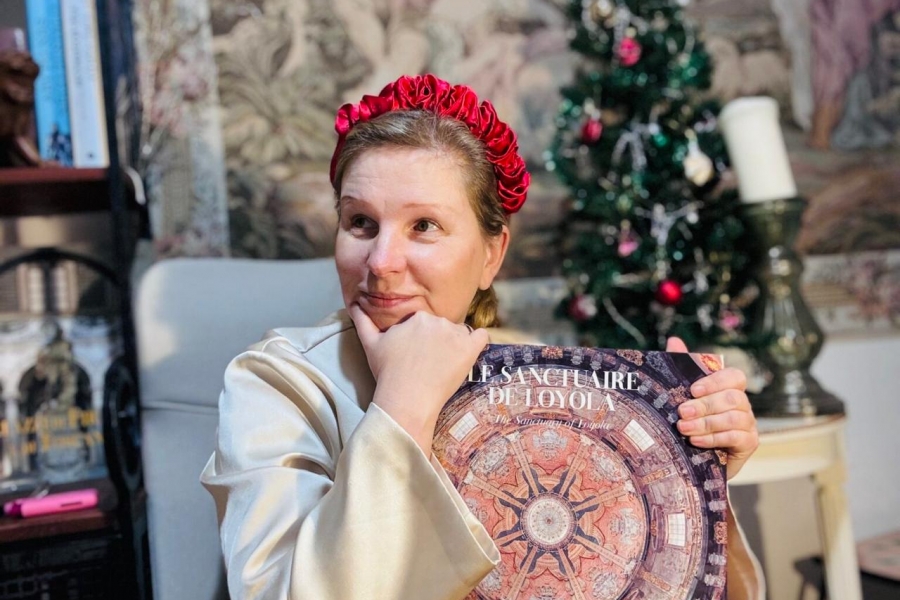
Natalia Makovik. Photo from the heroine’s archive
In 1999, Natalia Makovik lived in Belarus and thought her life was over. After participating in protests, she was beaten on the street and left overnight at Akrestsina. She was expelled from university. According to Natalia, she couldn’t even get a job as a cleaner: “Back then in Belarus, people like me were considered outcasts. There wasn’t the kind of support and solidarity there is now. The whole building hated me.”
In such a state, in 2000, Natalia left to study in a small Czech town with other Belarusian students who had left the country for political reasons. She lived on a scholarship of 3000 Czech crowns (in 2000 — approximately 80 euros, average salary — 13,600 crowns). It was enough to pay for the dormitory, food in the canteen, and a little extra food — by the second week, the money ran out.
But one day Natalia woke up in the dormitory and realized she could breathe and her stomach didn’t hurt. Her fear of the police and nervous tic had gone. That’s when she realized the tension she had lived under in Belarus.
The Punk Who Bought a Castle
Every year, Natalia visits the place where the idea of dealing with castles first emerged. In 1999, invited by Czech journalists, she came to Prague. She stood near Prague Castle, looked at the tiled roofs, and dreamed of living in an attic like Karlsson when she retired. And then her companion invited her to visit a castle – apparently, his friend had just bought one.

Павялічыць
Natalia Makovik. Photo from the heroine’s archive
“I said, how did he buy a castle? Is he a prince or an oligarch? He said, no, he has his own punk band. I don’t understand, how did a punk buy a castle? Because he’s a rich punk? ‘No, here you can buy one for a symbolic sum. He bought it for himself, and now the whole family is renovating this castle.’ I was going to fight the dictatorship until I was 70, and suddenly I heard something like that. So, you can buy a castle? And sell it? Can you renovate it? I want that too!”
Humiliated by the Belarusian authorities, Natalia decided against all odds to become a “queen” in a castle.
The Last Attempt That Succeeded
Seven years later, she organized the largest agency, VIPCastle, which deals with the sale of historical real estate. The first deal is still the most memorable. At that time, she also had a tourism business. For five years, Natalia tried to sell castles — she created a website, took people on viewings. But no deal came through. One day, her husband called her to a cafe and started a conversation about changing businesses.
“He says, listen, let’s open a restaurant, what are you doing with these castles? Nothing is working out.”
Natalia burst into tears, agreed… and made one last attempt. She posted an ad on Facebook for another castle for 40,000 euros. And a social network user wrote to her. The auction was in two days, and she lived 5000 km away. So she offered Natalia to buy it for her.

Павялічыць
Natalia Makovik. Photo from the heroine’s archive
The price doubled to 80,000 euros. Due to a number of bureaucratic and family difficulties, Natalia formally became the owner of the castle – for an entire year.
“It was the craziest, absolutely abnormal situation when I was the mistress of a castle! What I had dreamed of fell upon me, and I had to re-register the electricity, hire a caretaker, and organize the reconstruction. And the owner, the true owner, she was also worried because she had given everything to me. She was afraid. I understood that. But I said — you know, I won’t deceive you,” Natalia recounted.
7 Years for One Deal
Thus passed the next 18 years.
“I saw myself not as a real estate agent, but as someone who saves Europe’s architectural heritage and selects responsible investors for castles, palaces, fortresses, and breweries, investors who will truly care for them. I had a mission,” Natalia said.
She not only described the state of the castle, the number of rooms and windows, but also worked in archives, researching the castle’s history and matching it to a person’s archetype:
“I understood for whom it was, what kind of person it should be, what chord it should strike in their soul so that the person bought this castle not just as some building, but as a place that makes them better, that makes them wiser, calmer, more responsible.”
Some castles took seven years to sell – viewings continued throughout this time. During her work, Natalia drew attention to the condition of castles at both national and European levels. She moved beyond the emigrant paradigm and began working with local residents, Europeans. She advised the Minister of Culture on how to support monument owners. She appeared in Forbes and Bloomberg. A documentary was made about her on Czech television and a mini-film on German television ARD.
Павялічыць
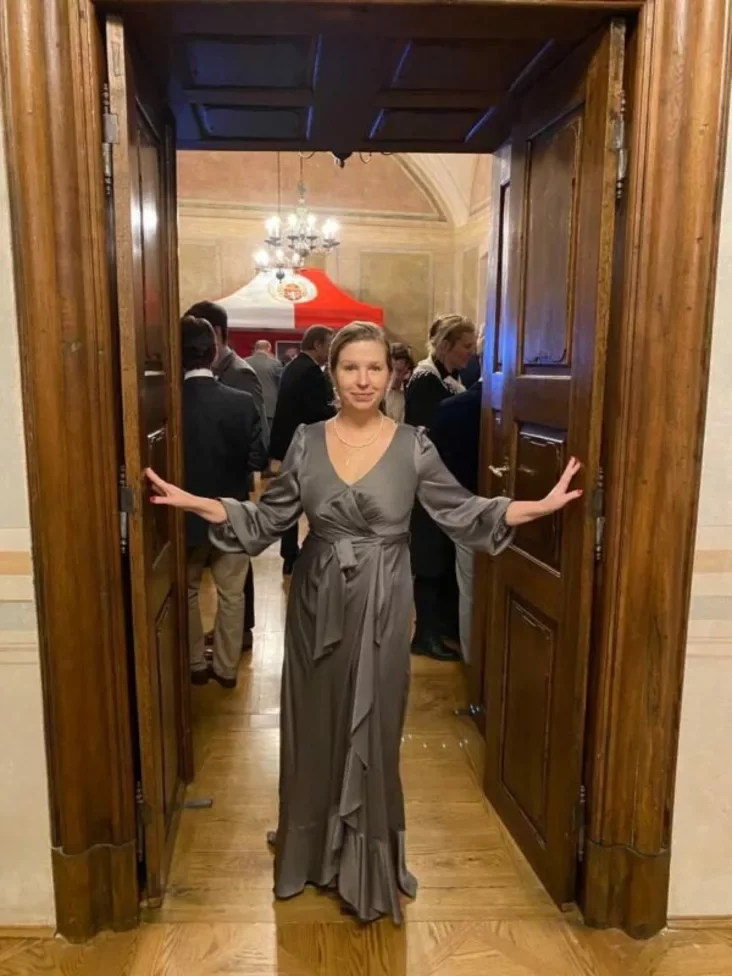
Natalia Makovik. Photo from the heroine’s archive
And at some point, Natalia realized she had burned out and had done everything possible in the business. So she sold it. But she didn’t abandon her work with castles. Now she works as a consultant. Last year, Natalia returned to the idea of castle development — restoring ruins for commercial projects. The expert explains how to get financing or bank loans, where to find grants, how to create a viable business plan, and carry out reconstruction.
The “Milady” Academy and the Swiss Case
In addition, several other projects grew out of her work with castles. Today, Natalia runs the “Academy of Castrology,” where she teaches the survival strategies of aristocratic dynasties. She calls it a closed educational and spiritual program. Emigrants, experts, and entrepreneurs are promised help in gaining connections and patrons in a new country using the Ricci method – a method of cultural adaptation. The course studies an ancient technique of the Jesuit order that helps transform one into an “aristocrat of spirit” and become part of the upper circle.
Natalia conceived the project while spending 18 years communicating with castle owners, dynastic aristocrats, and ruling dynasties. She became interested in how they managed to preserve their families, businesses, and crowns for 600-700 years. They also experienced revolutions, wars, and exiles.
“And so I realized that in our turbulent, terrible, frightening times, since 2011, I have been conducting extensive research, asking all aristocrats and castle owners these questions about life. Moreover, I study the history of these dynasties from the perspective of their secrets of success. I deduce these rules about how to behave, how to react, how to prepare oneself for life – this is exactly what I teach at the Academy of Castrology. I reveal the secrets of aristocrats.”
Павялічыць
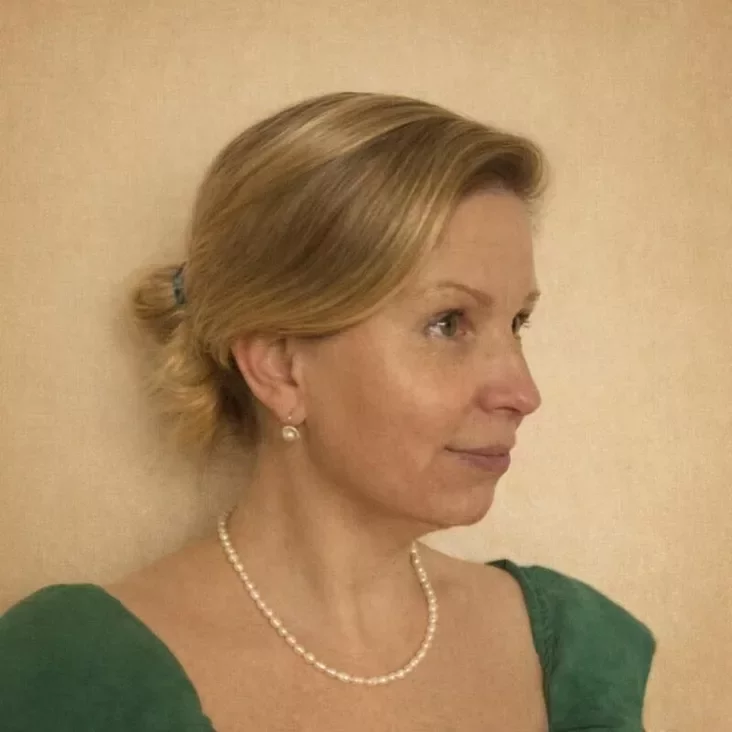
Many are surprised by Natalia’s athletic past — preparation for the most challenging Iron Man triathlon (4 km swimming, 180 km cycling, and 42 km running). Photo from the heroine’s archive
“I had a case: a student from Kharkiv fled to Switzerland. Before the war, she managed a financial department, but in emigration, she worked three jobs — on a farm, as a cleaner, and a dishwasher. She didn’t want to live on aid but felt crushed. A wealthy German she met saw her as a refugee. She came to the academy saying: ‘I feel bad, I can’t do this anymore.’”
The turning point happened when we organized an audience with the Liechtenstein princely family. She saw that the true elite accepted her as an equal. Her shoulders straightened. When she sent a photo from this meeting to her German acquaintance, he suddenly saw in her not a “refugee-cleaner,” but the statuesque woman she had always been inside. He understood her caliber and made a proposal. Now she is certifying her finance diploma and has found quiet joy!
Natalia encountered skeptics who say: “Big deal, they went and took pictures with some aristocrats.” But in her opinion, the respectful attitude, the address of “milord” and “milady” in the school – allows people to open up.
The Luxury of Naturalness: Why Princes Have Crooked Teeth
According to Natalia, entering high society does not require investment. One simply needs to learn how to behave, maintain polite conversation, and react appropriately. Some might need to change their clothes and shoes a bit – but it’s not about expensive brands.
“I interact with the world’s richest monarchs, and there’s no plastic surgery there. If it’s a manicure – no gel polish, just short-trimmed nails with clear polish. My students were most impressed by the teeth of the head of Liechtenstein – the owner of the wealthiest bank. He has no veneers! His teeth are healthy, but natural, even crooked. For him, such artificiality is superfluous.”
Павялічыць
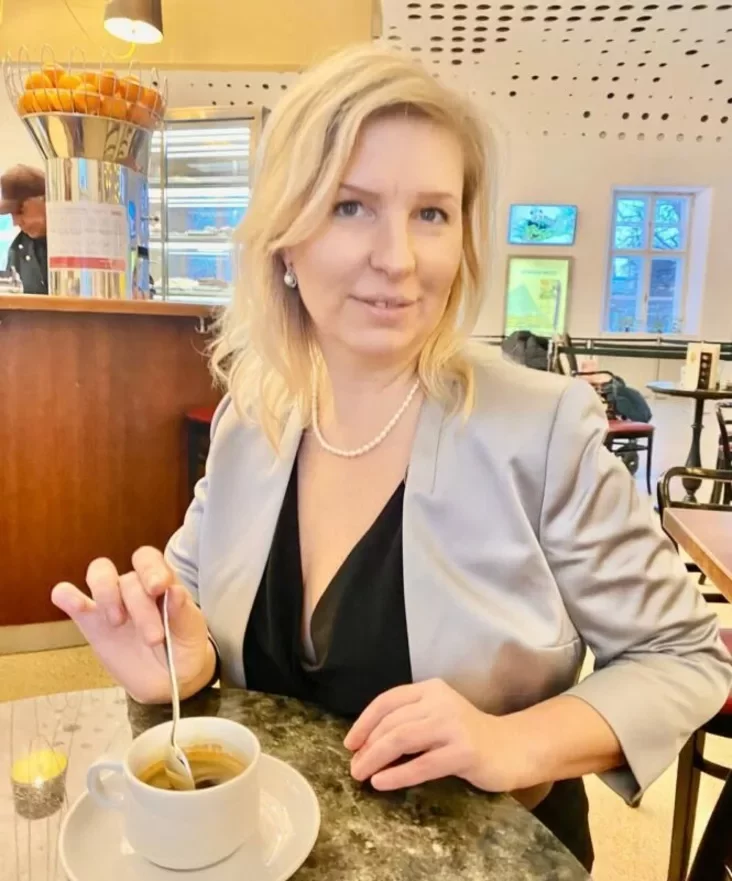
Natalia Makovik. Photo from the heroine’s archive
It seems to us that if we get veneers or plump our lips, do our eyebrows, eyelashes, or do something else to ourselves, then we will be worthy of a better life. They don’t ask themselves these questions, and they don’t need to.
Mission against “Info-scamming”: Why Learn Aristocratic Manners?
“I have over 500 lectures freely available on YouTube: from strategic thinking and mindfulness to spiritual practices. I give it away for free so people can feel for themselves: is there wisdom in this? If you feel a resonance, listen further. My ‘Ricci method’ consists of 100 lectures based on exclusive materials, ancient works, and practices of the European aristocracy. I’ve only made condensed mini-courses paid for those who need to learn faster,” Natalia said in response to a question about “info-scamming.”
For Natalia, this is a mission. She is convinced: if people learn the dignity and strategies of higher society, there will be no wars in the world.
“People with self-confidence, free from trauma and guilt, who do not wish to manipulate, are capable of stopping an aggressor not with ‘witchcraft,’ but with honest and precise negotiations. Those who possess strategic thinking will be able to organize processes in such a way as to transform dictatorship into creation and build a strong country in its place. These are not high-minded concepts; this is pure practice.”

Павялічыць
Natalia Makovik. Photo from the heroine’s archive
36 Stratagems: How to Win When You’ve Lost Everything
A special place in the training is occupied by a course on ancient Chinese strategies. Natalia highly recommends it specifically to Belarusians, with whom she empathizes in emigration.
“In China, 36 scenarios for the development of any event and mechanisms for victory for each of them have long been laid out. Most importantly: six situations where you have absolutely lost are analyzed there. And even for this ‘bottom,’ there are six options for an exit!
If you feel that you are lost — you’ve been fired, abandoned, lost your documents or your Homeland — go and listen to these lectures. They break down specific cases: how to choose a behavior model to get out of a crisis. You cannot lose faith and hope. There is always a way out; you just need to sit down and think, and if you can’t do it yourself – seek help.”
Another method Natalia advises is the “inner castle” from Soviet dissident Vladimir Bukovsky. In his book “Building a Castle,” he described how he was imprisoned and held in a psychiatric hospital. To avoid going mad and to maintain his dignity, he built a castle in his mind every day. He imagined digging the foundation with a shovel, pouring concrete, laying each brick, and erecting towers. By the end of his term, he was already mentally arranging books in his library.
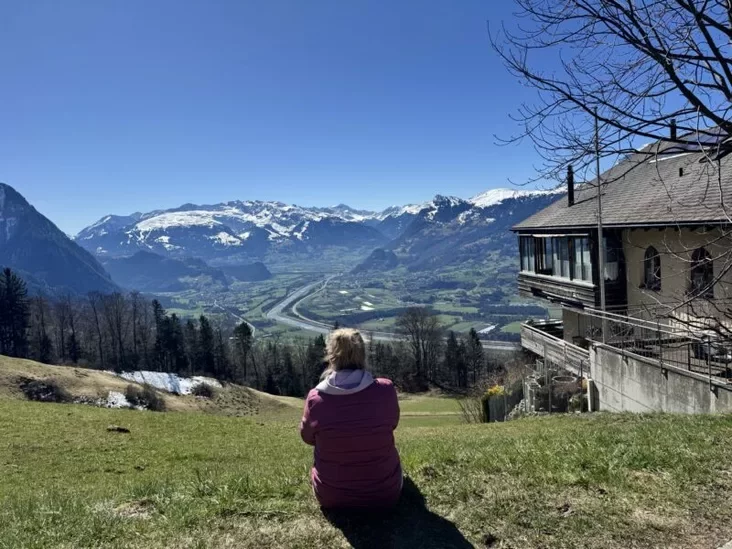
Павялічыць
Natalia Makovik. Photo from the heroine’s archive
“We move and lose our profession, our diplomas are not recognized. But it’s important to realize: you are here for a reason. This is a chance to fulfill your calling on a scale that was impossible under a dictatorship. Admit: what happened is not your fault — these are external circumstances. Development is impossible under a dictatorship,” Natalia encourages Belarusians.
When Castles Become Prisons
Natalia says the same about the restoration of castles in Belarus. According to her, it is not the time to invest money in Belarusian castles. Moreover, it is not the time to live there, otherwise, one will constantly have to compromise:
“What castles, when people’s inner castles there are destroyed? When, excuse me, castles turn into prisons, I remember Valadarka, it’s very symbolic.”
Therefore, the main thing now, she believes, is to preserve oneself.
Natalia has lived in Europe longer than she lived in Belarus. She is fascinated by her Liechtenstein — a country where “people live in absolute trust in each other and have not known wars for 300 years.” But she promises: if she feels that her experience in castle restoration is needed by a new Belarus, she does not rule out returning.