
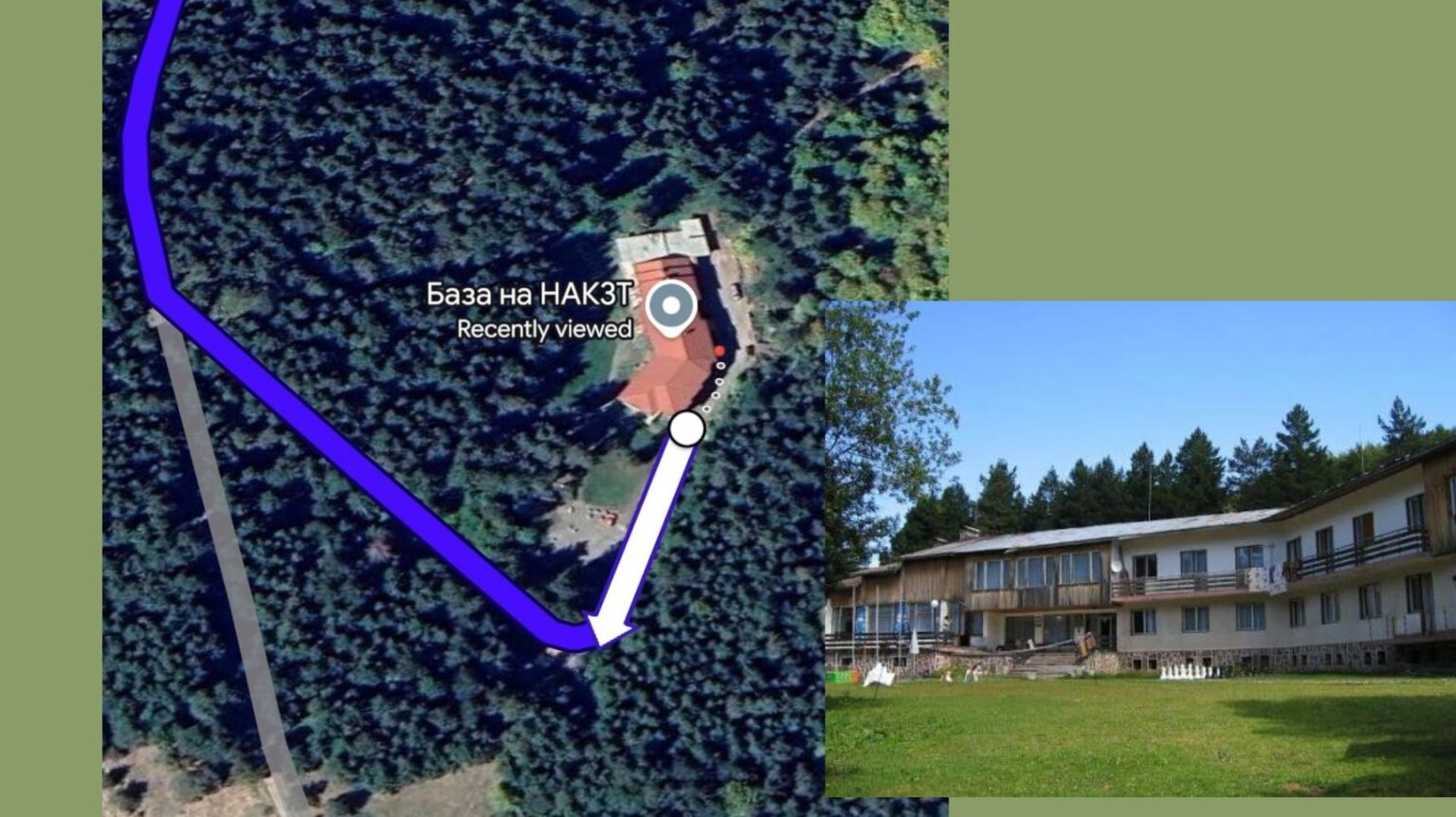
In the first incident on February 2, police arrived at the Petrohan mountain lodge, near the village of Gintsi, 62 kilometres from the nearest border point with Serbia, acting on an alert about a fire. Three men were found dead, shot in the head, with two dead dogs in the upper level of the lodge, which had been damaged by the blaze.
While police did not give out the names of the victims, the three men were soon identified by the media and by friends and associates, opening up a flood of unconfirmed details that reached the media.
The murdered men in the hut were named as 49-year-old Ivaylo Ivanov, a lawyer, Detcho Vassilev, 45, who owned an accounting firm, and Plamen Statev, 51, a diving instructor. They were all part of an NGO called National Agency for Control of the Protected Areas, which had been in partnership with the Ministry of Environment and Waters between 2022 and June 2025, when the agreement was ended by the ministry.
“Life has given us more shocking details here than in the ‘Twin Peaks’ series,” General Prosecutor Borislav Sarafov told media. His quote led to the case becoming colloquially known as “the Bulgarian Twin Peaks”. Sarafov did not provide further details.
The prosecutor however criticised the NGO for taking on the role of a state authority by organising patrols of the area near the hut. The mayor of the nearby village, Georgi Todorov, also said disapprovingly that NGO members had patrolled the area like “self-appointed rangers”. Some media have reported that they were hunting for migrant-smugglers who are active in the border area with Serbia.
The director of Bulgaria’s State Agency for National Security, Denyo Donev, said there was information about sexual crimes against minors taking place in the same hut dating back two years, but did not say why police did not act on this.
This caused a pushback from people who knew the victims. Friends of the dead men contested the suggestion they could have been involved in wrongdoing, and said they had been threatened over their wildlife protection activities in recent months.
“They were very proud that they had stopped loggers and poachers, and that animals had returned … they had the area under surveillance using a drone for illegal logging,” said a long-time friend of one of the killed mountaineers. “He told me they were being threatened with assassination.”
Amongst those questioning the police’s theories was Sofia’s mayor, Vassil Terziev and ex-Prime Minister Nikolai Denkov. Politicians from the opposition party We Continue the Change also accused the authorities of initiating a cover-up.
“Ivo, Detcho, Plamen, I knew them personally,” Terziev wrote on Facebook on February 4, accusing police of pushing a fake narrative using “classic KGB practices … with no facts, with no shame”.
Terziev praised the work of the environmental activists in helping to protect the animals and trees in the mountain area.
“Does anyone wonder why life has returned to the mountains … Is this a coincidence, or is it the result of years of daily efforts against poachers who kill 10 to 15 animals at a time for fun?” he asked.
“Did the loggers disappear by chance? Or was it the result of a consistent battle to protect a 200 to 300-year-old beech forest that local thugs and structures close to the Movement for Rights and Freedoms party had openly sworn to cut down?” he asked.
The party, currently split into two factions led by two different tycoons – Delyan Peevski and Ahmed Dogan – has not commented on these allegations. Terziev’s comments echo suspicions that the victims were targeted by what is vaguely referred in local media as the ‘wood mafia’, people involved in illegal logging and poaching.
Terziev also noted that the slain men had tried to thwart migrant-smuggling in the area. “Will anyone ask about the migrant channels that they helped the Border Police to counteract?” he demanded.
By Monday, the police force had yet to release a statement saying when exactly the murders were committed and whether police officers were the first to find the bodies. No details have yet been made public about the weapons used, the type of bullets fired, or whether there are fingerprints or video recordings, including from the drone used by the environmentalists.
Police have also not commented on reports that friends and relatives of the three men called the 112 emergency number on February 1, when they were unable to contact them. The extent of the blaze that damaged the Petrohan lodge is also unknown.
Amid the lack of information, speculation has escalated.
“The reaction from [state] institutions to the murders reveals a coordinated effort to cover up the facts by spreading rumours,” claimed Nikolai Denkov, who was prime minister in 2022-23, on Friday.
Former MP Ivan Hristanov also claimed in a radio interview that the group at the hut had likely “seen something terrible” while conducting surveillance of the area and that this was probably connected to a drug trafficking route between Serbia and Bulgaria.
“It’s nothing less than an execution by a combat squad who entered the premises, put them in a row and killed them,” Hristanov said.
There are apparently no signs the men defended themselves, even though lawfully obtained ammunition was found at the location, leading to further speculation.
‘Don’t believe anything you hear’