
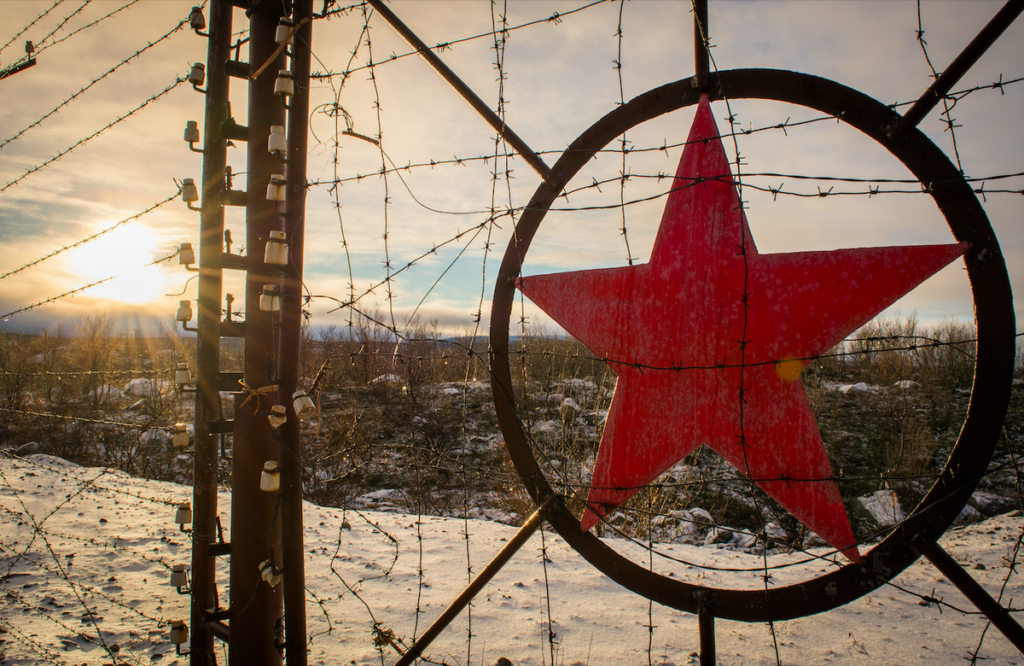
Finland’s concern is the former Soviet‑era military garrison in the Rybka district of Petrozavodsk. Photo credit: Photogid/Shutterstock
Finland’s defence establishment is intensifying its monitoring of Russian military activities in the Republic of Karelia, as satellite imagery and reporting confirm that Moscow has begun renovating a long‑unused military base near Petrozavodsk, roughly 160–175 kilometres from the Finnish border.
To Finnish officials, the development signals a notable shift in the military landscape along the 1,340‑kilometre frontier shared with Russia, the longest land border between a member state of the North Atlantic Treaty Organisation (NATO) and Russia.
Revival of Rybka Garrison
The site at the heart of Finland’s concern is the former Soviet‑era military garrison in the Rybka district of Petrozavodsk. The base had lain largely dormant since the early 2000s, with only sporadic use for training exercises. Recent satellite images show extensive land clearance, construction of new infrastructure, and the arrival of military trucks and equipment.
Most Read on Euro Weekly News
Finnish military analysts have interpreted these changes as more than routine maintenance. The modernisation appears designed to support the newly formed 44th Army Corps, a Russian military formation reportedly planned to include up to 15,000 personnel.
Strategic Signal After NATO Accession
Finland’s defence leadership views the timing of the Petrozavodsk expansion through the lens of recent strategic shifts. Finland formally joined NATO in April 2023, ending decades of longstanding neutrality and extending the alliance’s border with Russia by more than 800 miles.
For Finnish officials, the renovations are consistent with Russia’s stated intent to respond militarily to NATO’s enlargement. Satellite reveals of logistics facilities, new barracks and vehicle storage at Petrozavodsk are being seen not in isolation, but as part of a broader reinforcement of military infrastructure in northwestern Russia.
Expert Assessments in Helsinki
In Helsinki, independent military experts and defence analysts have underscored the significance of what they describe as a systematic refurbishment of border‑region facilities.
According to Euromaiden press Finnish defence analysts stated that “The level of construction and infrastructure works suggests long‑term planning,” they reviewed imagery and open‑source reports this January. While only a fraction of the projected personnel has been confirmed on site so far, the base’s development aligns with Russia’s broader effort to strengthen its strategic posture along its western flank.
For Finland’s Ministry of Defence, the focus remains on vigilance rather than alarmism. Officials emphasise that enhanced facilities do not necessarily equate to imminent offensive action, but they do complicate the security environment in the region. Finnish military doctrine places high value on early warning, deterrence and strong NATO cooperation, elements that the government says are essential in dealing with evolving Russian capabilities nearby.
Military Infrastructure Beyond Petrozavodsk
Petrozavodsk is not the only site attracting attention. Satellite imagery has also documented active construction of troop camps, vehicle depots, and renewed aviation facilities closer to the border, including in Kamenka, Kandalaksha and other locations in Russia’s northwest.
These developments extend Russia’s capacity to house heavy equipment and personnel in the region, even if many units remain tied up elsewhere, notably in ongoing operations in Ukraine. For Helsinki, such infrastructure improvements across northern Russia are being tracked as part of a broader pattern rather than an isolated project.
Finland’s Response and NATO Integration
In response to these activities, Finland has continued to invest in its own defence capabilities and in deeper integration with NATO partners. Joint military exercises, enhanced air‑defence systems, and greater interoperability with alliance forces are now core components of Helsinki’s strategic posture.
Government officials insist that Finland’s membership in NATO does not make the country a target, but they acknowledge that Moscow’s renewed focus on border‑region facilities presents a more complex security challenge.
“The stability of northern Europe depends on transparent military postures and strong defensive alliances,” a senior Finnish official said. While recognising the uncertainties that accompany Russia’s actions, Finland remains committed to a deterrence strategy rooted in preparedness and cooperation with NATO allies.