
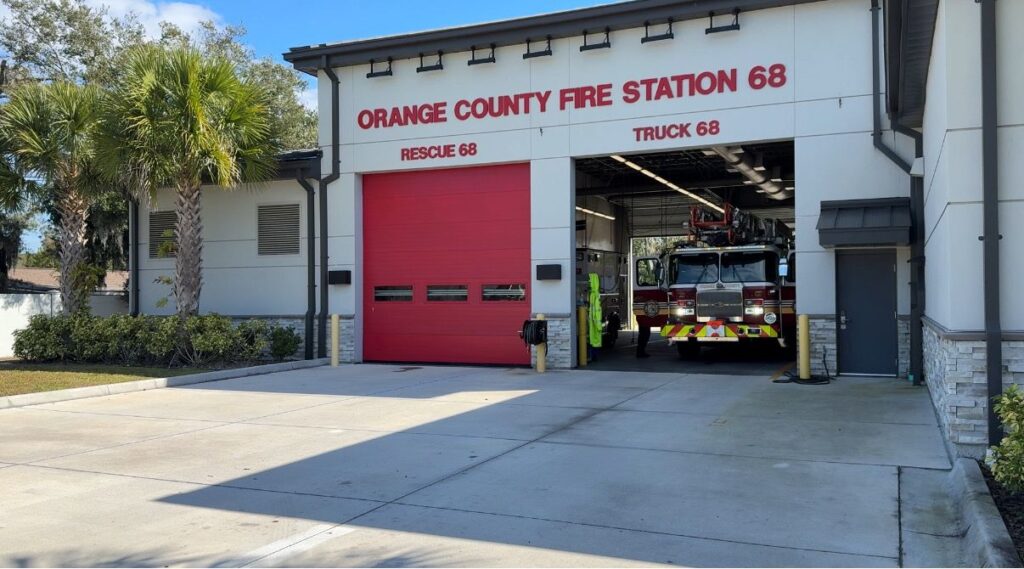
ORLANDO, Fla. — Orange County leaders are allocating $644,000 for behavioral health evaluations for Orange County Fire Rescue, a move aimed at strengthening mental health support for firefighters and other employees who routinely respond to traumatic emergencies.
What You Need To Know
- Orange County has approved $644,000 for behavioral health resources for Orange County Fire Rescue employees
- The program includes baseline mental health check-ins and expanded support services
- Support also includes peer teams, chaplain services, and therapy dogs
- Leaders say early intervention helps firefighters manage stress and trauma
The evaluations create an initial baseline assessment of an employee’s mental well-being, including work and home-related stress, and connects them with resources when needed. The contract runs through September 2026, with an option for the county to renew for an additional year.
At fire stations, leaders say support often starts in the same place first responders spend much of their shift: the kitchen table.
“Like any home, the kitchen is usually where people gather,” said OCFR Lt. Claudia Fernandez, the department’s behavioral health coordinator. “The kitchen table for any fire station is going to be where we solve all the problems of the world.”
Fernandez said firefighters have always leaned on each other after tough calls, but she said the culture has shifted over time toward talking more openly about mental health.
“Usually, the peer support starts right after a call,” Fernandez said. “The people that we’re running the calls with are going to be the primary people that we lean on, especially when we’ve experienced a traumatic event.”
Fernandez is also a firefighter, a role she says gives her a unique perspective on the mental toll of the job.
“Our job is to make sure that we take care of the community. That’s our primary concern,” she said. “But at the same time, my role is to take care of the people that are taking care of the community.”
She said one reason she joined the behavioral health team is because of how trauma can pile up after repeated exposure to emergencies.
“We do have to go to people’s worst days, and those traumas become our traumas,” Fernandez said.
Along with the new evaluations, Fernandez said the department already uses multiple layers of support, including peer support, chaplain services, critical incident stress management, and a therapy dog program.
“For many people, seeing a dog brightens up their day,” she said. “We do bring Jake, especially when it’s a difficult call, and a lot of people will open up a lot more.”
OCFR Chaplain Lou Del Tufo said firefighters don’t always feel the weight of a traumatic call at that moment — sometimes it hits later.
“Sometimes when they go on the call, the adrenaline is pumping, and it doesn’t hit them until maybe a day later, a shift later, and they start to really think about what they just experienced,” Del Tufo said.
Del Tufo said that’s why baseline mental health assessments can be an important tool to help firefighters understand where they are and what support may help.
“It’s much harder with people’s mental health,” he said. “And so I believe that we need to get our firefighters these assessments so that they can get a baseline to where they are.”
And for firefighters who may be hesitant to reach out, Del Tufo said the message inside OCFR is clear: “Something we like to say around Orange County is ‘It’s not weak to speak,’” he said.