
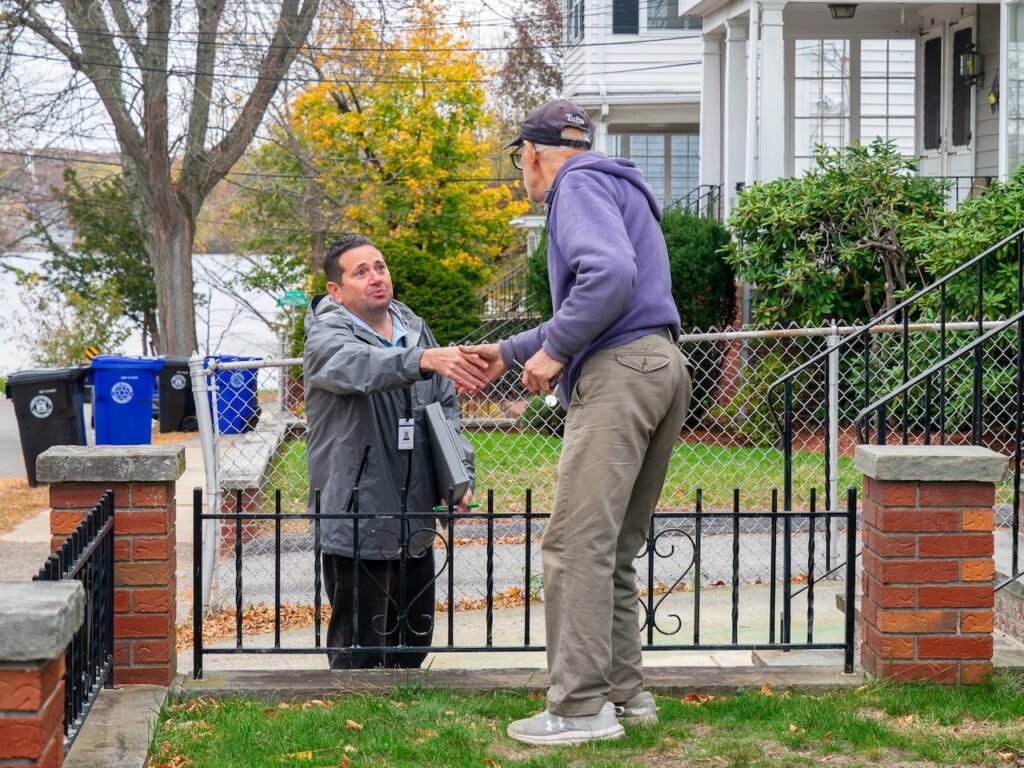
Fourteen years after he went to war with one of the most powerful corporations in live entertainment, Tommy Dorfman is doing what he needs to do to stay afloat: selling cable and internet door to door in the Boston suburbs.
In another era, Dorfman made a career promoting clubs in North Jersey, New York and Miami, booking electronic and house music acts and arranging for celebrities — from Paris Hilton to the cast of “The Jersey Shore” — to appear at nightlife venues.
That time is long past.
Since 2011, Dorfman and his business partner, Chris Barrett, have been locked in a lawsuit with Live Nation, the multinational events promotion juggernaut and owner of Ticketmaster, one of the world’s largest ticketing services.
As Dorfman tells it, he refused Live Nation’s demands to become a partner in an electronic dance music festival he was organizing.
In retaliation, Dorfman says, Live Nation threatened to withhold access to its ticketing platform and pressure musical artists to avoid performing at the festival. In its efforts to torpedo the event, the company tarnished Dorfman’s reputation, he said, devastating his future in the club and music scenes.
“I was just wiped out of the whole entire industry,” Dorfman, 49, said. “I lost everything.”

Tommy Dorfman, 49, stands in an Arlington, Mass., neighborhood during an afternoon selling cable and internet door to door, Nov. 3, 2025. (Will Katcher/MassLive)
Dorfman said the case reflects the monumental power Live Nation holds over the live entertainment industry, and the tactics that have drawn scrutiny from U.S. federal prosecutors and foreign regulators.
The company owns or controls more than 250 music venues across the country, including 60 of the nation’s top 100 amphitheaters.
It uses its sway to squeeze the venues, performers and other promoters into submission, the U.S. Department of Justice said in a 2024 antitrust lawsuit backed by 30 states.
Through its subsidiary Ticketmaster, Live Nation controls ticketing for more than 80% of major concert venues, the Federal Trade Commission said in a separate lawsuit last year. The company inflated ticket costs, tacked on hidden fees and employed other “deceptive pricing tactics” that cost music fans billions of dollars, the FTC said.
Because of the company’s dominance, Americans pay more for tickets than music fans abroad, the Justice Department said, arguing the time has come to break up Live Nation-Ticketmaster.
The company denies Dorfman’s allegations and has contested his lawsuit and the federal government’s legal actions.
Live Nation argues Dorfman has scapegoated the company for his team’s inability to pull off production of a large-scale new music festival.
With mediation failing to bring the sides to a settlement, the case has dragged on for years, inching toward a trial that now seems inevitable.
A career ends, a fight begins
Within months of the dispute beginning, Dorfman was living in his car, the festival plan and his career in tatters. The lawsuit became a necessity.
At first, Dorfman just wanted his livelihood back. But as the case stretched on for a decade and a half, his mission changed.
Now, Dorfman wants to go to trial and show how live music’s corporate titan maintains a grip on the industry.
“I love the music industry, but the scene’s been destroyed,” he said.
Yet to win, Dorfman needs money. He is up against a defendant that reported $23 billion in revenue in 2024, enough to hire an army of attorneys. Dorfman said he has a single lawyer on his side.
On a cool, cloudy weekday last fall, Dorfman traversed a leafy street of duplexes in Arlington. Massachusetts. Clipboard in hand, he knocked on one door after another, hoping to convince residents to switch their cable and internet provider to Astound Broadband.
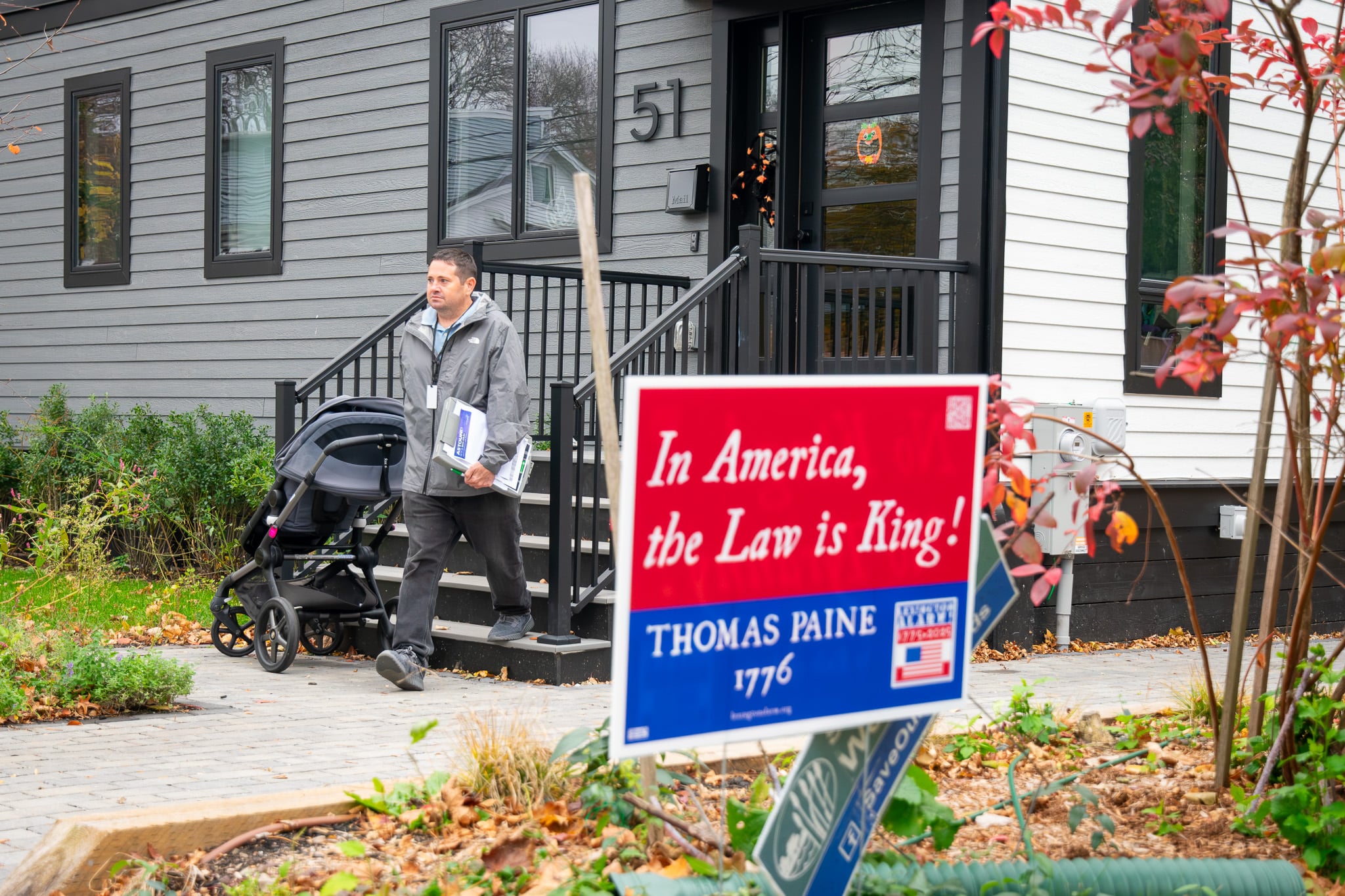
Tommy Dorfman, 49, leaves a home in Arlington, Mass., while selling cable and internet door to door, Nov. 3, 2025. (Will Katcher/MassLive)
Drifting piles of dried leaves greeted Dorfman as he strode to the front doors and gave a few knocks.
At midday, most residents weren’t home or didn’t answer. Of the rest, most seemed uninterested in what he was selling or needed to check with their significant other before dumping their internet and television bundle.
More often than not, Dorfman was met with rejection. Under an overcast sky, he walked on.
‘Everybody knew Tommy D’
When he grew up in West Milford, a rural New Jersey community on the border of New York’s Hudson Valley, Dorfman loved all kinds of music. His father took him to a wide variety of shows: Prince, Michael Jackson, Bruce Springsteen, Madonna and more.
But Dorfman gravitated toward electronic dance music above all else.
Living on his own from the age of 16 onward, he kept afloat by throwing underground house parties. He hired DJs, bought kegs of beer with a fake ID and charged for entry.
Hooked by the party lifestyle and thumping, bass-heavy music, Dorfman continued booking larger and more popular venues. Step by step, he built a career promoting clubs and their parties.
“Everybody knew Tommy D,” said Mario LaVecchia, 65, a New Jersey club and restaurant owner who met Dorfman around 2009.
LaVecchia was amazed by the young promoter’s ability to pack a venue or secure a big-name celebrity appearance, drawing crowds who wanted to party in proximity to fame.
The decor of Dorfman’s office walls today tells the story of his fast, thrilling past.
In one photo, Snoop Dogg leans on Dorfman’s shoulder at a birthday party. In another, Dorfman grins with his arm thrown around Charlie Sheen.
“If you wanted a talent, Tommy would get it there,” LaVecchia said. “If you had the money, he’d get them there.”
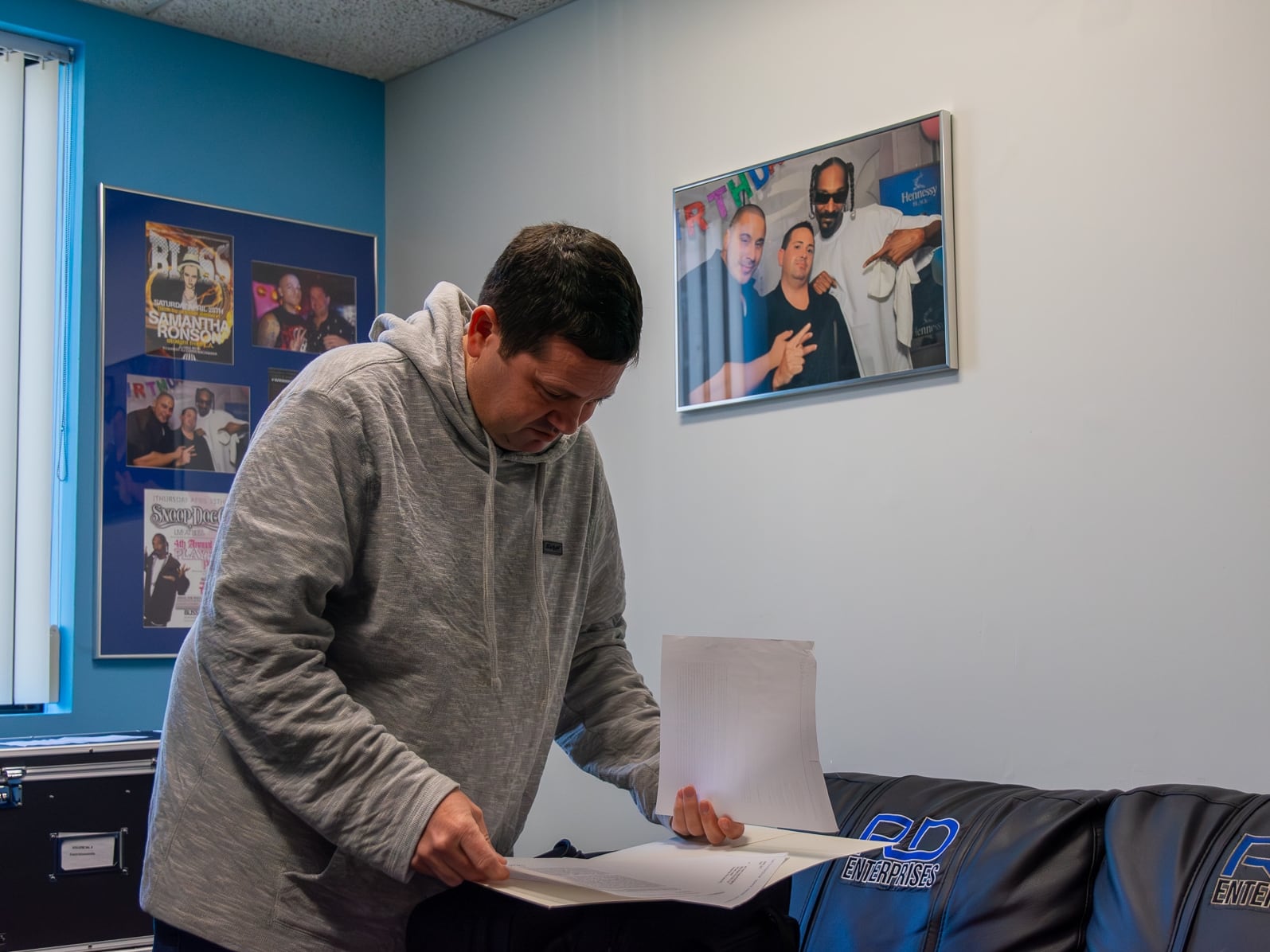
Tommy Dorfman, 49, thumbs through files from his lawsuit with Live Nation at his office in Woburn, Mass., on Feb. 4, 2026. Behind him, he poses with Snoop Dogg in a photo hanging on the wall. (Will Katcher/MassLive)
In late 2010, according to Dorfman, he and a business partner were in discussions with operators of a New Jersey fair to produce an electronic dance music festival the next summer on the fairgrounds, at the Meadowlands complex in East Rutherford.
“Electronic music was a bubbling underground and soon-to-be mainstream music,” Mike Ma, legal director for Dorfman’s company, Juice Entertainment, said.
The new contract would also give them the rights to produce concerts at the fair’s event space for years to come.
Dorfman said he was in negotiations with acclaimed acts such as Dutch DJ Tiësto and French DJ David Guetta to perform.
Live Nation caught wind of the deal and set out to scuttle it, Dorfman said. The company insisted to the fair management that Dorfman and his associates had neither the money nor the expertise to put on concerts of this scale at the venue.
Still, Dorfman and the fair operators inked an agreement.
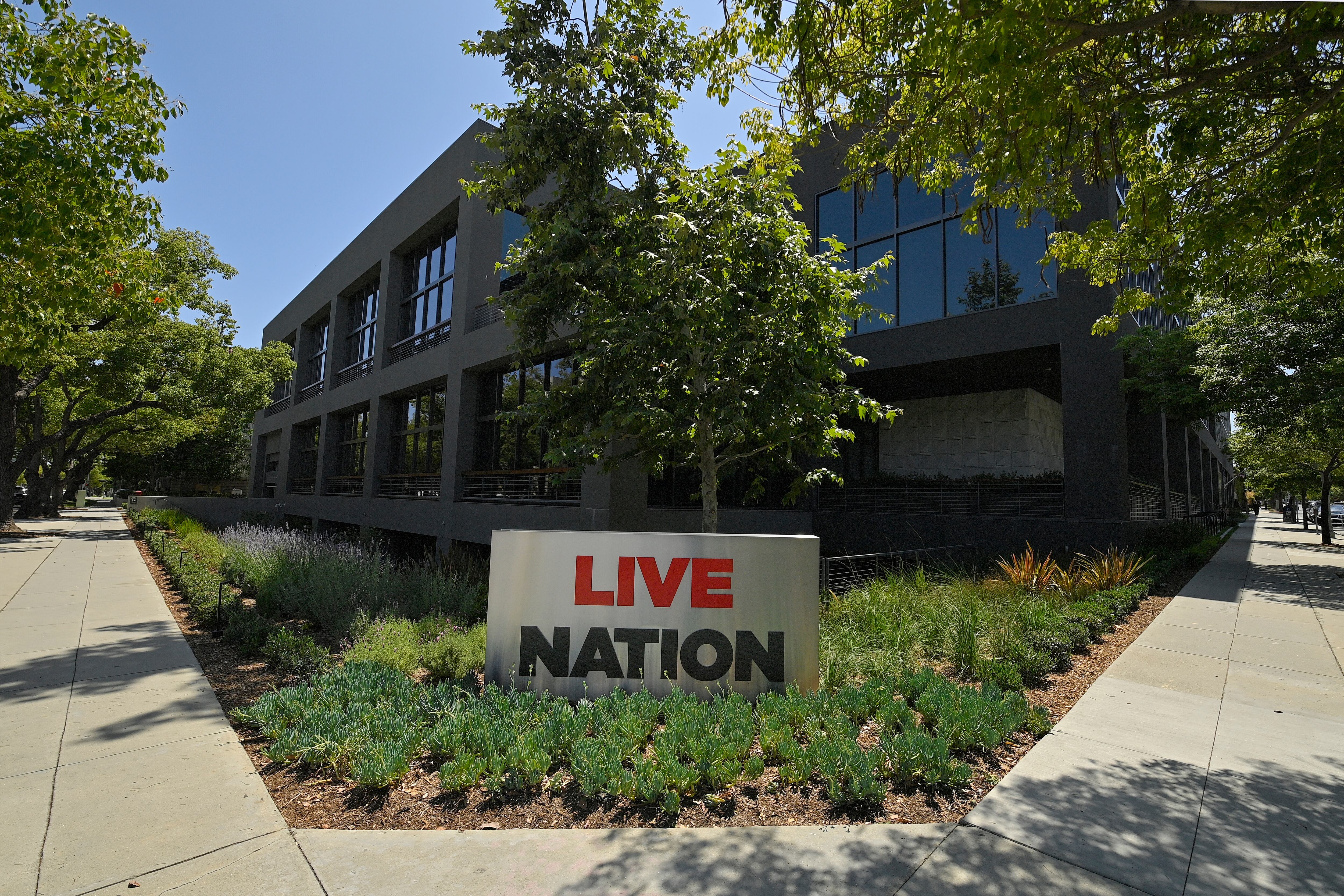
The headquarters of Live Nation is shown June 29, 2020, in Beverly Hills, Calif. (AP Photo/Mark J. Terrill, File)
Live Nation already had the rights to provide ticketing services for events at the Meadowlands, Dorfman said.
According to him, the company threatened that unless it was allowed to join in producing the fairground concerts and therefore share in the profits, it would cut off ticketing for the events. The company said it would block musicians from performing at Dorfman’s festival, his lawsuit said.
Live Nation was “dictating terms,” Dorfman said. He didn’t budge.
Seemingly overnight, his negotiations with artists to perform evaporated. Talent agencies would no longer answer his phone calls.
Unable to live up to his end of the contract with the fair, the event crumbled, along with his hopes of producing years of music festivals on the fairgrounds.
Dorfman and his business partner filed a lawsuit on Dec. 16, 2011, in the U.S. District Court of New Jersey, accusing Live Nation of defamation and interference with their contract and business relationships.
Fourteen years later, he hopes a trial may be near.
“He’s David, trying to take down Goliath,” LaVecchia said. “And he will.”
Staying afloat, one door knock after another
Dorfman is a salesman at heart.
In 2012, with a lawsuit in motion and his entertainment career in shambles, he took a job going door to door generating leads for window and roof replacements. A few years later, now living outside Boston, Dorfman switched to selling cable and internet.
At each home he visits on a weekday last fall, Dorfman knocks and waits, waving every few moments at the dark windows and peepholes on closed doors, trying to project a warm demeanor to whoever may be contemplating answering.
If the door cracks open, he is off to the races.
“Hi there, I’m Tommy — and your name?” Dorfman says. He won’t forget it.
“This router covers 6,000 square feet — that’s like Tom Brady’s whole house.”
“We’re booked up for today, but I could have my techs out to your house tomorrow.”

Tommy Dorfman, 49, speaks with an Arlington, Mass., resident while selling cable and internet door to door, Nov. 3, 2025. (Will Katcher/MassLive)
When he was working to make a name in the club scene, Dorfman would canvas college campuses, handing out fliers for upcoming events. When clubs let out at daybreak, he’d be there to spread the word on his next event. He learned not to take offense when clubgoers, stumbling out into the morning light, slapped fliers back in his face.
Dorfman’s current workday can stretch 10 or 12 hours, he said. He tends not to break for lunch. On weekends, he’s out from midmorning through to dinner time. In the winter, he dresses warmer and keeps knocking.
“He’s nonstop,” LaVecchia said. “When he had a club to fill, he never slept.”
On one weekday last fall, Dorfman’s first customer of the afternoon comes to the door in fuzzy, sea green slippers. Dorfman introduces himself and makes his pitch, and she has questions.
What would the monthly charges be? What does she do if the current internet provider bills her for a cancellation fee? Does the installation involve any new wiring?
She’s interested, and Dorfman promises to check back in that night when her husband is home. He leaves his cellphone number, still with a North Jersey area code.
“Thanks, Tommy,” she says.
“That’s unusual,” Dorfman remarks as he moves on to the next house, the gray-blue clouds overhead threatening rain. “Sometimes you can knock on 100 doors before you get one.”

Tommy Dorfman, 49, approaches a home in Arlington, Mass., while selling cable and internet door to door, Nov. 3, 2025. (Will Katcher/MassLive)
3,000 attorneys vs. ‘a mom and pop shop’
Dorfman’s regular workdays are interrupted only to see his kids or put in crucial clerical work for the lawsuit, he said.
He helps his attorney out as much as he can by working on the case at night. But as major hearings approach, it eats into his daytime business as well. In those stretches, he said he may sleep just two hours some nights.
“Our counsel is a mom and pop shop,” said Ma, the legal director for Dorfman’s company, though not his litigator for the lawsuit. Live Nation’s law firm claims 3,000 attorneys spread across 50 offices.
Dorfman declined to disclose the details of any past settlement discussions with Live Nation, citing the privacy of mediation.
The plaintiffs are confident in their case. But they worry the aging or death of a witness could be detrimental.
“When we started the case, most of these guys were already in their 60s,” Ma said. “They’re nightclub kids. None of them are vegetarians.”
“I just never anticipated to still be doing this 15 years later,” he added.
The defendants are confident in their side, too.
Live Nation says Dorfman and his associates failed on their own merits to sign the artists they needed to put on the 2011 music festival. They blamed Live Nation for their shortcomings, the company argues in court documents, and concocted a “wholly fantastic story” that the company defamed them and blocked the artists from performing.
In a 2018 ruling, Judge William H. Walls dismissed Dorfman’s claim that Live Nation interfered with his contract with the fair operators. The judge allowed his defamation and interference-with-a-business-relationship claims to proceed.
However, Walls ruled that Dorfman could not seek “lost profit” damages at trial. He found that although Dorfman and his business partner had produced events in the club scene, they did not have a proven track record of producing festival-scale events, beyond a 2010 Latin music festival that lost money.
Therefore, Walls ruled, it was “too remote and speculative” to say that any potential defamation by Live Nation resulted in them losing future profits.
The case does not yet have a trial date.
The parties last appeared in court on Nov. 18 for an evidentiary hearing and are awaiting a judge’s decision on which evidence to allow in the proceedings.
“Eventually, we’ll get a trial. But I see no evidence currently that gives me any real expectations,” Ma said. “At this point, it’s absolutely impossible to deny us a trial. We just need a date.”
A peek behind the curtain of Live Nation
In the course of the lawsuit, Dorfman and his attorney sought the expert testimony of Richard Barnet, a professor of music business at Middle Tennessee State University and an authority on the live entertainment industry, for his analysis of the inner workings of Live Nation.
Using internal documents procured from the company during discovery, Barnet concluded that Live Nation was deceiving its artists, promoters and partners about how much it profited from events.
He authored a report for the plaintiffs accusing Live Nation of “financially predatory” and anticompetitive business practices that gave the company an undue advantage over others in the live music industry.

Tommy Dorfman, 49, walks through a neighborhood in Arlington. Mass., during an afternoon selling cable and internet door to door, Nov. 3, 2025. (Will Katcher/MassLive)
The report nearly didn’t see the light of day. Submitted three years after expert reports in Dorfman’s case were due, the judge ruled it could not be used in the case.
But in 2024, U.S. Rep. Bill Pascrell, a New Jersey Democrat pushing for stricter oversight of Live Nation, uncovered an unredacted copy of the report in the federal court records of Dorfman’s case.
Pascrell published the material and shared it with federal regulators and congressional colleagues investigating Live Nation.
In an antitrust lawsuit filed in May 2024, two months after Pascrell released the report, the Justice Department accused Live Nation of running an illegal monopoly of the concert industry.
The Biden administration sought to undo the 2010 merger that brought together the two giants of concert promotion and ticketing sides of live entertainment. At the time, consumer groups had lobbied hard against the merger.
Live Nation denies it is a monopoly or has abused its power in the entertainment industry.
Instead, it said its success can be attributed to its ability to manage hundreds of artists, promote thousands of shows and distribute tickets to concerts around the world.
The company says it is not to blame for rising ticket prices, which can be blamed on the growing cost of event production, artist popularity and audiences’ willingness to pay more for tickets.
The government’s pressure on Live Nation and Ticketmaster continued under President Trump.
The antitrust case is scheduled to go to trial in March.
In September, the Federal Trade Commission and a bipartisan group of state attorneys general also sued Live Nation, accusing it of falsely advertising lower ticket prices on Ticketmaster than what consumers must pay.
The company secretly allowed ticket resellers to circumvent the limits that consumers face on how many tickets they can buy for an event. The brokers could then place the tickets back on Ticketmaster’s resale market at a higher price, allowing both them and the company to substantially profit, according to the Federal Trade Commission.
“To the average ticketbuyer, Ticketmaster is a dirty word,” said John Scher, a famed veteran concert promoter who worked with the Grateful Dead, the Rolling Stones and numerous other stars.
By dominating the market for large arena and amphitheater shows, ticketing, management and event promotion, Live Nation and Ticketmaster exert tremendous sway over the market price for concert tickets, which has far outpaced the average music fan’s budget, Scher said.
Scher once promoted 30 to 40 arena concerts per year, including at the Meadowlands, Madison Square Garden and some of the other largest stages in the country, he said. Last year, he had two such events.
“Look, from my perspective, Live Nation and Ticketmaster are absolute monopolies, to the letter of the definition,” he said.
Five months after Pascrell pulled back the curtain on Live Nation’s internal workings, the New Jersey congressman died at the age of 87.
“He believed in what Tommy was doing,” his son, Bill Pascrell III, said last week.
“I think he has a shot,” the younger Pascrell said of Dorfman’s lawsuit. “I don’t think it’s going to be easy. I give him credit for not giving up. He’s not a quitter.”