
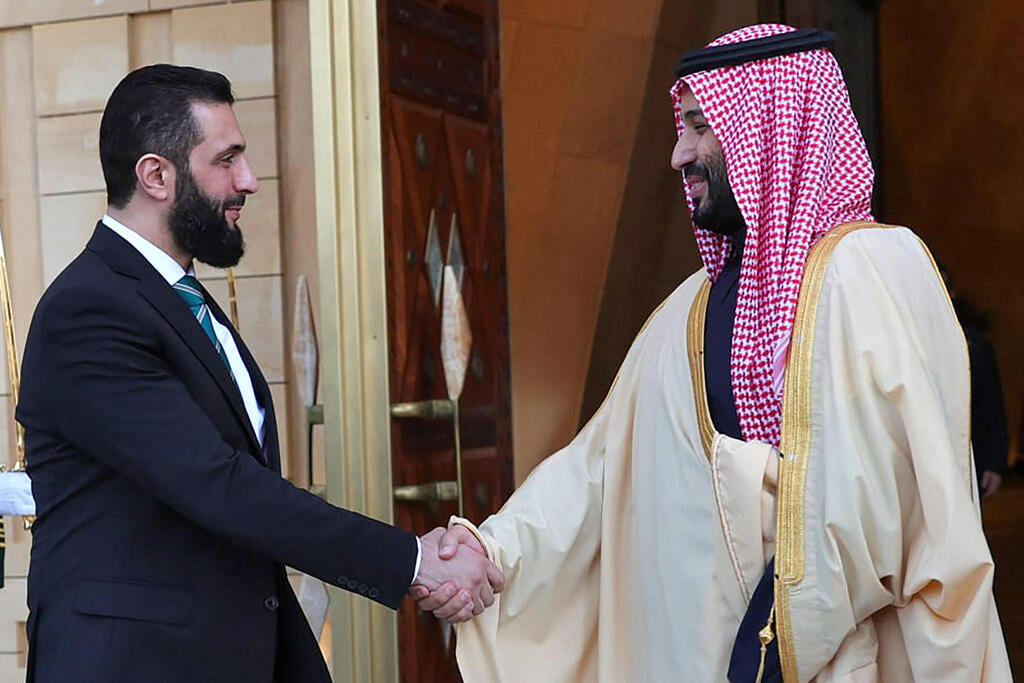
Saudi Arabia’s renewed embrace of Syria is not about reconstruction, reconciliation, or goodwill. It is about power, timing, and containment. The joint airline, telecom investments, and infrastructure deals announced with Damascus are the visible layer of a deeper Saudi offensive: locking in influence before Turkey and Qatar finish turning post-war Syria into a long-term extension of their own regional strategies.
Riyadh understands something many Western analysts still miss. Syria is no longer just a battlefield; it is a prize. Turkey embedded itself during the war through proxies, border economies, armed networks, and administrative penetration in the north. Qatar, meanwhile, is moving through cash, energy deals, media leverage, and flexible political networks that translate investment into quiet but durable influence. Left unchecked, Syria risks becoming formally unified but informally partitioned—governed not from Damascus, but from Ankara and Doha.
Saudi Arabia’s answer is blunt and unapologetic: buy the state. Telecommunications, aviation, ports, and infrastructure are not neutral sectors; they are the nervous system of sovereignty. Whoever wires Syria’s fiber networks, controls its airports, and finances its reconstruction doesn’t just rebuild roads—they shape intelligence capacity, elite loyalty, economic dependency, and political gravity. Money, here, is a cleaner weapon than militias, and far more durable.
This is where Riyadh’s rhetoric about “containing Islamism” gets real. The Saudi leadership is not waging a theological crusade. It is fighting political Islam as a transnational power structure that undermines state authority, empowers populist movements, and travels easily across borders. Turkey and Qatar thrive in that ecosystem. Saudi Arabia does not. Its model favors centralized, governable states—actors that can be pressured, bargained with, and folded into a regional order dominated by capital rather than ideology.
Geostrategically, Syria matters because it sits at the hinge of the Levant, the Eastern Mediterranean, and Gulf–Europe corridors. If Saudi Arabia becomes the primary gatekeeper of Syria’s reentry into the regional economy, it checks Turkey’s northern machinery, blunts Qatar’s networked leverage, and reasserts itself as the Arab system’s architect rather than its checkbook. This is not sentiment. It is strategic hygiene.
The bottom line is simple. Saudi Arabia is not rebuilding Syria because it trusts Damascus. It is rebuilding Syria because it refuses to let Ankara and Doha finish the job first. In the post-war Middle East, influence no longer arrives in tanks. It arrives on balance sheets, fiber cables, and runways—and Riyadh is finally playing offense.
Jose Lev Alvarez is an American–Israeli scholar specializing in Israeli security doctrine and international geostrategy.
Lev holds a B.S. in Neuroscience with a Minor in Israel Studies from The American University (Washington, D.C.), completed a bioethics course at Harvard University, and earned a Medical Degree.
On the other hand, he also holds three master’s degrees: 1) International Geostrategy and Jihadist Terrorism (INISEG, Madrid), 2) Applied Economics (UNED, Madrid), and 3) Security and Intelligence Studies (Bellevue University, Nebraska).
Currently pursuing a Ph.D. in Intelligence Studies and Global Security at Capitol Technology University in Maryland, his research focuses on Israel’s ‘Doctrine of the Periphery’ and the impact of the Abraham Accords on regional stability.
A former sergeant in the IDF Special Forces “Ghost” Unit and a U.S. veteran, Jose integrates academic rigor, field experience, and intelligence-driven analysis in his work.
Fluent in several languages, he has authored over 250 publications, is a member of the Association for Israel Studies, and collaborates as a geopolitical analyst for Latin American radio and television, bridging scholarship and real-world strategic insight.