
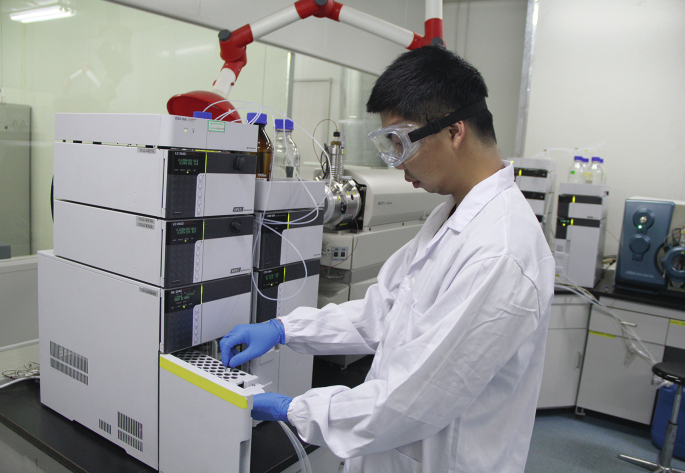
Organic contaminants such as antibiotics and per- and polyfluoroalkyl substances (PFAS) are released by pharmaceutical and industrial activities, respectively. Defined by their low volatility, chemical persistence, and widespread distribution, these organic contaminants accumulate in aquatic systems and biota, threatening ecosystem and human health. However, these contaminants are difficult to identify and quantify owing to their diversity (hundreds of compounds with various chain lengths) and low concentrations (parts per million). Analytical tools capable of resolving complex mixtures are therefore needed to evaluate the occurrence, transport and fate of these contaminants.
LC–MS can simultaneously monitor hundreds of compounds, making it well suited for large-scale and long-term environmental surveillance. For example, periodic LC–MS measurements of water from Xinglin Bay, Xiamen, were used to confirm that PFAS concentrations were below the enforceable maximum contaminant level. Precise mapping of pollutant occurrence across environmental compartments and spatial scales with LC-MS can underpin evidence-based regulation and management strategies.