
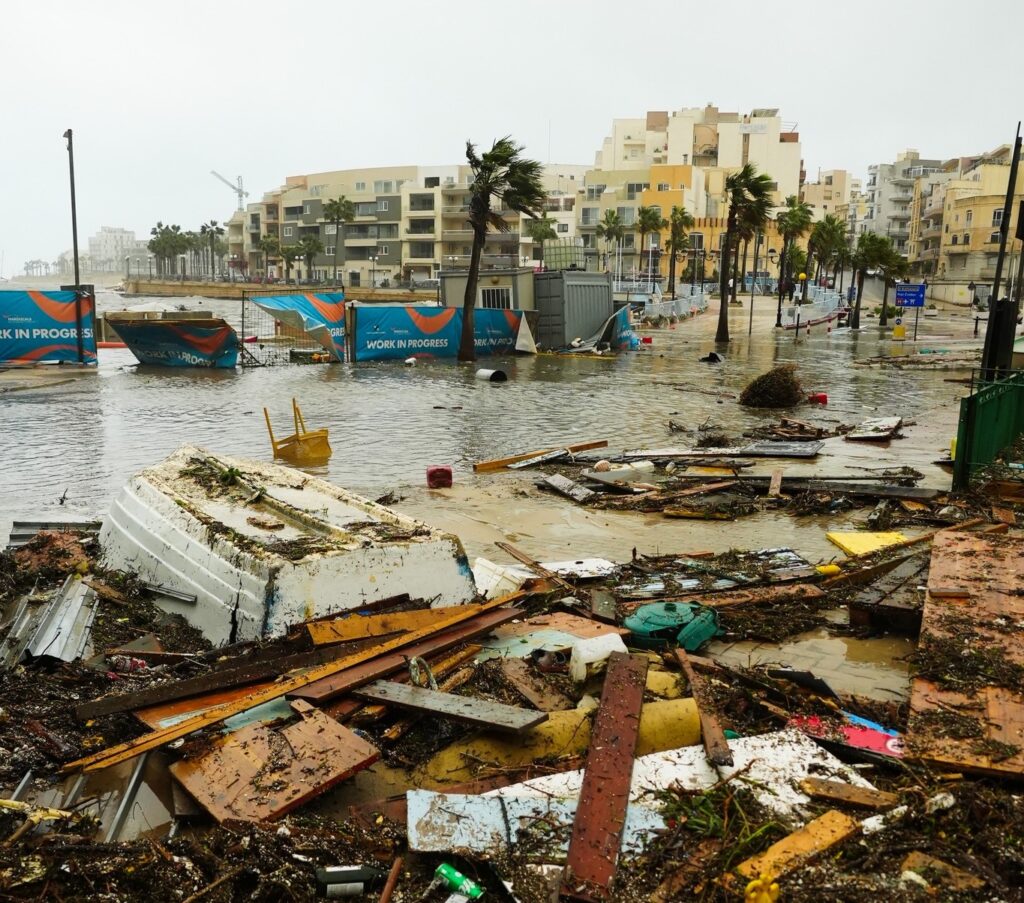
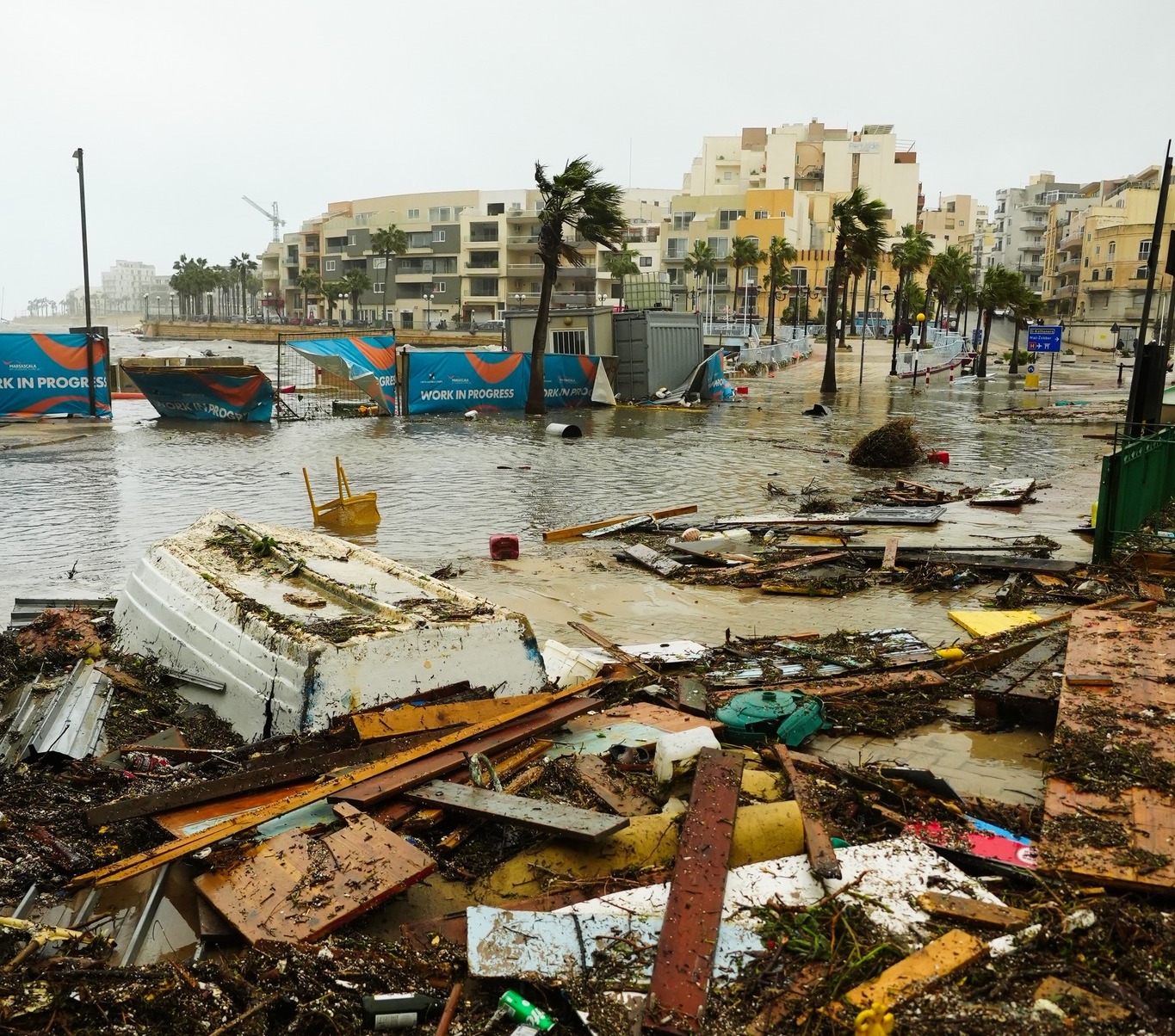
 Photo: Steve Zammit Lupi
Tista’ taqra bil-
Malti.
Maltese Members of the European Parliament have warned that current EU rules governing disaster relief funding are unfairly weighted against small states, effectively preventing Malta from accessing compensation after major natural disasters.
Under existing criteria, Malta must suffer damage of at least €121.5 million to qualify for assistance.
The concern was raised by Nationalist MEP David Casa in a letter to the European Commissioner responsible for disaster relief, following a plenary debate in the European Parliament on EU mechanisms such as the European Solidarity Fund.
Casa argued that although the eligibility rules are technically identical for all member states, they do not produce equal outcomes.
To qualify for aid, a country must record damage equivalent to 0.6 per cent of its Gross National Income. Maltese MEPs say this threshold is disproportionately high for a small country, leaving Malta with only one theoretical route to apply while setting the bar at a level that is extremely difficult to reach.
Casa said that claims of equal treatment are undermined by the practical effects of the rules, which create structural obstacles for small states. He called on the commissioner to exercise discretion in exceptional cases such as the damage caused by Storm Harry and urged a review of the framework to ensure it reflects the realities of countries with limited size and economic scale.
During the same debate, Maltese MEPs from across the political spectrum echoed these concerns.
They pointed out that while two alternative application routes exist, Malta is excluded from both. This is because the country is classified as a single region, and because the neighbouring-country option is effectively unusable. Malta’s only neighbour, Italy, would normally qualify for regional assistance rather than cross-border support.
Labour MEP Alex Agius Saliba said Malta contributes to the EU on the same basis as other member states and should therefore have equal access to solidarity funding. He questioned how the EU can speak of solidarity while maintaining a system that makes it almost impossible for small countries to benefit. He described it as discriminatory that regions such as Sicily can receive assistance while Malta cannot, solely because Malta is not divided into multiple regions.
Agius Saliba also called for increased support for localities such as Marsaskala, Marsalforn and Għar Lapsi, which are already experiencing the effects of climate change.
Other Maltese MEPs reinforced the criticism, with Thomas Bajada calling for fair treatment and Daniel Attard saying the EU is failing to consider the realities faced by small member states.
Peter Agius added that while Malta is complying with EU climate policies, it reasonably expects support when extraordinary events such as Storm Harry cause significant damage.
Momentum backs cross-party push
The push for reform has also been backed by civil society. The NGO Momentum has declared its full support for Maltese who have criticised the eligibility criteria of the European Solidarity Fund.
Momentum noted that Storm Harry caused extensive damage not only in Malta but also in Portugal, southern Italy and Greece. While the fund is intended to support member states affected by major natural disasters, the organisation said EU bureaucracy is making access particularly difficult for Malta because of its size.
Momentum leader Arnold Cassola criticised what he described as a ‘one size fits all’ approach, arguing that Malta’s size should not make it harder to obtain compensation for millions of euros in damage.
He said EU assistance should be granted swiftly and limited to law-abiding residents and businesses, stressing that those who consistently break the law should not be eligible for compensation.

