
Willow Kennedy
As U.S. electricity demand continues to rise, battery energy storage is increasingly positioned as a critical pressure-release valve for a grid operating with less margin. At the NAATBatt 2026 Annual Conference in Tucson, Arizona, Stryten Energy emphasized the role of domestically manufactured battery energy storage systems (BESS) in supporting reliability, flexibility, and resilience as demand grows.
According to the U.S. Energy Information Administration (EIA), U.S. electricity consumption is projected to reach 4,239 billion kilowatt-hours in 2026, exceeding the previous record set in 2024. Much of that growth is expected to come from commercial and industrial users, including data centers and manufacturing—segments where power quality, peak demand, and outage risk carry direct operational and financial consequences.
Storage as an Infrastructure Stress Response
Rather than framing storage as a long-term transition tool, Stryten positioned BESS as an immediate infrastructure response to tightening grid conditions. Battery systems can store energy from both conventional and intermittent sources and deploy it for peak shaving, frequency regulation, and resiliency applications—functions that become more critical as systems operate closer to capacity.
“Access to reliable, high-quality energy is a significant challenge facing our nation,” said Scott Childers, vice president of essential power at Stryten Energy, noting that integrating advanced battery storage into grid infrastructure is a foundational step toward resilience and energy independence.
Domestic Manufacturing and System Exposure
A central theme of Stryten’s presence at NAATBatt was domestic sourcing and manufacturing. As supply chains for critical energy technologies face geopolitical, trade, and policy pressures, U.S.-built storage systems are increasingly viewed as a way to reduce exposure while improving deployment timelines.
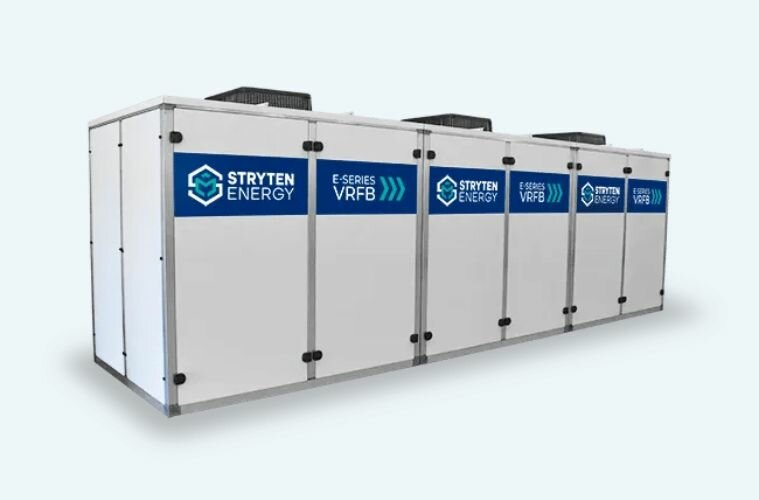
Stryten’s BESS portfolio is designed to scale across use cases—from commercial and industrial facilities to utility-scale applications—supporting demand management strategies such as valley filling and peak shaving. Real-time monitoring and control through the company’s inCOMMAND™ platform allows systems to be managed remotely, reflecting the growing need for flexibility and responsiveness as infrastructure stress becomes more dynamic.
Multiple Chemistries, Targeted Applications
Rather than promoting a single technology pathway, Stryten highlighted its range of battery chemistries, including advanced lead, lithium, vanadium redox flow, and hybrid configurations. The approach reflects a broader industry shift toward matching storage technologies to specific load profiles, duration needs, and resilience requirements.
As electricity demand rises and grid conditions tighten, battery storage is moving from a supplemental solution to a structural component of energy infrastructure. Stryten’s focus at NAATBatt reflects a wider recognition that managing infrastructure stress will require not just more generation, but greater flexibility, control, and resilience where demand is growing fastest.
For brands and agencies looking to reach the decision-makers who read E+E Leader:
Request the media kit and learn more about advertising and partnership opportunities.