
Published on
February 12, 2026
Spain is buzzing with excitement as skywatchers and travellers prepare for a rare total solar eclipse on 12 August 2026. This celestial event will plunge parts of the Iberian Peninsula into shadow, offering a breathtaking view that is expected to become one of the most talked-about events of the year. The last time mainland Spain witnessed a total solar eclipse was in 1905, making this a once-in-a-lifetime opportunity for visitors. Spain’s tourism industry is set to experience a huge boost, with travellers from all over the world flocking to witness the stunning spectacle.
The path of totality, where the Moon completely obscures the Sun, will pass through parts of northern and central Spain before heading out over the Mediterranean Sea. Major cities and regions such as A Coruña, Bilbao, Zaragoza, and Valencia, as well as the Balearic Islands, will be in the eclipse zone, making these prime spots for visitors seeking the best views. Even outside the totality area, cities like Madrid and Barcelona will experience a dramatic partial eclipse, adding to the event’s broad appeal.
Spain’s Solar Eclipse: A Celestial Moment the World Won’t Forget
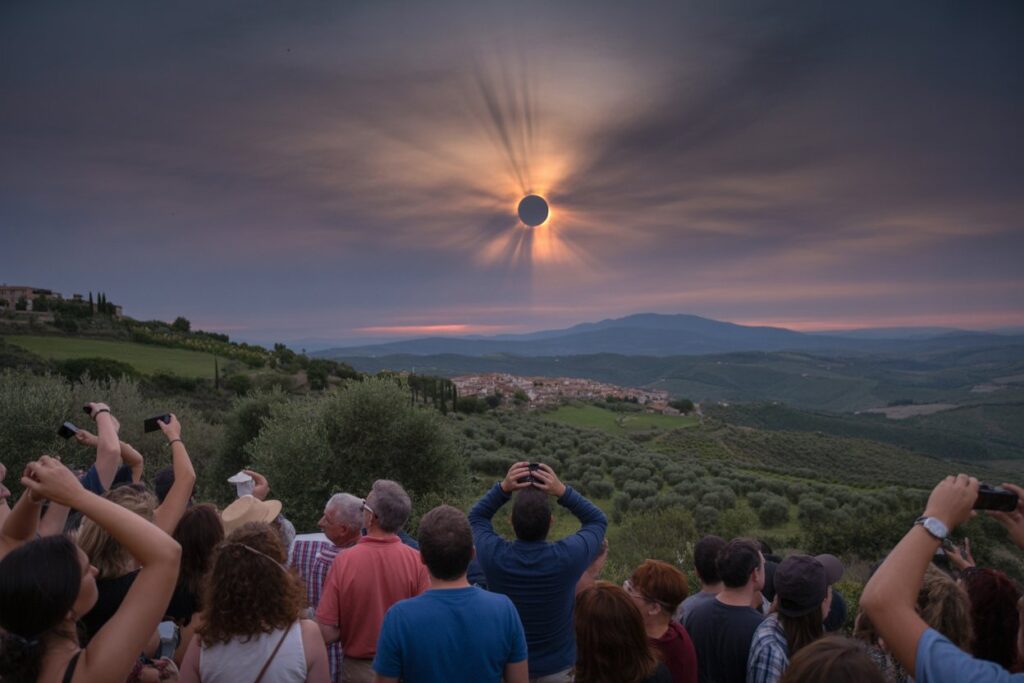
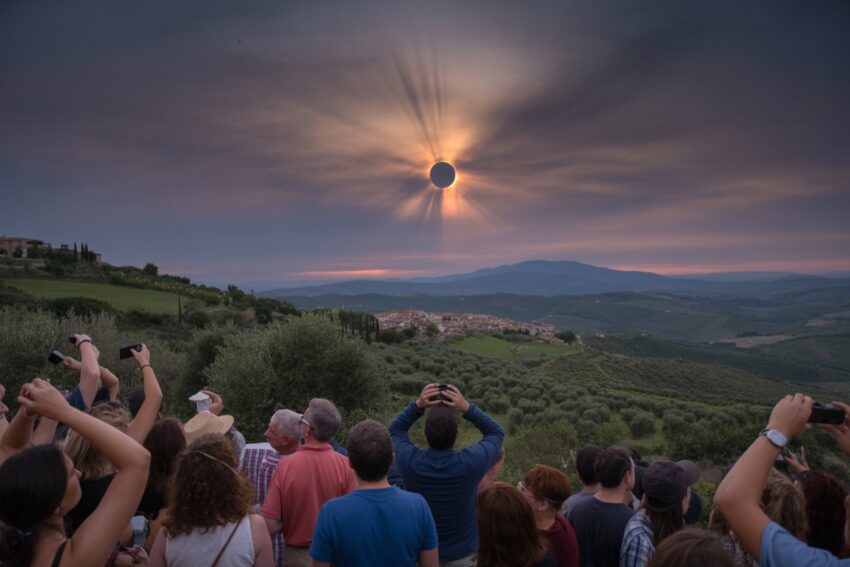
The August 2026 total solar eclipse will be a cosmic showstopper. As the Moon’s shadow travels across Spain in the late afternoon, the sky will darken for up to 1 minute 36 seconds in certain areas, with the Sun’s corona becoming visible around the Moon’s edges. Tourists and locals will gather in strategic locations to catch a glimpse of the extraordinary moment. These locations will be chosen for their clear horizon views and prime eclipse viewing opportunities as the sky darkens towards sunset.
Astro-tourists, people who travel specifically for astronomical events, have been booking accommodations well in advance. Popular areas such as Palencia, Cuenca, and Teruel are already seeing reservations for over a year ahead of the eclipse, as travellers vie for a front-row seat to one of the most spectacular natural events of the century.
The Balearic Islands and Northern Spain: Top Eclipse Viewing Destinations
The Balearic Islands — including Mallorca, Menorca, Ibiza, and Formentera — are expected to be among the top destinations for the eclipse due to their strategic location over the Mediterranean. The eclipse will take place near sunset, offering stunning sky views over the water, which is predicted to attract more than a million visitors to Mallorca alone. With flight searches and accommodation bookings already soaring, the island is bracing for an influx of travellers far beyond typical August numbers.
In northern coastal cities, such as A Coruña, the demand for hotel rooms has spiked by as much as 435% year-over-year, making them some of the most sought-after spots for eclipse viewing. Alongside the eclipse, regions such as La Rioja, San Sebastián, and Pamplona are also attracting eclipse enthusiasts who combine the allure of astronomy with the rich cultural experiences of Spain’s culinary and wine regions.
Advertisement
Advertisement
Spain’s Preparation for the 2026 Solar Eclipse: Managing Logistics and Crowds
Spain’s government and tourism authorities are working together to ensure that the eclipse event goes smoothly, providing infrastructure and crowd management strategies to accommodate the influx of visitors. An Interministerial Commission has been established to oversee transport, safety, and accommodation planning, while local governments have started working on crowd control measures to prevent overcrowding at the best viewing spots.
For rural areas such as Soria in Castilla y León, which traditionally has limited tourism infrastructure, the increase in hotel bookings has presented both a challenge and an opportunity. Local businesses are bracing for large crowds but also urging visitors to come prepared with essential supplies, as the region may lack some services typically available in larger cities.
Advertisement
Advertisement
Spain’s Global Astronomy Tourism Opportunity: The Eclipse and Beyond
The 2026 solar eclipse is more than just a skywatcher’s dream — it is part of Spain’s growing push to become a major hub for astro-tourism. As more astronomical events like total solar eclipses (including one in 2027) and an annular eclipse in 2028 draw global attention, Spain is positioning itself as a leader in travel and science tourism. This focus is expected to bring astronomers, photographers, and science enthusiasts to Spain in increasing numbers over the coming years.
The tourism industry is already gearing up with plans to host eclipse-themed festivals, guided sky-watching tours, and astronomy workshops that will allow visitors to learn more about solar events and engage with the science behind the eclipse. This focus on educational tourism will make Spain a must-visit destination for science lovers and travellers looking to combine culture, history, and spectacular natural events.
Important Travel Advice for Eclipse Visitors to Spain
Travel experts advise those planning to travel to Spain for the eclipse to book accommodations early, especially in popular locations near the eclipse path. Hotels in cities like A Coruña and Bilbao are filling fast, with many hotels already booked well in advance. Visitors should also ensure that their eclipse viewing equipment — such as ISO-certified eclipse glasses — is safe and ready for use, as regular sunglasses do not provide adequate eye protection.
With so much interest in the eclipse, flexible travel plans are recommended. Travellers should prepare for potential crowds, traffic delays, and a high demand for services in eclipse-viewing areas. Arriving early at designated viewing spots is also advised to ensure the best experience of this once-in-a-lifetime event.
Spain’s Celestial Showcase: The Eclipse That Will Define the Year
For millions of people across the world, the August 12, 2026 solar eclipse represents a unique opportunity to witness one of nature’s most awe-inspiring events, and Spain is ready to deliver. With its diverse regions, cultural richness, and newly established position as an astro-tourism destination, Spain is poised to make the eclipse a moment to remember for generations. Whether you’re travelling for the eclipse itself or planning to enjoy Spain’s sunset views, gastronomic delights, and rich cultural experiences, this is the event of 2026 that promises to be a life-changing experience.
