
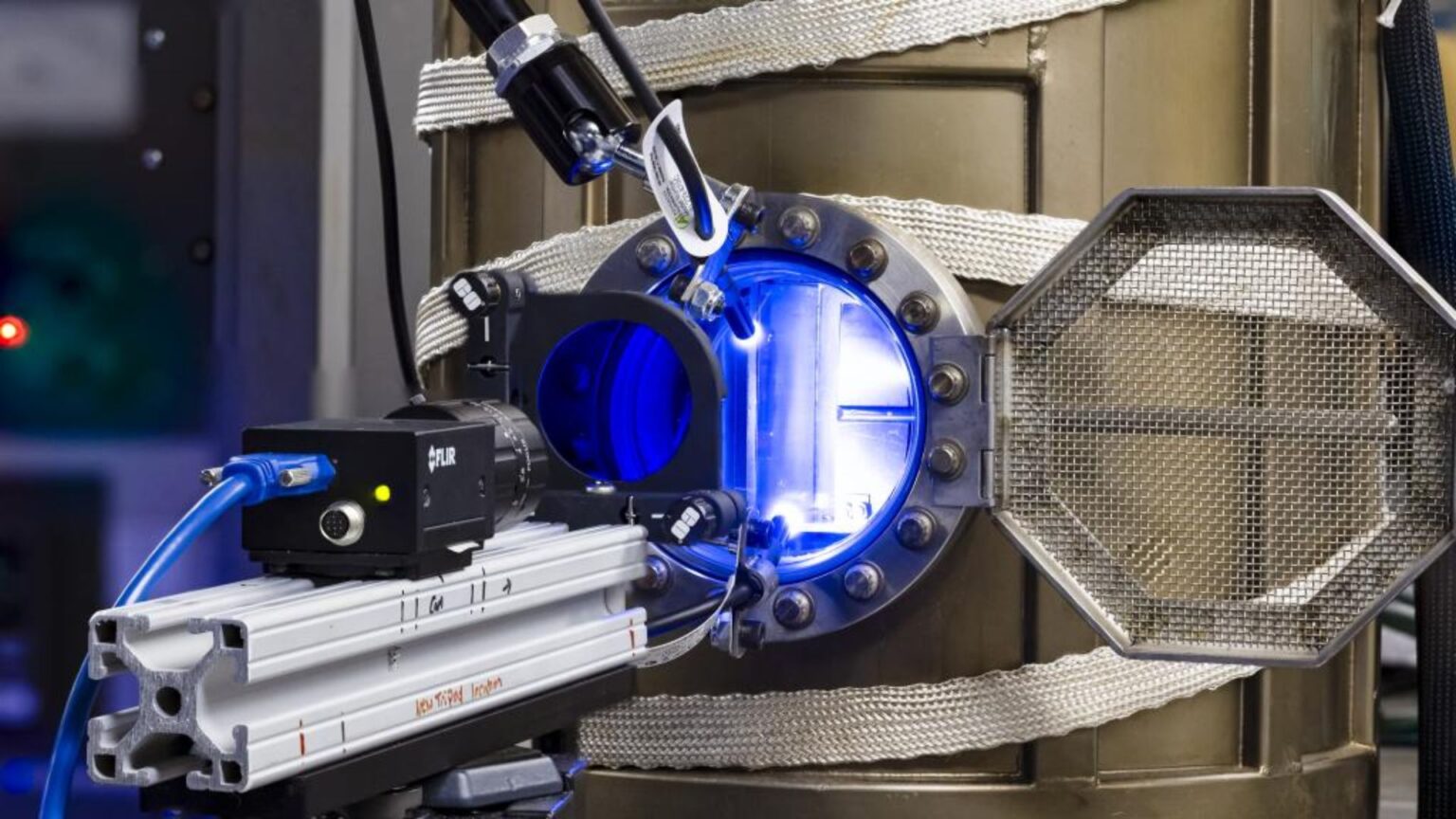
Researchers at Oak Ridge National Laboratory (ORNL) are centralizing their nuclear materials research within the new Translational Research Capability building. This move consolidates work previously distributed across more than a dozen locations to focus on how materials withstand the environments required for fusion reactor blankets.
The facility is designed to support the development of reactors that use molten salts and liquid metals.
These substances are efficient heat-transfer fluids that allow for high operating temperatures at low pressures.
“However, molten salt and liquid metals create harsh environments that can degrade the materials of the reactor, making corrosion research a critical area of inquiry to enable these concepts,” said the researchers in a press release.
Material challenges in high-temperature environments
In fusion and advanced fission designs, the degradation of structural materials involves several complex processes. Research indicates that key alloying constituents can become depleted, while materials may undergo embrittlement that leads to cracking and failure.
Strengthening phases within the metal can dissolve as detrimental phases develop at the atomic level, and mechanical stress combined with neutron irradiation can increase these effects.
The ORNL Corrosion Science and Technology Group is studying these interactions to determine which materials can remain stable over long periods.
This includes evaluating how metal alloys respond to corrosive elements while being exposed to high-energy neutrons produced by nuclear processes.
Developing the fusion blanket
In magnetic confinement fusion architectures, such as tokamaks and stellarators, a “blanket” component must surround the plasma. This blanket is intended to absorb heat and energy from neutrons to generate electricity and produce fuel on-site.
Using molten salts within this blanket is a primary concept under investigation, though it requires further experimental data to understand material interactions.
Rishi Pillai, lead of ORNL’s Corrosion Science and Technology Group, noted that while research has historically focused on sustaining plasma, the blanket presents its own technical requirements due to its multi-purpose nature and the materials involved.
“Research has been focused for decades on how to create and sustain fusion in the plasma, but the blanket is also a formidable challenge due to its multi-purpose nature and the complex material interactions that take place there,” Pillai said.
“Incorporating molten salts into the blanket is a concept that needs more experimental investigation to explore its potential for resolving this challenge.”
Historical expertise and modern testing
The lab’s current work relies on expertise developed during the Molten Salt Reactor Experiment in the 1960s and research for the liquid-metal-cooled Experimental Breeder Reactor II. Maintaining this technical knowledge has allowed the lab to support current industrial interest in these technologies.
To provide data for reactor deployment, the group is testing conventionally manufactured alloys, additively manufactured components, and specialized coating systems. The research combines physical observations with computer modeling to analyze material performance under reactor conditions.
“This unique combination of competencies makes ORNL the leading lab to tackle the fission and fusion challenges,” concluded Pillai.