
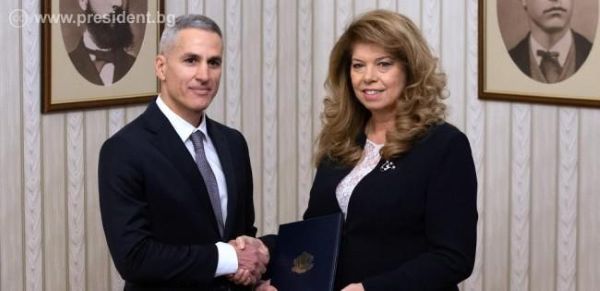
Bulgarian President Iliana Iotova has taken significant steps to address the ongoing political instability in the country by appointing Andrey Gyurov, a senior official from the Bulgarian National Bank, as the interim prime minister until the national elections scheduled for April. As deputy governor of the National Bank, Gyurov will lead a caretaker government focused primarily on ensuring a fair and transparent electoral process in a nation preparing for its eighth election in five years. The President stated that the urgent and adequate solution to the problems facing Bulgaria will depend on the shared political responsibility between the acting executive branch and the National Assembly.
The persistent political uncertainty in Bulgaria, a member of both the European Union and NATO, has undermined public confidence in governmental institutions and created opportunities for the rise of populist and far-right movements. Additionally, this environment has increased the potential for Russian hybrid influence within the country. President Iliana Iotova said that Andrey Gyurov will present his proposed cabinet members within the next seven days. Following this proposal, she will review and approve it, subsequently establishing the election date, which is anticipated to be 19 April.
“I interpret Mr Gyurov’s statement ‘under clear principles and without hidden conditions’ as a request to conduct the elections in alignment with the expectations of Bulgarian citizens and to assume joint political responsibility with the current National Assembly in addressing critical issues facing our country.”
President Iotova expressed her gratitude to the parliamentary groups that participated in the consultations, which helped define the agenda for the caretaker cabinet. These groups demonstrated a collective understanding of the primary challenges confronting Bulgaria, including the need for immediate measures to control prices, stabilise the state’s finances in euros with a budget independent of the euro, regulate electricity prices, provide swift assistance to the most vulnerable households, resolve the Petrohan case, and fulfill commitments to foreign policy partners while pursuing a foreign policy that serves Bulgaria’s interests.
The President expects Mr Gyurov to present a cabinet formed without political coercion. He will be responsible not only as Prime Minister but also for selecting the ministers he appoints. “They will not be my choices. Mr Gyurov is accountable to the National Assembly, where he and the caretaker cabinet will formally take the oath,” emphasised the head of state.
At 50 years of age, Gyurov boasts an extensive academic and professional background. He holds a bachelor’s degree in economics from Truman State University in Missouri and a PhD from the University of Vienna in Austria. He held senior positions in academia and European financial institutions, in addition to serving as a lawmaker and floor leader for the reformist political party We Continue the Change.
In late 2025, widespread protests erupted in Bulgaria, driven by public discontent over corruption, social injustice, and perceived oligarchic influence, ultimately leading to the resignation of the governing coalition led by the centre-right GERB party. Since then, several attempts to establish a new government within the fractured parliament have failed.
Mario Bikarski, a senior analyst for Eastern and Central Europe at Verisk Maplecroft, remarked that Gyurov’s appointment reflects President Iotova’s intention to select a candidate not affiliated with GERB or DPS, the two main parties targeted by the protests. “This appointment will strengthen the opposition in advance of the upcoming snap election and will clarify the policy priorities of the presidency,” Bikarski said, as reported by The Associated Press.
This year, Bulgaria adopted the euro. The decision to appoint a central bank representative as prime minister indicates a commitment to achieving macroeconomic stability during this transition, The Associated Press notes.
Nonetheless, Bikarski expressed concern that the forthcoming election might not effectively resolve the enduring political crisis. He predicts that the election could result in three similarly sized blocs within parliament, with smaller parties facing the risk of falling below the 4% threshold for parliamentary representation. According to Bikarski, the likelihood of electoral consolidation restoring stability remains low, as all three political blocs may struggle to secure a governing majority.
This article used information from The Associated Press.