
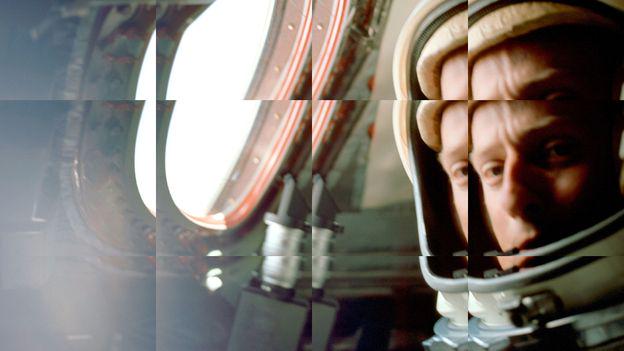
Einstein correctly predicted that time slows when you're flying fast, but to experience "time dilation" most spectacularly, you'd have to travel into a black hole, says astrophysicist Chris Lintott.
https://www.bbc.com/future/article/20231117-time-dilation-planes-einstein-relativity-black-holes
Time travel and black holes….
byu/TheMiningAlchemist inspace
2 Comments
You’d have to travel around one or in a gravitational field so strong that time dilates, you don’t technically have to go into one. Although, it would most certainly be a one way trip, however you look at it.
While some theoretical models suggest rotating black holes aka Kerr holes could contain closed time like curves that theoretically allow for traveling to the past, these places are believed to be unstable and physically inaccessible and even if you could somehow access it, the universe has a way of stopping any information from going to the past and breaking causality, there is always something, physicists have tried (with equations), trust me.
Every event has a cause, and effects cannot precede their causes. The universe ensures this order through physical constraints most notably the speed of light, which prevents information from traveling faster than light and breaking the temporal order of events.
While some interpretations of quantum mechanics or like wormholes suggest ways to circumvent this, wormholes are very unstable and collapse immediately when something enters.
You could travel to the future, in fact, if you fell into a black hole, you would see the entire future of the universe happen and when you reached the singularity, you would reach, from your perspective, the end of time itself. That’s at least what Einstein’s general theory of relativity states.
However, black holes are increasingly considered quantum, or “macroscopic quantum,” objects and we all know what happens to Einstein’s theory on that scale.
So yes, you could travel to the future, however, it would most definitely be a one way trip and you couldn’t relay any information because it would break the law of causality.
In other words, you are allowed to go to the future, but sharing what you saw and know is forbidden.
Quite poetic, if you ask me.
Be mindful that pop-sci articles like these run the risk of dumbing sophisticated math down to the point where the words don’t reflect reality:
>If you could pick up a television signal, then you could watch the rest of humanity’s broadcasts until the Sun’s evolution into a red giant swallows the planet, albeit at speed.
AFAIK, in GR, the energy of this incoming “television signal” (or any other radiation) blueshifts to infinity, and while we don’t expect that because of QM and other effects, the embedded energy would still be catastrophically high. Also, as best we understand it, the event horizon is a one‑way causal boundary: once you cross it, no signal from the outside universe can reach you once you’ve passed *Tmax*, which doesn’t take long, even for stellar mass BHs. This also means that time dilation within the event horizon isn’t what we think it is outside the event horizon.
This statement is also unlikely:
>This means their experience of time could be fundamentally changed – and they might even be able to move back and forth in time.
Given that inside the event horizon GR predicts that time becomes spacelike and vice versa, I take it that the author is suggesting that rather than our experienced 3D movement in space, you now have “3D” movement in time. But your proper time to the singularity is fixed by the geometry. That’s milliseconds to minutes or hours, depending on the size of the hole, the causal structure is still one‑way. You have a future light cone, and it points toward the singularity.
Of course, we don’t really know what’s beyond the event horizon. GR suggests a singularity. QM suggests something else. But either way, it’s a weird place that even astrophysicists seem to struggle to put into words.