
Since Dec. 28, 2025, a severe economic crisis has sparked anti-government protests across the Islamic Republic of Iran, questioning the survival of the theocratic regime. The unrest has been followed by a bloody crackdown, which has resulted in between 5,000 and 20,000 deaths, making it one of the largest massacres in modern Iranian history. Inevitably, the uprising raises questions about the future of the Iranian regime. Not only has it lost support among its citizens — whose protests have become increasingly relevant in recent years — but its survival is threatened by Israel and the United States of America, which have already bombarded the country during the 12-Day War in July 2025.
In such a context, the possibility of a coup d’état or regime collapse cannot be ruled out. Moreover, in such scenarios the outbreak of a civil war is not a remote possibility, since the Iranian opposition is far from united. Furthermore, in some regions — such as Balochistan and Kurdistan — there are strong and active separatist or autonomist groups, which not only challenge the Iranian regime, but also the centralized structure of nation.
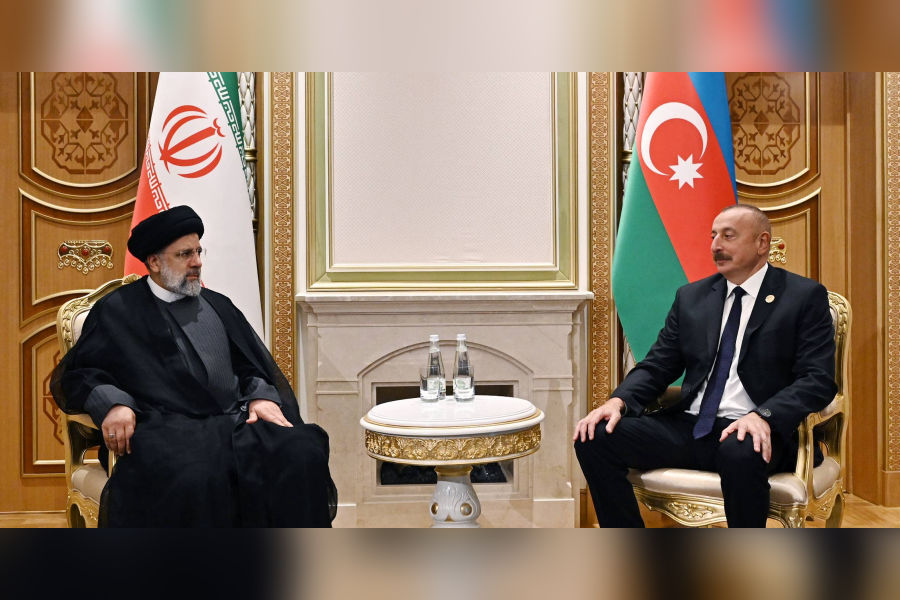
However, this situation also raises questions about the stability of Transcaucasia, particularly regarding the role of the Azerbaijani Republic. In fact, relations between Baku and Tehran can be described as ambiguous. On the one hand, Heydar Aliyev and his successor Ilham have never contested the legitimacy of the borders between the two countries, nor have they shown any sympathy for the Iranian opposition. However, the ghost of Pan-Azerbaijanism is far from having disappeared. Iran contains four Azerbaijani-speaking provinces: East Azerbaijan, West Azerbaijan, Ardabil and Zanjan. These territories — commonly known as Iranian Azerbaijan or Southern Azerbaijan — have historically been claimed by pan-Turkists and Azerbaijani nationalists.
When Caucasian Tatars established their own political entity in 1918, they chose to call it Azerbaijan, although eastern Transcaucasia was not commonly labeled with such a name. This decision was all but casual: in fact, the Turkic Muslim nationalist elite perceived the two banks of the Arax as part of the same nation, hoping they would eventually “reunify” in the future. Such an aspiration was not fulfilled; however, it didn’t vanish, despite the Sovietization of Azerbaijan in 1920.
On the contrary, the Soviet regime exploited such irredentist ideals intermittently. During the Leninist period, communist Azerbaijan was depicted as an advanced and free Muslim nation, meant to be a model for the whole Islamic world, especially for the Turkic peoples in neighboring countries. This line was halted by Joseph Stalin in the 1930s, and resumed in 1945 during the Muscovite occupation of Iran. That year, the Soviets established a puppet regime in Iranian Azerbaijan, reviving the myth of pan-Azerbaijanism. However, lack of indigenous support and international pressures led to the failure of such a project.
During the 1950s and ‘60s, a “literature of longing” emerged, including poetry and prose that mourned the separation of Azerbaijanis across the Arax River and expressed hopes for cultural and national reunification. Irredentism remained dormant until the late 1980s and the early ‘90s, when the main nationalist and anti-communist party founded during the Perestroika period — the so-called “Popular Front of Azerbaijan” — began to promote the union between the two banks of the Arax River. When this political party fell into disgrace due to the 1993 coup d’état, the pan-Azerbaijanist ideal started to decline. Indeed, Heydar Aliyev focused his efforts on regaining Karabakh, reducing the international isolation of Baku and cultivating cordial relations with Moscow and Tehran.
Nowadays, Ilham Aliyev doesn’t officially embrace territorial claims against Iran. Nevertheless, several incidents sparked anxiety in the neighboring country. For example, on Dec. 10, 2020, Turkish president Recep Tayyip Erdogan — invited by his Azerbaijani counterpart – attended the Victory Parade in Baku. There, he recited lines from the controversial poem Gülüstan, written by Bakhtiyar Vahabzadeh in 1959. The text laments the separation of the Azerbaijani people, divided between Iran and the Soviet Union. Unsurprisingly, Erdogan’s speech was met with anger and firm condemnation in Iranian society.
Aliyev’s speech at the Ninth Summit of the Organization of Turkic States on Nov. 11, 2022 provoked similar reactions. During the event, the dictator drew attention to the situation of Iranian Azerbaijan: “The young generation of the Turkic world should have the opportunity to study in their mother tongue in the countries of their residence. Unfortunately, the majority of the 40 million Azerbaijanis living outside Azerbaijan are deprived of these opportunities. The education of our compatriots living outside Turkic states in their mother tongue should always be on the agenda of the organization. Necessary steps should be taken in this direction.” It must be noted that the Congress of World Azerbaijanis — a pan-Turkist organization founded by Heydar Aliyev in 2001 — has frequently been associated with rhetoric critical of Iran and with irredentist ideas, promoting the notion of a unified Azerbaijani nation across the Arax River.
Despite the persistence of pan-Azerbaijani dreams, the possibility of their materialization is very low.
Not only would an Azerbaijani invasion of Northern Iran spark fierce condemnation from the international community, but it would threaten the very existence of Aliyev’s dictatorship.
According to estimates, there are more Azeris in Iran than in the Azerbaijani Republic: thus, the annexation of the so-called “Southern Azerbaijan” would overturn the demographic balance, causing political and social instability. In fact, most southerners don’t support separatism or irredentism, considering themselves part of the Iranian nation.
Moreover, they have little reason to appreciate Ilham Aliyev, whose regime is heavily corrupt and authoritarian. It should also be noted that there are noticeable cultural differences between the two banks of the Arax River. Iranian Azerbaijanis are bilingual, speaking Farsi alongside their Turkic dialects, and they use the Arabic script instead of the Latin or Cyrillic alphabets. Their linguistic varieties have been heavily influenced by Persian, while northern dialects contain many Russian loanwords.
They also tend to be more religious and socially conservative than their northern counterparts, since Iranian lands have never experienced Soviet-sponsored atheism. Ironically, the “reunification” dreamed by pan-Turkist nationalists would harm Baku by incorporating a large, distinct and potentially disloyal population. That is why Aliyev is unlikely to pursue annexation of those lands, as doing so could ultimately lead to the disappearance of his realm.
While the unification of the two regions appears unfeasible, the prospect of a Baku-friendly separatist regime in Tabriz seems no more realistic. As mentioned earlier, the vast majority of the local population wishes to remain within Iran, rejecting both separatism and irredentism. The territory could secede from the Iranian state only through military coercion, which Baku is unlikely to pursue.
First, international law aside, it would be difficult for the Azerbaijani army to control a vast and hostile region populated by over nine million people, who could potentially engage in acts of resistance. Moreover, such a campaign would likely entail significant human and economic losses, not to mention domestic opposition. This initiative would also undermine the strategic advantages enjoyed by Baku in its conflict with Armenia, its historical rival.
Despite the ties between Azerbaijan and Israel, the former doesn’t desire a secular, democratic and pro-Western Iran.
In fact, the democratization of its neighboring country could create a spillover effect, becoming an appealing alternative for post-Soviet authoritarianism. Further, in such a scenario, Baku would lose relevance from a Western perspective. Currently, Azerbaijan is regarded as the only secular and stable Muslim nation in the area. It is also rich in hydrocarbons and maintains friendly ties with Israel.
However, if Iran were to become a democracy aligned with the West, its gas and oil could be available for European countries, reducing its dependence on Baku’s energy resources. The neutralization of the Islamic theocracy could diminish the geopolitical importance of the Caucasian country for Washington and Jerusalem. Inevitably, this conjecture would harm Azerbaijan’s strategic position vis-à-vis Armenia.
In addition, in recent years, Tehran has maintained an ambivalent stance toward the regional conflict between Yerevan and Baku, avoiding explicit support for either side. This balanced position could be attributed to several factors: one is the Islamic nature of the Iranian government, which constrains potential pro-Armenian policies. Without the theocracy, Tehran could adopt a more Yerevan-friendly stance — a prospect clearly feared by Aliyev.
Thus, Baku would likely adopt a prudent approach, avoiding direct involvement in Iran’s domestic affairs. At most, it might offer limited and cautious support to autonomist or separatist groups in the Azerbaijani-populated provinces, carefully calibrating its involvement to avoid triggering regional escalation. Any military intervention and annexation attempts would carry prohibitive risks, while discreet support for local movements allows Baku to exert influence without destabilizing the region or undermining its own security.
In the end, while the idea of uniting Azerbaijanis across the Arax River may appeal to nationalist sentiment, in practice, cautious engagement and limited support for sympathetic groups are the only realistic tools available to advance Baku’s interests.