
Published on
February 17, 2026
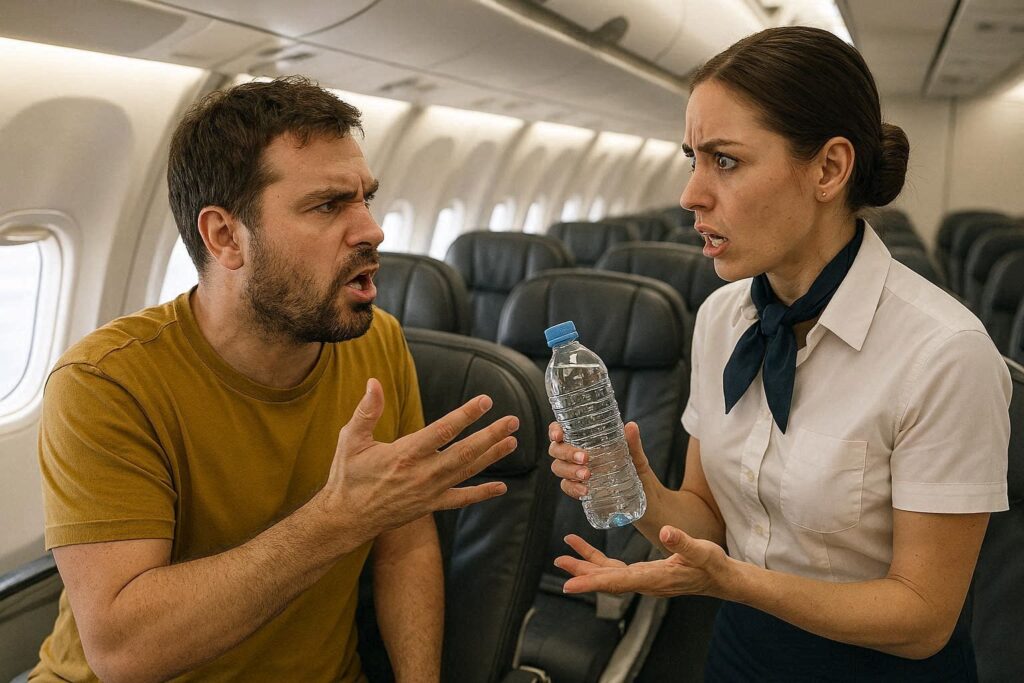
Image generated with Ai
A routine cabin service aboard British Airways operating within the United Kingdom unexpectedly evolved into an online discussion that extended as far as Estonia, after a passenger described an uncomfortable interaction over something as ordinary as a sealed water bottle. What might otherwise have been dismissed as a minor inflight inconvenience was amplified across digital platforms, where questions were raised about cabin crew service standards, passenger expectations, and the importance of clear communication during short-haul flights.
The episode, reported by OMAAT, centered on a traveler who experienced difficulty opening a bottled drink provided during service. While such assistance is commonly extended in commercial aviation, the manner in which the request was handled became the focal point of wider debate. As attention grew, the incident was framed not merely as an isolated misunderstanding, but as a reflection of broader service dynamics within modern air travel. The discussion has since drawn interest from aviation observers in the United Kingdom and beyond, including audiences in Estonia, where aviation photography and commentary communities closely follow airline developments.
Incident Overview
The event took place on a short-haul flight operated by British Airways, where cabin service is typically conducted under time constraints. During beverage distribution, a passenger reportedly found herself unable to open a sealed water bottle. It was explained that such difficulty had been encountered on previous flights as well, and assistance had routinely been requested without issue.
On an earlier journey, help had reportedly been provided promptly after the challenge was mentioned. However, on the later flight in question, a different response was perceived. According to the account that circulated online, the cabin crew member appeared to question the request before eventually opening the bottle. The interaction was later described as uncomfortable, with the passenger stating that the tone used felt dismissive.
Advertisement
Advertisement
Although the exchange itself was brief, it gained attention after being shared publicly. Aviation commentary platform OMAAT highlighted the story, leading to wider discussion among readers and industry observers.
Cabin Service Pressures on Short-Haul Routes
Short-haul flights, particularly within the United Kingdom, are characterized by compressed service windows. Cabin crew members are required to complete safety checks, distribute refreshments, respond to passenger needs, and prepare for landing within a limited timeframe. Efficiency is therefore prioritized alongside safety.
Advertisement
Advertisement
In such environments, requests that fall outside the expected service flow may sometimes be met with momentary hesitation. However, industry norms indicate that assistance with minor tasks, including opening beverage containers, is frequently provided when clearly requested. This is especially the case when passengers communicate physical discomfort or limitations.
The situation aboard British Airways was not linked to safety concerns or broader operational disruption. Rather, it highlighted the delicate balance between efficiency and individualized service. Even minor interactions can carry weight when passengers feel their needs are not fully acknowledged.
Communication and Perception in Confined Spaces
Air travel places individuals in close proximity for extended periods, often under conditions of stress or fatigue. Within this setting, tone and body language may be interpreted more strongly than intended. In the reported case, the absence of detailed explanation during the second interaction may have contributed to confusion.
It was later noted that the passenger did not initially explain her recurring difficulty in opening bottle caps during the later flight. Without this context, the request may have appeared unusual to the crew member. In professional service environments, clarity is often essential in preventing misunderstandings.
Observers within aviation communities in both the United Kingdom and Estonia noted that such incidents are rarely indicative of systemic service failure. Instead, they are frequently shaped by brief lapses in communication that escalate once shared online.
The Role of Social Media in Aviation Narratives
Modern aviation incidents, even minor ones, are increasingly documented and disseminated across social platforms. What once would have remained a fleeting moment between crew and passenger can now become part of global discourse within hours.
The involvement of OMAAT ensured that the event reached a broader audience beyond the immediate flight. Discussions emerged around whether expectations of inflight assistance have evolved in recent years, particularly as airlines refine service models to balance cost efficiency and customer satisfaction.
In this case, no official statement indicating misconduct or policy breach was reported. Instead, attention remained centered on the interpersonal dynamic and how it was perceived. The amplification of such stories underscores how customer experience in aviation is shaped not only by service delivery but also by narrative framing.
Practical Hydration Strategies for Travelers
The episode has also prompted renewed discussion about passenger preparedness. Travelers who experience difficulty opening standard bottle caps may benefit from advance planning. Carrying a reusable water bottle equipped with an easy-open lid is widely recommended.
At major airports such as Heathrow in the United Kingdom, water refill stations are available after security screening. These facilities enable passengers to remain hydrated without depending solely on sealed inflight packaging.
Preparation is particularly beneficial for individuals who are aware of recurring physical challenges. By anticipating such needs, reliance on inflight assistance can be minimized, thereby reducing the potential for awkward exchanges.
Service Expectations in Contemporary Aviation
The broader debate touches on evolving service expectations. Airlines operating short-haul routes, including British Airways, must manage high passenger volumes while maintaining consistent service standards. Cabin crew training emphasizes professionalism, efficiency, and attentiveness. However, the human element remains central.
Even in highly regulated environments, interactions are influenced by tone, timing, and individual perception. A request perceived as routine by one party may be interpreted differently by another. The confined and time-sensitive nature of air travel can intensify these perceptions.
Industry analysts in the United Kingdom have noted that passenger satisfaction is increasingly influenced by small gestures. Acts such as assisting with luggage or opening bottles, while minor, can significantly shape overall impressions of an airline.
A Balanced Perspective
No operational disruption, safety issue, or policy violation was reported in connection with the incident. The discussion instead reflects the complexities of service interaction in a fast-paced aviation setting.
While the passenger’s discomfort was acknowledged within online forums, it was also observed that communication clarity could have altered the outcome. The situation illustrates how easily misunderstandings can arise when expectations are not explicitly expressed.
For airlines, such episodes serve as reminders of the importance of maintaining consistent service tone, even during routine tasks. For passengers, awareness of personal needs and proactive preparation can help avoid unnecessary stress.
Bottom Line
A brief exchange aboard British Airways operating within the United Kingdom evolved into an online debate that reached audiences as far as Estonia, highlighting the nuanced relationship between service delivery and passenger perception.
The incident underscores how small moments in confined cabin environments can take on broader significance once shared publicly. Clear communication, mutual understanding, and thoughtful preparation remain essential components of a smoother travel experience for both crew members and passengers alike.
