
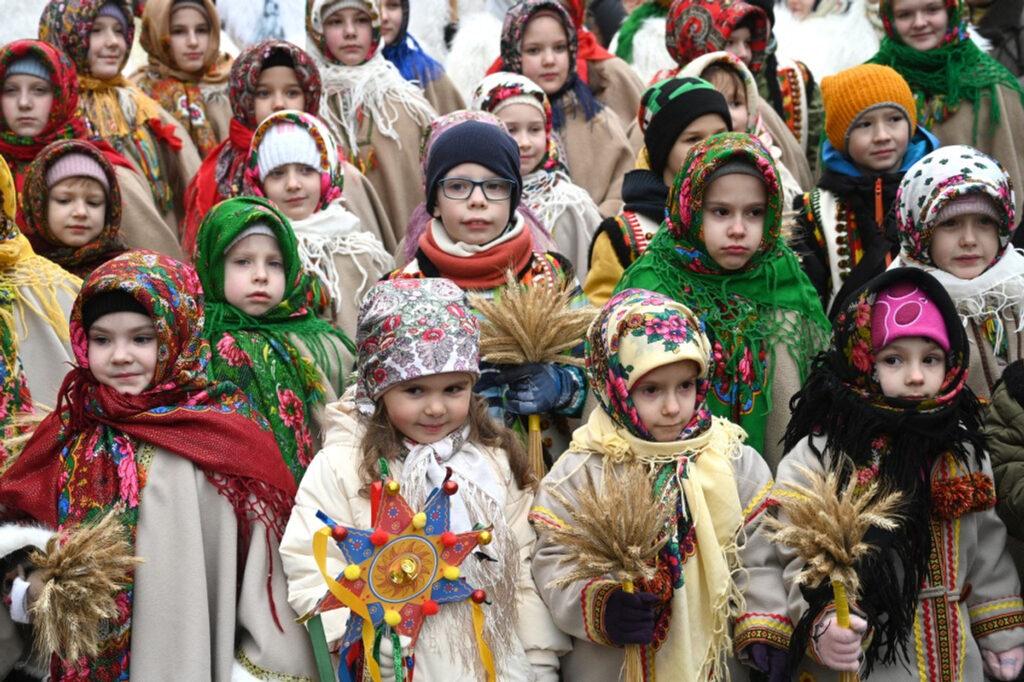
Two thousand Ukrainian children have successfully been recovered from Russian control as part of the Bring Kids Back UA initiative, President Volodymyr Zelensky said on Tuesday.
In a statement posted to Telegram, the Ukrainian leader commended government officials, civil society groups and international partners for their role in securing each child’s return, but stressed that the effort is far from over.
Follow our coverage of the war on the @Kyivpost_official.
“Today we have an important result – 2 thousand Ukrainian children who were successfully returned home from Russian control as part of the Bring Kids Back UA initiative,” Zelensky said.
However, he cautioned: “We still have a long and difficult road ahead of us. Thousands of Ukrainian children still remain hostages of Russia, becoming victims of its crimes every day.”
Since Russia launched its full-scale invasion in February 2022, Moscow has faced widespread allegations of forcibly transferring Ukrainian children from territories seized by its forces.
Official figures place the number of children seized from their homes against their will at almost 20,000.
However, a report from the Humanitarian Research Lab at Yale School of Public Health estimated that as many as 35,000 children listed as missing could be in Russia or Russian-occupied territories.
In 2023, the International Criminal Court issued arrest warrants for Russian President Vladimir Putin and Russia’s commissioner for children’s rights, citing the “war crime of unlawful deportation” of Ukrainian children.
Other Topics of Interest
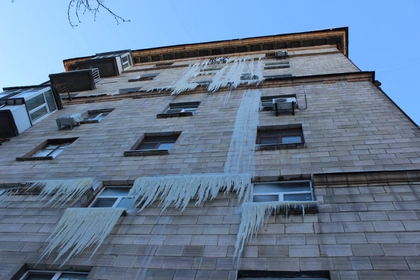
Living Behind Icy Walls: a Look Inside a Frigid Kyiv Apartment Building
This is how Kyivites deal with the Kremlin’s attempts to freeze them into submission. Kyiv Post visits a building damaged due to Russian terror aimed at cutting off heat in subzero temperatures.
Testimonies from Ukrainians who managed to flee Russian occupation have revealed a deliberate campaign by Moscow to re-educate and indoctrinate children, pressuring them to accept Russian citizenship and sever ties to their Ukrainian heritage.
“We will not stop until we return every Ukrainian child home,” Zelensky vowed.
“We are grateful to everyone who joined this fight for the future of our children, our country and the entire free world,” he added.
Pressure, propaganda and erasure of identity
Dmytro Lubinets, Ukraine’s parliamentary commissioner for human rights, celebrated the result on X, but emphasized: “More than 1.6 million Ukrainian children remain in temporarily occupied territories — under pressure, propaganda, and attempts to erase their identity.”
“I call on international partners to increase pressure and sanctions for the deportation of Ukrainian children,” the ombudsman added.
He also called on media and human rights organizations to sustain attention on the issue.
In December, Lubinets revealed that Russia had sent some of the thousands of children it had abducted from occupied Ukraine to North Korea for purposes of “re-education.”
He claimed that a network of 165 “camps” for indoctrinating children exists across occupied Ukraine, Belarus, Russia and North Korea, a hermit autocracy that has intensified cooperation with Moscow in recent years.
Since October last year, US First Lady Melania Trump has said that she has been making efforts to reunify Ukrainian children forcibly deported to Russia with their families through an “open channel of communication” with Moscow.
However, some experts raised fears about the efforts, saying the First Lady’s rhetoric, which described Ukrainian children “residing in Russia” as having been “displaced to the Russian Federation because of front-line fighting,” appeared to characterize Russia as passive.
“It is kids who were taken as a war crime and kids who are being militarized and were abducted by a state — not lost in the war. Language matters,” said Nathaniel Raymond, executive director of the Yale Humanitarian Research Lab.