
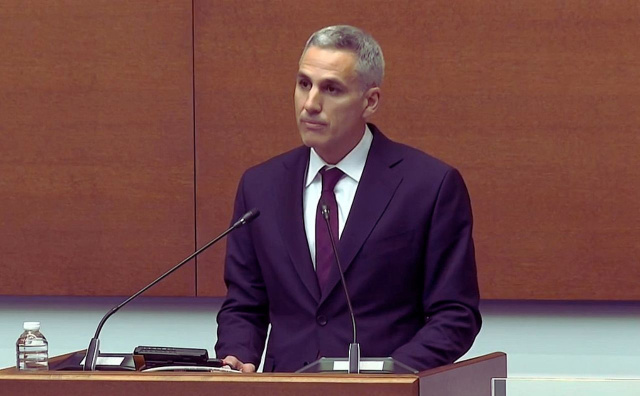
Following the swearing-in of the caretaker cabinet, Prime Minister Andrey Gyurov addressed the National Assembly, emphasizing a government guided by reason rather than hysteria. He made it clear that his administration would not promise immediate reforms or miracles, but would focus on ensuring fair elections and maintaining stability. Gyurov outlined seven central tasks his cabinet would prioritize during its mandate.
Further reading: Oath Taken: New Caretaker Cabinet Takes Over in Bulgaria, Focus on Elections, Budget Stability and Rule of Law
The first priority is securing financial stability through the management of a long-term budget, implementing measures linked to Bulgaria’s euro adoption plan, and preparing both the upcoming long-term and the 2026 regular budget. Second, funds will be allocated fairly across municipalities, ensuring resources reach citizens rather than being diverted for political campaigns. Third, the government aims to maintain the regularity of pension payments, social benefits, and assistance to vulnerable groups, including the unemployed and socially disadvantaged.
Further reading: New PM Gyurov: “No Revanchism, Only Fair Elections and Accountability”
Gyurov highlighted the importance of restoring legality within the prosecutor’s office and ensuring the proper functioning of justice through specific mandates for the Supreme Judicial Council. Fifth, the government will set clear standards for judicial nominations proposed by the Minister of Justice, strengthening transparency in key appointments. Sixth, citizen security will be guaranteed through strict adherence to legal norms, transparent communication from institutions, and a commitment to prevent secrecy or misinformation. Finally, the caretaker government will focus on organizing elections abroad in coordination with the Central Election Commission and Bulgarian communities, pledging personally to oversee a fair process.
Further reading: Bulgaria: Who’s Who in Andrey Gyurov‘s Caretaker Cabinet
The Prime Minister addressed the public directly, acknowledging Bulgaria’s current internal tensions and global uncertainties. He stressed that democracy is a practical response to crises, and that elections remain the legitimate mechanism for citizens to shape a representative parliament. Gyurov reinforced Bulgaria’s Euro-Atlantic commitment as a matter of strategy and security, and pledged support for lasting peace in Ukraine and beyond, emphasizing cooperation with the European Union, NATO, and the UN.
Gyurov reflected on the widespread public protests demanding democracy and responsible governance, asserting that fair elections require civic maturity and active participation, along with strict adherence to the law. He called on citizens to vote on April 19 and ensure their ballots are respected. The caretaker government, he emphasized, will remain impartial, without party affiliations, and will seek cooperation from all parliamentary groups to enact necessary legislative measures.
Further reading: Will Radev and the Liberals Join Forces? What the Caretaker PM Choice Really Means for Bulgaria
The Prime Minister underlined the importance of compliance with the Recovery and Resilience Plan, describing its funds as a matter of trust rather than aid. He reaffirmed that the government operates without hidden agreements or coalition mathematics, committing to governance marked by integrity, responsibility, and transparency. Gyurov highlighted the broad expert composition of the cabinet, combining political experience with independence from party structures, aiming to demonstrate that responsible management can achieve tangible results.
In practical terms, the caretaker cabinet will begin work immediately. Acting Finance Minister Georgi Klisurski outlined three financial priorities: securing funds for the upcoming elections, extending the current Budget Law to maintain state operations beyond March 31, and unblocking delayed municipal payments under the National Investment Program, totaling 460 million euros. Klisurski also commended former Finance Minister Temenuzhka Petkova for successfully introducing the euro, noting its smooth circulation over the past two months.
Earlier on the same day, the formal transfer of power took place at the Council of Ministers, where Rosen Zhelyazkov handed over authority to Andrey Gyurov. Following the ceremony, ministers returned to their respective departments to continue administrative transitions and ensure a smooth handover. The caretaker government will govern until a regular cabinet is formed, focusing on elections, transparency, and the responsible management of public resources.