
Hello from Belgrade! This week’s newsletter is a little later than usual because it has been a deadline-heavy few days. For related reasons there will be no Café Europa next week, but normal service will resume at the beginning of March.
In the meantime, please enjoy an interview with Jussi Sorjanen, artistic director of & Espoo, Finland’s international theatre about his ambitions for the venue.
These kind of pieces take time to research and write. Paid subscribers help to support my work while also allowing me to keep this Substack largely paywall-free, though there will be (very) occasional paid subscriber bonus posts, like this one on in which I have a conversation with myself about the new West End production of Born With Teeth. I currently have a little under 100 paid subscribers. If you’d like to join their number you can do so for £5 a month or £50 a year. Or just share this newsletter with someone you think might find it interesting. That helps too.
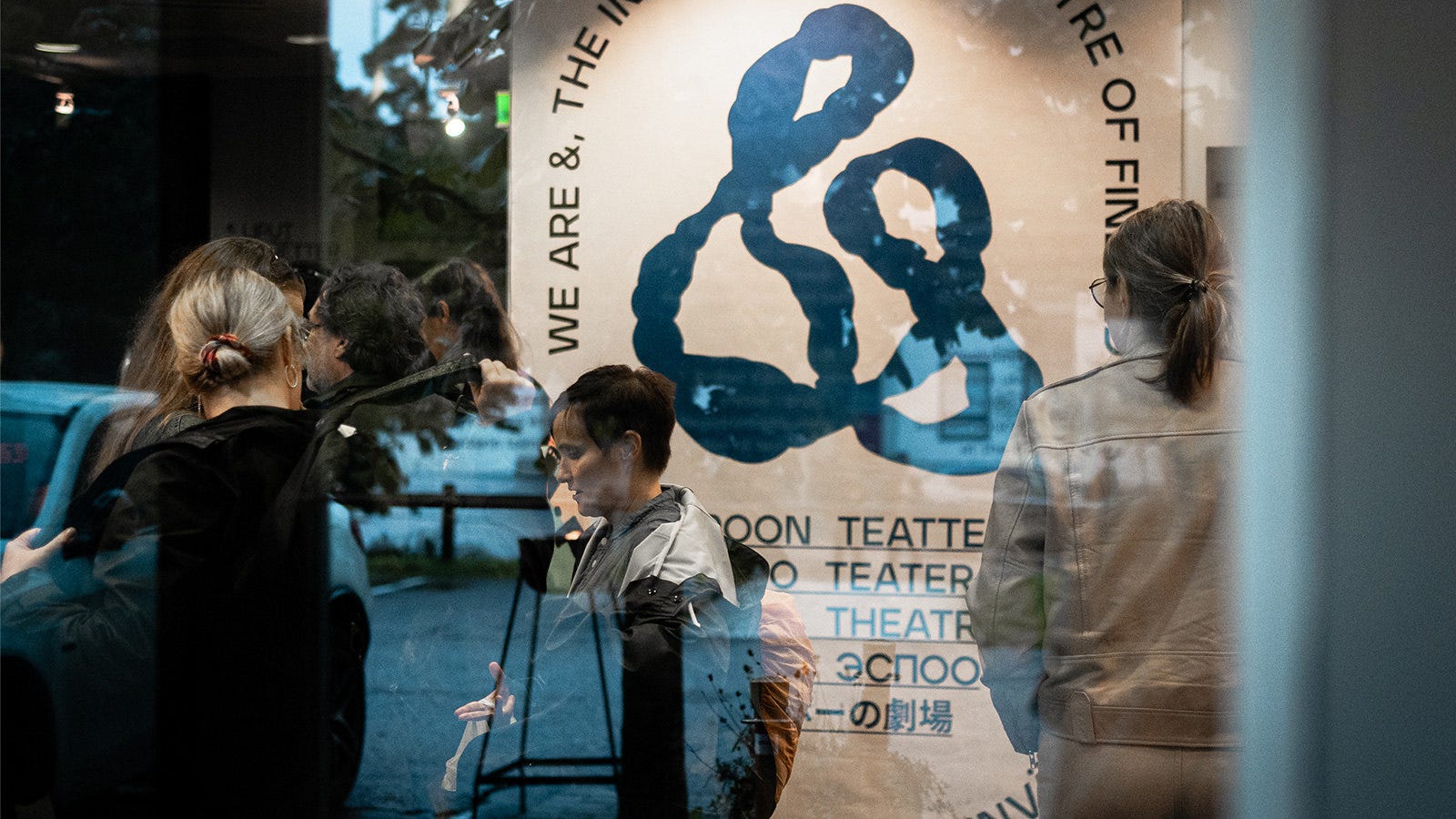
In 2023, the Espoo City Theatre in Finland’s second city was renamed. It’s now called &, a name which, perhaps unsurprisingly, has been the source of some debate. “Everybody was talking about it, everybody had an opinion, and mostly they felt this could not be the name of the theatre,” says Jussi Sorjanen, & Espoo’s artistic director since 2024.
Founded in 1988, the theatre already had a reputation for staging contemporary work, presenting up to ten international guest productions each year. In recent years they’ve played host to Miet Warlop, Fix&Foxy, NT Gent and Internationaal Theater Amsterdam. During Covid, the former artistic director, Erik Söderblom, decided to create a new visual identity for the theatre that would differentiate it from other theatres in Finland as well as appealing to a wider audience, one which was as well versed in visual art and cinema as in theatre.
The ampersand symbol “&” is pronounced “et”, which is also the initials of Espoon Teatteri, so there is a kind of logic to it in Finnish, Sorjanen says, but that didn’t stop the Language Centre of Finland wading in and criticizing the new name. Even now they get regular feedback telling them to “change the stupid name of the theatre,” he laughs.
The name change was not just an exercise in rebranding; it was about crafting a new identity for the theatre. Though it’s the country’s second city, Espoo is essentially a satellite of Helsinki. A lot of people think of it as an extension of the Helsinki suburbs, he says. They wanted to create a cultural space with a distinct identity, one that set & apart from other theatres in the country. It is the only state-funded theatre in Finland to not have its own resident ensemble and the only theatre that regularly presents visiting international performances as well as commissioning work by Finnish artists.
As an international theatre, the goal is “to introduce our Finnish audience something that they wouldn’t see otherwise,” he says. Not only does this benefit audiences, who get to see some of the most talked about shows in Europe, but also Finnish theatre professionals who get to engage with, and be inspired by, different theatrical approaches.
Theatre is fundamentally a place where people come together, he says. This takes on a bigger significance when you consider the current geopolitical situation. Finland has the longest border with Russia of all the NATO countries and while it is also connected to Sweden and Norway in the north of the country, in some ways, he says, it is an island. “When people talk about European theatre, we are not even on the map,” he says, “which is something that we want to overcome.”
With Trump talking about taking over Greenland or withdrawing the US from NATO, there’s also an increasing sense of existential threat in the region, he says, and an increasing necessity for Finland “to be connected and to be a strong part of the international performing arts community. Theatre, he says, increasingly feels like both “an important tool for resistance and space for practicing democracy.”
Sorjanen is not short of ambitions for the theatre. & Espoo currently has two venues in the Tapiola district of the city. Plans for a new theatre building were approved last year, and a flexible, 455-seat space is slated to open in 2029, almost doubling the theatre’s audience capacity. Sorjanen is keen to put & Espoo on the international map and he hopes that in a few years’ time people will come to recognise it as one of the “most relevant theatres in Europe,” a venue that presents “the most exciting contemporary theatre artists out there” as well as introducing “the most exciting Finnish artists to the international community.” From a programming perspective he is drawn to work that is “explosive and energetic, but also with political relevance.” The wilder the work, he says, the more the audience seem to go for it.
In March it will host &Fest, a biannual festival of international work intended to open up space for debate. The 2026 line-up has been curated under the banner ‘Learning to Disagree.’ “We shouldn’t be afraid of disagreeing,” says Sorjanen, “and we need to learn strategies for that.” The festival programme consists of seven international performances including Łukasz Twarkowski’s The Employees, Carolina Bianchi’s Cadela Força Trilogy Chapter 1: The Bride and Goodnight Cinderella, Patrick Blenkarn and Milton Lim’s gaming experience asses.masses (described in the Guardian as an eight-hour “video game about donkeys, reincarnation and organised labour, which is political, unpredictable and replete with ass puns”) and The Gummy Bears Great War, by Sardinia-based company Batisfera, a table-top performance using the titular sweets and an abundance of plastic dinosaurs to explore themes of conflict. With the festival, Sorjanen wanted to programme work that would trigger discussion, work to which it was impossible to remain indifferent, and for the festival to act as “a space for talking about society, art and democracy.”

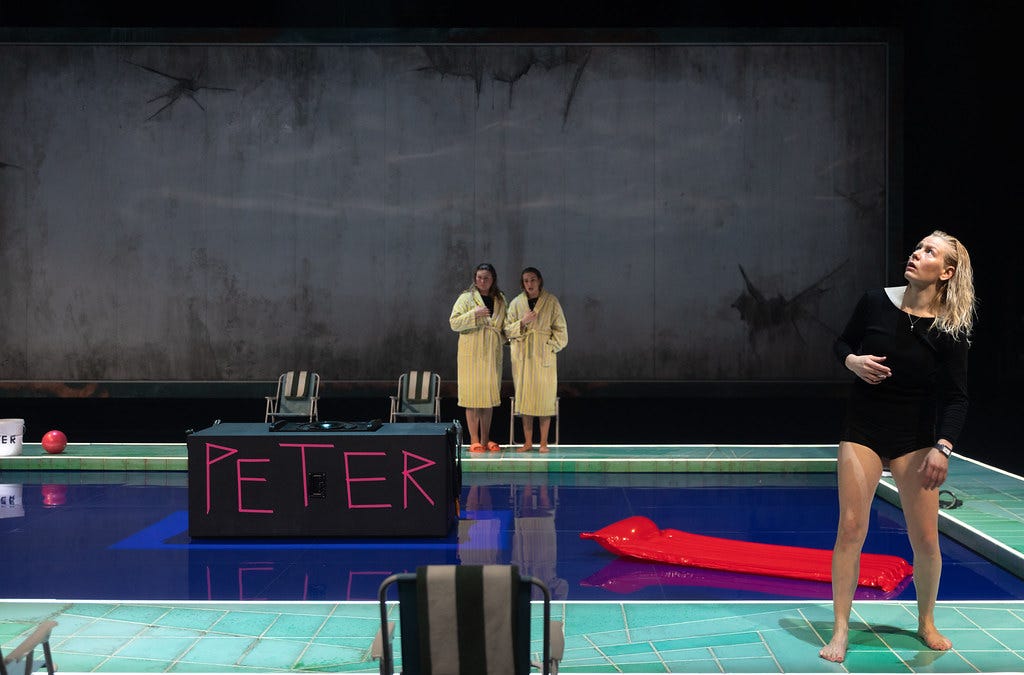
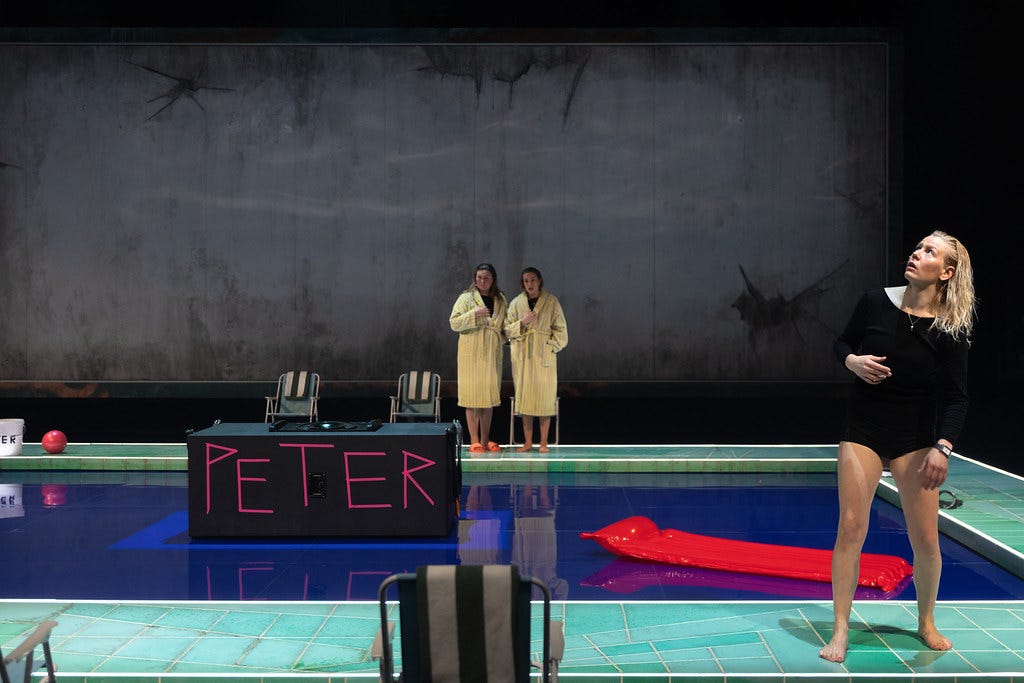
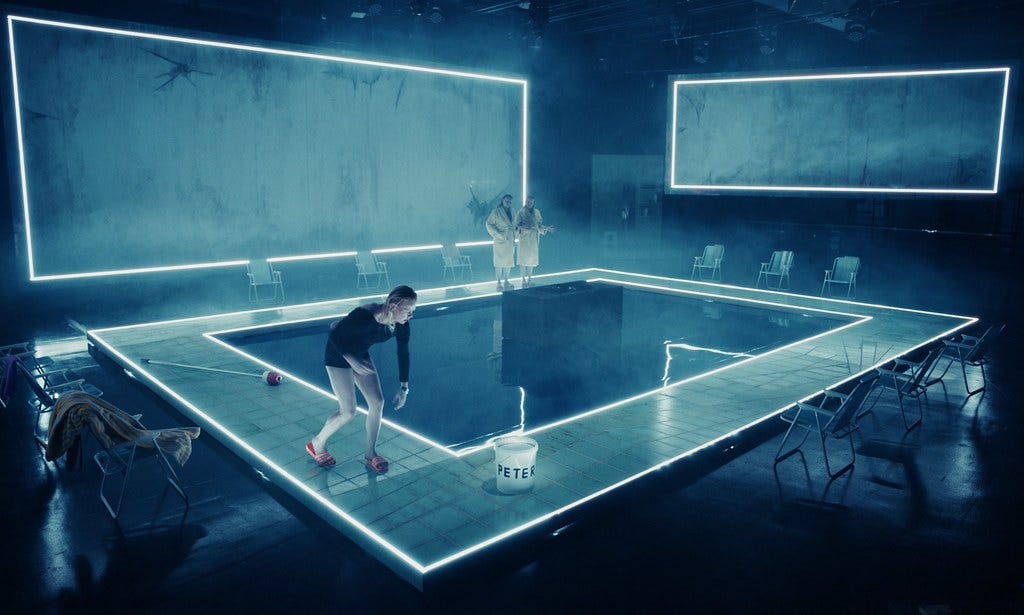
& Espoo doesn’t just programme international artists. It also commissions work by Finnish theatre makers. In February they coproduced Peter Lived in a House – a dolphin from dot to dot, by the Helsinki-based collective Wauhaus, a piece inspired by a notorious 1960s NASA-funded project in which scientists attempted to teach a dolphin to speak English. Sorjanen is keen to bring the work of Finnish artists to wider international attention and increase Finland’s cultural visibility, though this presents a number of challenges.
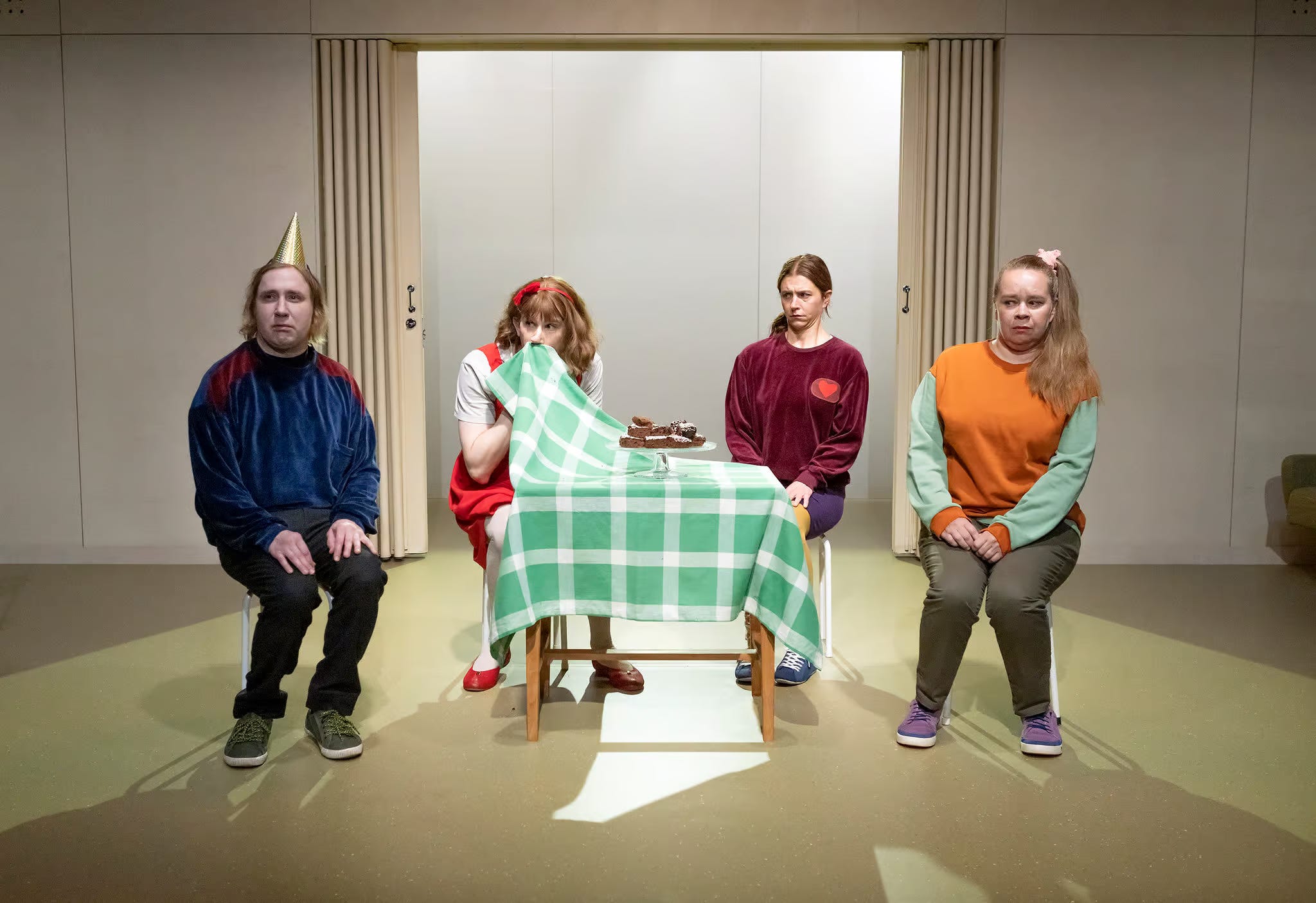
While there are a few Finnish theatre artists with an international profile – directors like Saara Turunen and Kristian Smeds, and the Glitcher collective – there are not all that many of them. There are a number of systemic, geographic and historical reasons for this, believes Sorjanen. Finnish theatre differs from central European theatre because of how strongly rooted it is in the folk tradition. There was no court theatre, no royal patronage; it was an artform of the people and Finland’s best-known playwrights were working class, he explains. Historically Finland has been caught between Sweden and Russia. It was part of the Kingdom of Sweden until 1809, and it was only in the mid-19th century that the Finnish language was elevated from peasant status to be recognised as an official language. The credo of the Fennoman nationalist movement was: “Swedes we are no longer, Russians we do not want to become, let us therefore be Finns.” Swedish names were Finnicized, the Finnic culture was celebrated and the Finnish National Theatre, the oldest Finnish-language professional theatre in the country, was founded in 1872. They “artificially built a Finnish identity through art,” says Sorjanen. “This is why theatre has historically played a strong role in national identity.” (This article delves deeper into the ‘generational crisis’ currently faced by Finnish institutional theatre and the struggle to attract younger audiences).
In his mission to bring Finnish artists to wider international attention, he says, “we kind of had to start from scratch.” At & Espoo, “we try to find the most exciting and interesting Finnish theatre artists whose work we think could also communicate in the international sphere.” “We have some great theatre artists,” he says, “but they don’t have a route out,”
Late last year, at Dresden’s Fast Forward festival for young directors, the jury – of which I was a member – was struck by the work of Pauli Patinen, a master’s student at the Theatre Academy of the University of the Arts, Helsinki, whose graduate piece Steal This Performance, was an intensely meta theatrical essay on the impossibility of originality created by stitching together moments from the work of other artists, from Miet Warlop to Florentina Holzinger. It was magnificently cheeky, but it held together admirably well (and contained a deliciously meta rendition of Radiohead’s Creep). Patinen – reflecting here on the differences between Finnish and German approaches to theatre education – is a dramaturg at & Espoo, which I think speaks to the kind of work they’re hoping to produce.

As Sorjanen explained in this interview, international co-production is increasingly becoming central to the way the theatre operates. They have recently been a coproducer on Euripides Laskaridis’s Lapis Lazuli, as well as work by Mario Banushi, Jaha Koo and Anna Smolar. Later this year, Saara Turunen’s acclaimed Room Trilogy will be remounted at the theatre in a coproduction with the Riksteatern’s which will tour Sweden. & Espoo has also recently been invited to join Prospero, a network of theatres and festivals which supports artists to develop their careers internationally.
Before, he says, “we were basically just presenting international artists.” Now the theatre is becoming more artistically engaged, which is “changing the course of our international work.”
A round-up of festivals, premieres and other upcoming events over the next seven days.
Rage – I neglected to include this in last week’s round-up, but Milo Rau’s latest production, a piece set in the near future which explores the rise of nationalist and fascist movements in Europe and the US, opened in Stockholm on 31 January. There are further performances at Dramaten, Sweden’s national theatre, this week with an English captioned performance on 24 February.
The Master and Margarita – Russian director Timofey Kuljabin, whose past productions include a version of A Doll’s House told via the characters’ smartphones – Ibsen with emojis, basically – turns his attention to Bulgakov’s classic novel in a new production at the Schauspiel Frankfurt. It premieres on 21 February.
NT Mini 2026 – Bulgaria’s Ivan Vazov National Theatre presents a range of work from its repertoire, all of which premiered over the last two years, to an international industry audience. Over the course of five days, there will be a choice of 13 productions including two promenade performances. This showcase takes place in Sofia between 24 and 28 February.
Thanks for reading! If you have any feedback, tips, or thoughts about this newsletter, you can reach me on natasha.tripney@gmail.com