
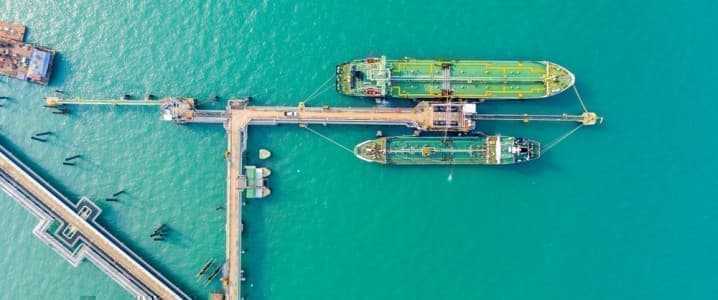
Georgia’s Black Sea port of Kulevi, a hub for Black Sea oil shipments, may soon face European Union sanctions over allegations that the Georgian government has used it to help Russia move crude needed to finance its war in Ukraine. The potential sanctions place Azerbaijan, whose state-controlled energy entity SOCAR owns an oil terminal in Kulevi, in a tough spot.
According to RFE/RL, which obtained a draft of the EU’s upcoming 20th sanctions package, the bloc is considering banning transactions with four ports allegedly used for Russian oil exports, including Kulevi in western Georgia. If adopted, the sanctions would mark a major escalation in how Brussels targets Moscow’s export routes and its suspected international abettors.
The draft document asserts Kulevi is being used “for the maritime transportation of crude oil or petroleum products produced in Russia or exported by Russian ships that use irregular and high-risk shipping practices,” RFE/RL reported.
Reuters also reported that the sanctions package, if adopted, would add Kulevi in Georgia and Karimun in Indonesia to the EU blacklist.
SOCAR launched the Kulevi oil terminal in 2008. Concerns about the port’s role in the illicit trafficking of Russian crude intensified late last year after the tanker Kayseri sailed out of Novorossiysk in Russia and delivered more than 105,000 metric tons of oil to a newly built refinery in Kulevi that is a separate entity from the SOCAR-owned facility. The refinery is owned and governed by individuals closely linked to Georgia’s ruling Georgian Dream party.
Although Georgian authorities have denied any involvement in sanctions-busting activities, Kayseri was later added to the EU’s sanctions list targeting vessels connected to Russia’s so-called shadow fleet.
The refinery is operated by Black Sea Petroleum, owned by Georgian Dream-linked businessman Maka Asatiani. A Russian investigative outlet reported that Asatiani’s son has business ties with the son of a senior official of Russia’s military intelligence service, the GRU. In September, former Georgian Dream economy minister Levan Davitashvili was appointed chairman of the refinery’s board, highlighting the ruling party’s growing political and financial stake in the project.
Prime Minister Irakli Kobakhidze has dismissed allegations of wrongdoing, claiming that his government has been transparent in providing EU officials with substantiating documentation. “We don’t think there’s anything going on there that goes against the sanctions policy,” Kobakhidze said. “We comply with the sanctions regime. This is our stance, and as for specific issues, we are ready for consultations with the EU.”
State-controlled media outlets in Azerbaijan contend that sanctions against Kulevi are unjustified. “The attacks on Georgia and the Port of Kulevi in Brussels appear to be an attempt to distract attention from those who truly control a significant portion of the shadow fleet—companies from Greece and Malta,” stated a commentary published February 14 by the government-connected outlet Caliber.
Sanctions on Kulevi, the Caliber commentary added, “could negatively impact the functioning of the port as an important element of Middle Corridor infrastructure.”
If approved, it would be the first time the EU has directly targeted ports in third countries over Russia-related sanctions. The package also proposes using an anti-circumvention tool against a third country for the first time. New restrictions would ban sales of metal-cutting machines and communications equipment, including modems and routers, to Kyrgyzstan. The EU has also proposed sanctioning two Kyrgyz banks, Keremet and OJSC Capital Bank of Central Asia, allegedly for enabling sanctions-busting transactions utilizing cryptocurrency. An unnamed bank in Tajikistan is also being targeted for sanctions, according to Reuters.
For Georgia, sanctions on Kulevi would be sure to further strain already frosty ties with Brussels. The country’s EU accession talks have stalled, and Georgian Dream officials are subject to diplomatic visa restrictions in EU member states. Brussels is also weighing a possible suspension of visa-free travel over the government’s crackdown on democratic standards.
In a symbolic snub, EU Enlargement Commissioner Marta Kos toured the South Caucasus last September, visiting Armenia and Azerbaijan but pointedly skipping Georgia. The United States seems to be sending a similar message: US Vice President JD Vance spent three days in the region, February 9-11, stopping in Yerevan and Baku, but bypassing Tbilisi.
By Eurasianet