
Recent official data published by the National Statistics Office (NSO) confirms that Malta is moving in the wrong direction when it comes to waste management.
The 2024 statistics show that, instead of reducing waste generation and improving recycling performance, the island is producing more waste, sending more of it to landfill, and falling further behind its legally binding EU targets.
In 2024, total solid waste generated in Malta surged to approximately 3.5 million tonnes, an increase of about 17.6% over the previous year. This dramatic rise was largely driven by construction, demolition and dredging waste.
More concerning, however, is the long-term trend: over roughly a decade, Malta’s total waste stream has expanded by around 2.5 times compared with 2014 levels.
Municipal waste, the household and similar waste stream most relevant for EU recycling targets, also increased year-on-year.
In 2024, municipal waste reached 353,525 tonnes, up 6.1% over 2023. On a per-person basis (including tourists), Malta generated 574 kilograms of municipal waste per capita, placing it among the highest waste generators in the European Union.
Critically, the way this waste is treated points to regression rather than progress.
Although recycling tonnages rose modestly, increasing by about 3.1% to 58,156 tonnes, the proportion of waste sent to landfill also increased, rising from 78.6% in 2023 to 79.2% in 2024. Malta, therefore, remains heavily dependent on landfilling, with nearly eight out of every ten tonnes disposed of in this environmentally damaging manner.
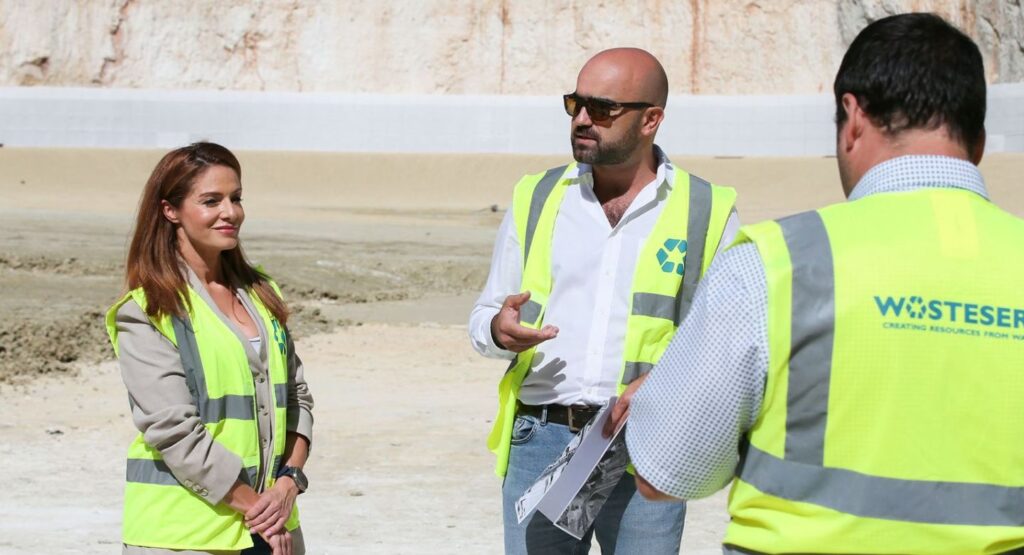
Waste management operations are carried out by WasteServ under the political responsibility of Minister Miriam Dalli. Yet key long-promised infrastructure, including the waste-to-energy incinerator at Magħtab, has still not materialised despite years of announcements. Its procurement process has faced repeated delays through mismanagement and claimed sleaze.
Meanwhile, EU law sets clear and binding targets.
Malta was required to ensure that at least 55% of municipal waste was prepared for reuse and recycling by 2025, rising to 60% by 2030 and 65% by 2035. At the same time, landfilling of municipal waste must be reduced to no more than 10% by 2035.
Malta has never reached the 55% recycling benchmark, and current figures indicate it is nowhere near achieving it.
Recent EU assessments have already flagged the country as being at risk of missing both municipal and packaging recycling targets.
Despite minor improvements in recycling volumes, the overall trajectory is showing that waste generation is rising, landfill dependence remains entrenched, and progress towards EU obligations is significantly insufficient.