
![[OC] The Top Speeds of Winter Olympic Disciplines Compared](https://www.byteseu.com/wp-content/uploads/2026/02/fm00qye1wvkg1-1536x1536.png "[OC] The Top Speeds of Winter Olympic Disciplines Compared")
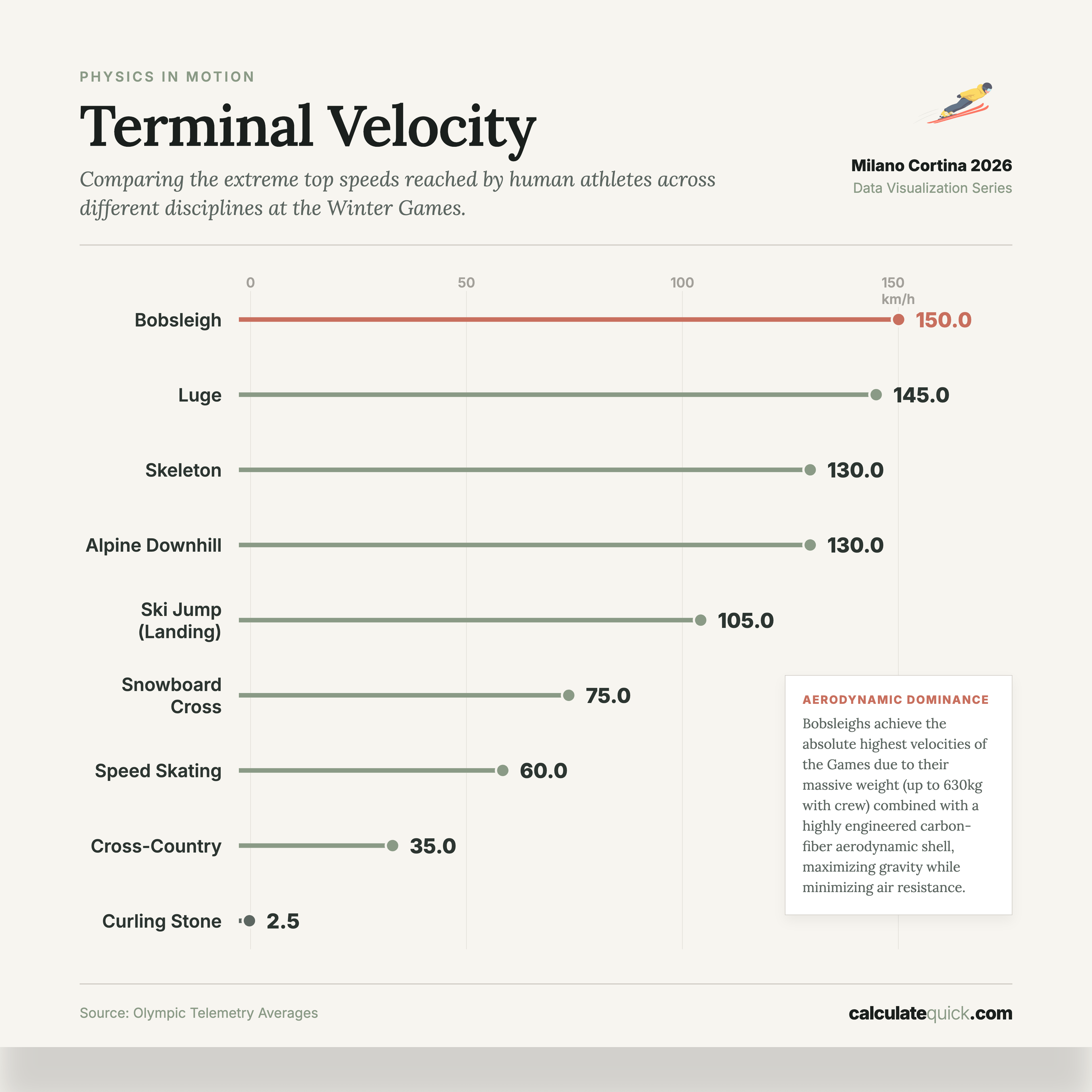
- Source: CalculateQuick (visualization). Telemetry averages from official Olympic tracking and the International Bobsleigh and Skeleton Federation (IBSF).
- Tools: Affinity Designer
Cross-country skiing requires massive endurance at 35 km/h, but it barely registers compared to the sliding track. At 150 km/h, the sheer weight and carbon-fiber aerodynamics of a Bobsleigh make it the undisputed fastest event of the Winter Games. Highway speed limits wouldn't even be legal for the top four sports shown here.
Posted by CalculateQuick
10 Comments
* ***Source:*** *CalculateQuick (visualization). Telemetry averages from official Olympic tracking and the International Bobsleigh and Skeleton Federation (IBSF).*
* ***Tools:*** *Affinity Designer*
Cross-country skiing requires massive endurance at 35 km/h, but it barely registers compared to the sliding track. At 150 km/h, the sheer weight and carbon-fiber aerodynamics of a Bobsleigh make it the undisputed fastest event of the Winter Games. Highway speed limits wouldn’t even be legal for the top four sports shown here.
Where does the dog rank in this?
Winter Olympics has all the craziest sports … and then there’s curling
Yeah I woud rather go 100 km/h on alpine skies than 30 km/h downhil on cross countrie skies.
If you include the curling stone, then where’s a hockey puck? 175km/h.
I was enjoying it reading top down. Then enjoyed it even more with a chuckle at curling stone. thanks!
That’s not what Terminal Velocity is.
That it Top Velocity, or Maximum Velocity.
Terminal Velocity is the top velocity/speed a FALLING object can achieve
Curling stone tried it’s best fr, people’s champion
Fairly sure 35 km/h is too low for cross country skiing top speed. Or we don’t count downhill? But we count downhill for bobsleigh and skeleton?
Data as most the time not quite as beautiful as claimed.
But if a Canadian touches a curling stone can it break the stone barrier?