
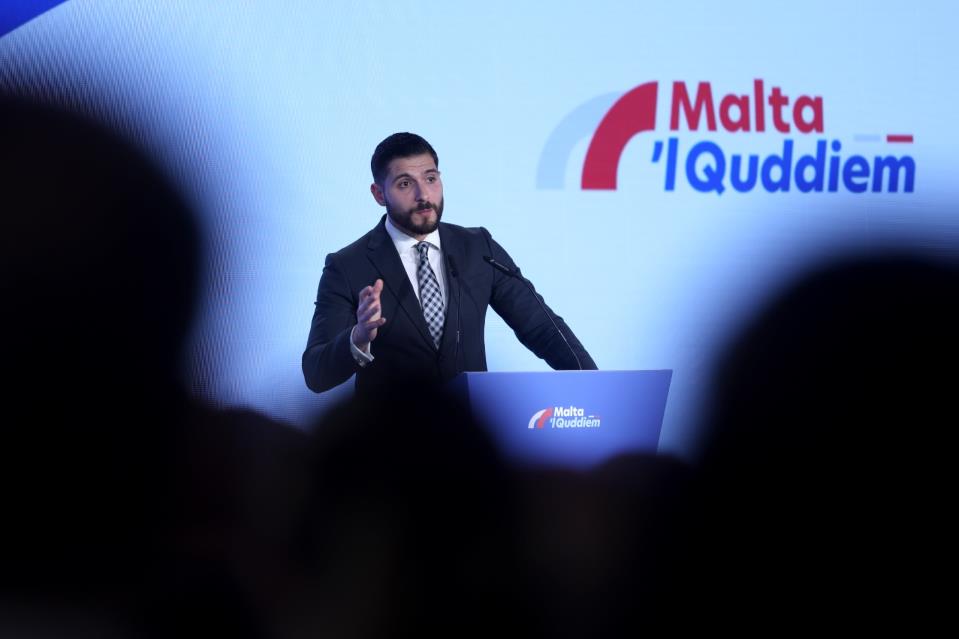

Nationalist Party leader Alex Borg has pledged that a future PN government would launch a modern mass transport system within its first 100 days in office, warning that Malta has “lost its balance” after years of rapid growth without proper planning.
Speaking at the close of the party’s two-day national convention Malta ’l Quddiem, Borg said traffic congestion, rising living pressures, and declining quality of life are now among the country’s most urgent challenges, stressing that delays and daily commutes are costing the economy hundreds of millions annually while draining people’s time and peace of mind.
He said a Nationalist administration would act immediately with short-term measures such as smart parking systems, improved junction management, and logistics hubs, while simultaneously beginning work on a large-scale public transport project designed to start operating within one legislature.
Borg argued that Maltese and Gozitan families are not asking for slogans but for concrete solutions that give them more time with their families, fair opportunities, and confidence that future generations will live better than today.
Throughout his address, he framed his message around the need to restore national balance, saying economic expansion had outpaced planning, leading to strain on housing, infrastructure, wages, and public services. He emphasised that government must focus on quality of life rather than growth alone, adding that transparency and accountability should be treated as a duty rather than a favour in order to rebuild public trust.
Borg also highlighted the importance of stronger local councils, saying decisions taken closer to residents allow communities to be heard more clearly and benefit more quickly from services and investment. He called for reduced bureaucracy, better-functioning public services, and a healthcare system that prioritises prevention.
Education, he said, would be central to preparing Malta for a rapidly changing global economy, noting that new technologies are transforming jobs and requiring lifelong learning. He stressed that schools must build character, resilience, and skills, ensuring that no student is left behind as industries evolve.
Turning to regional issues, Borg said Gozo must be protected from poor planning and overdevelopment, with policies focused on quality tourism, improved connectivity, and investment linked to skills rather than location. He proposed strengthening higher education and research opportunities on the island while safeguarding its identity.
He also acknowledged housing affordability pressures and promised to implement solutions discussed during convention workshops. Borg concluded by saying the event had been designed as a national listening exercise, insisting that effective politics begins by hearing people’s concerns and turning their input into action