
Published on
February 23, 2026
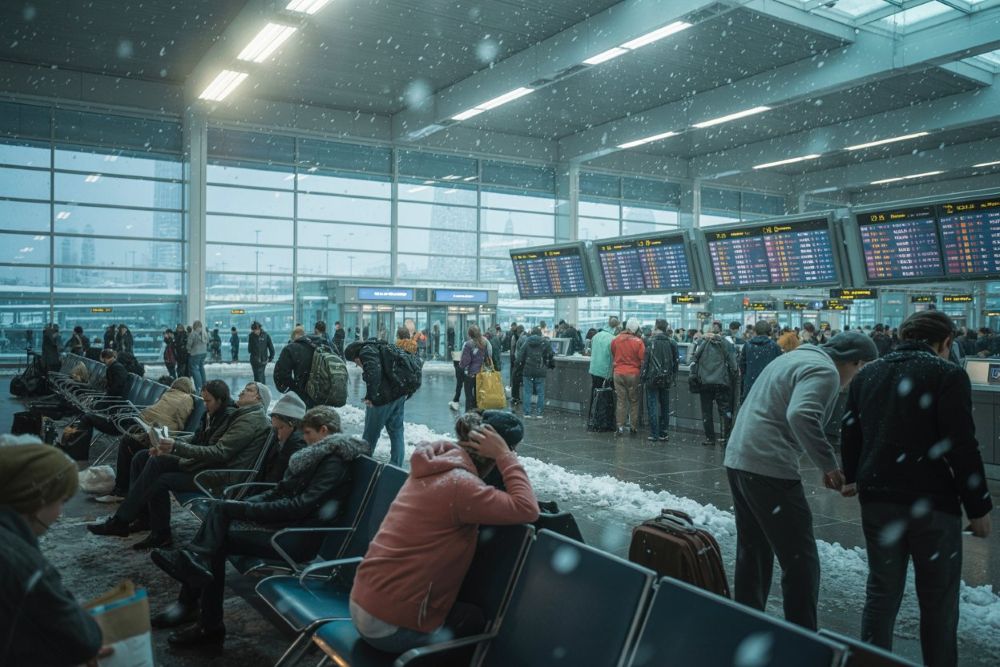
Image generated with Ai
Thousands of travelers across Europe are facing severe disruptions as winter storms bring chaos to air travel. The UK, France, Spain, Helsinki, and the Netherlands have been hit hard, with 159 new flights cancelled and 1,190 delays affecting multiple airlines. SAS, Emerald, Finnair, easyJet, and others are all grappling with the impact, leaving passengers stranded at major airports like London Heathrow, Paris Charles de Gaulle, Madrid Barajas, Amsterdam Schiphol, and Helsinki-Vantaa. As weather conditions worsen, snow and icy winds continue to disrupt schedules, making airline operations more challenging. Flight cancellations have been widespread, with easyJet and SAS seeing significant setbacks.
In addition to the flight issues, passengers in Amsterdam, Paris, and Madrid are facing extended delays, as ground handling and runway conditions worsen. Travelers are advised to check flight statuses frequently and prepare for further disruptions in the coming days.
Severe Weather Disrupts Travel Across Europe and the U.S. East CoastRomania’s Winter Woes: Snow, Ice, and Strong Winds
Romania faced severe disruptions on Saturday, February 21, 2026, due to heavy snow, icy conditions, and strong winds that affected roads, maritime ports, and power supplies. Emergency services were on high alert, providing assistance to around 75 people trapped in 46 vehicles across 16 localities in seven counties, including Bucharest. Fortunately, no highways were closed, and rail traffic remained mostly unaffected, but several national roads faced restrictions.
Power outages were reported in 12 localities across five counties, impacting approximately 1,222 residents. Notably, one runway at Mihail Kogalniceanu International Airport in Constanta was temporarily closed due to ice. While operations at Constanta North and South ports resumed, the situation remained challenging at the Mangalia, Midia, and Sulina Bara ports in Tulcea County, which were suspended due to the weather.
France Struggles with Severe Winter Conditions and Flooding
Meanwhile, in France, severe weather continued to affect much of the country. Heavy rainfall caused the Garonne River to overflow in southwestern France, leading to widespread flooding in La Reole and surrounding areas. While Storm Pedro, following closely after Storm Nils, was less intense, it still brought winds exceeding 113 km/h and up to 50 millimeters of rain, exacerbating the already challenging conditions of a persistently wet winter.
The French government issued orange and red flood warnings, signaling the highest levels of concern, as the country grapples with severe winter storms and river flooding. These warnings have been in effect for over 30 consecutive days, making it one of the longest stretches of weather-related disruptions. However, there is some relief in sight, as a high-pressure system is expected to bring a temporary respite from the rains next week.
Advertisement
Advertisement
New York Faces Historic Blizzard Conditions
Across the Atlantic, the U.S. East Coast is experiencing its own share of weather-related disruptions. A late-winter storm is set to hit New York City, New Jersey, and other coastal communities on Sunday, February 22, 2026. Blizzard warnings were issued across the region, with snow accumulations expected to reach between 1 and 2 feet (30 to 60 cm) in some areas. This marks the first blizzard warning for New York City since 2017.
Weather Chaos Across Europe: Total Delays and Cancellations
The impact of these conditions has been widespread. Across major European airports, a total of 149 flight cancellations and 1,190 delays were reported as of Saturday, February 21, 2026. The most significant disruptions occurred at major hubs, including London Heathrow (LHR), Charles de Gaulle (CDG), and Amsterdam Schiphol (AMS).
Advertisement
Advertisement
- London Heathrow (LHR): 43 cancellations and 144 delays
- Charles de Gaulle (CDG): 18 cancellations and 137 delays
- Adolfo Suárez Madrid-Barajas (MAD): 14 cancellations and 87 delays
- Zurich (ZRH): 15 cancellations and 78 delays
- Copenhagen (CPH): 16 cancellations and 104 delays
- Dublin (DUB): 13 cancellations and 90 delays
- Oslo (OSL): 12 cancellations and 120 delays
- Stockholm-Arlanda (ARN): 10 cancellations and 82 delays
- Amsterdam Schiphol (AMS): 9 cancellations and 185 delays
- Helsinki-Vantaa (HEL): 9 cancellations and 163 delays
This widespread disruption has caused chaos for passengers, particularly those attempting to fly in and out of major international airports. The delays and cancellations have been caused primarily by heavy snow, freezing temperatures, and high winds, which have impacted runway conditions, causing operational challenges for airlines.
Analysis of Affected Airports, Cities, and Airlines
The airlines most impacted by the weather conditions include SAS, Air France, British Airways, Finnair, and easyJet, with cancellations and delays seen across their routes.
- SAS reported 17 cancellations (3%) and 69 delays (12%).
- Air France had 14 cancellations (2%) and 78 delays (12%).
- British Airways had 14 cancellations (1%) and 64 delays (9%).
- easyJet faced 4 cancellations (0%) but an alarming 358 delays (20%).
Additionally, Finnair, known for operating flights to northern Europe, faced 9 cancellations (2%) and a high number of delays, 138 (41%), showing the severe impact of winter conditions on its operations.
What Affected Passengers Can Do Now
For affected passengers, the first step is to check with their airline for updated flight statuses and to see if there are alternative flights available. In the case of cancelled flights, airlines are often required to offer rebooking on the next available flight or a refund for the fare. Passengers are advised to keep an eye on official airport websites and mobile apps for real-time information and to monitor any announcements regarding additional delays or cancellations.
Travelers should also be prepared for long waits at check-in counters and security lines due to higher-than-usual passenger volumes caused by the ongoing disruptions. Additionally, those traveling to or from the U.S. may face delays due to the impact of storms affecting New York City and other East Coast airports, causing a ripple effect across international flights.
What to Expect in the Coming Days
As the weather conditions persist, passengers should remain flexible with their travel plans. The continued snowstorms and strong winds affecting southern and eastern Europe, as well as New York City, are likely to result in more cancellations and delays.
Airlines, including easyJet, Air France, and SAS, are expected to continue facing operational challenges. Passengers are urged to arrive at airports earlier than usual, ensure they have adequate provisions in case of extended delays, and stay informed about the latest weather updates.
Travelers are advised to check with their airlines for specific guidance on delays and cancellations. For those with long delays, many airports will provide accommodation, meals, or transport, depending on the circumstances.
Conclusion
As winter storms continue to disrupt European air travel, airports across the continent are experiencing unprecedented levels of cancellations and delays. Passengers flying through major hubs such as London Heathrow, Paris Charles de Gaulle, and Amsterdam Schiphol are feeling the brunt of the weather-related disruptions. With over 1,190 delays and 149 cancellations, the situation remains fluid, and travelers must stay vigilant and informed.
Source: FlightAware and affected airports
