
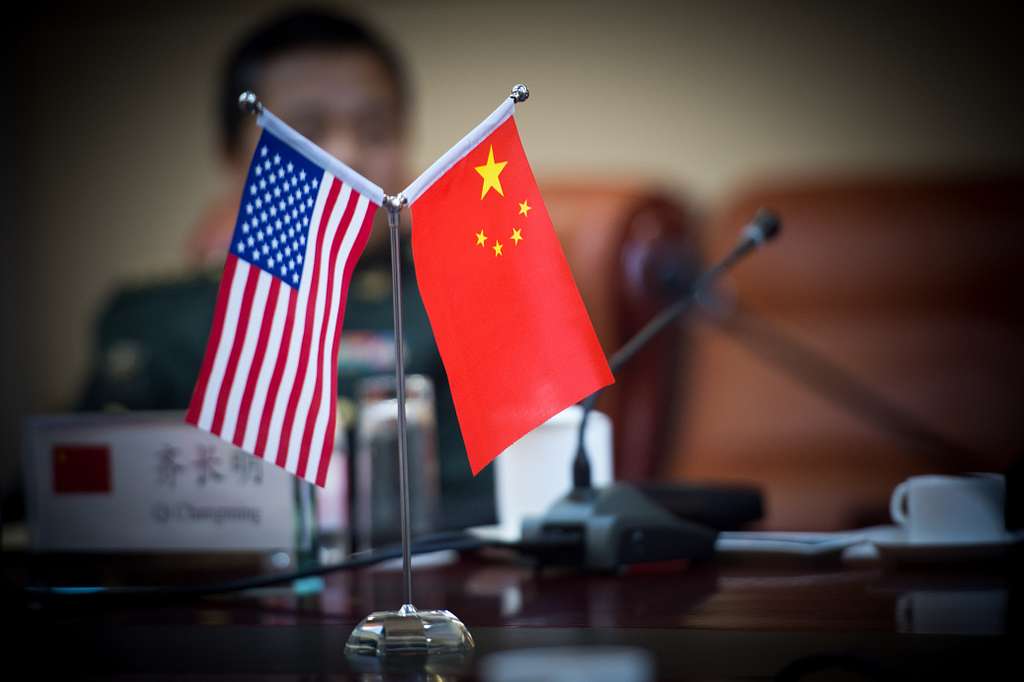
At the United Nations Conference on Disarmament in Geneva, U.S. Undersecretary of State for Arms Control, Thomas DiNanno, alleged that China had conducted nuclear explosive tests in violation of its stated commitments. Speaking at the conference, DiNanno said the U.S. government was aware of yield-producing nuclear explosions and preparations for tests with designated yields in the hundreds of tons. He argued that China’s military sought to conceal the activity by obfuscating the explosions because it recognized that such tests would violate existing test ban commitments and invite international scrutiny.
DiNanno identified June 22, 2020 as the date of one such alleged nuclear explosive test. He said the assessment was based on intelligence and monitoring data, including seismic information, though he did not publicly detail the sources or methods underlying that judgment. His remarks framed the alleged test as part of a broader, deliberate pattern rather than an isolated incident, suggesting institutional planning and preparation for further tests. DiNanno implicitly raised concerns about China’s long-term nuclear development trajectory and its implications for strategic stability.
DiNanno reiterated the claims in a series of ‘X’ media posts following the conference. In those posts, he connected the allegations directly to the expiration of New START, arguing that existing arms control arrangements no longer reflected contemporary nuclear realities. He described the treaty’s limits as outdated in an environment where nuclear arsenals were changing in both scale and composition, and called for a “new architecture” for nuclear weapons control. This framing suggests that alleged Chinese behavior was being used to justify broader U.S. reassessments of arms control orthodoxy.
International monitoring authorities disputed the allegation. The Comprehensive Nuclear-Test-Ban Treaty Organization (CTBTO), which operates a global network of seismic, hydro-acoustic, infrasound, and radionuclide sensors designed to detect nuclear test explosions, said it had not detected any event consistent with the characteristics of a nuclear weapon test at the time cited by the United States. In a public statement, CTBTO Executive Secretary Robert Floyd said that further detailed analysis had not altered that assessment. He noted that the available data did not allow the organization to confirm that a nuclear explosion had occurred, underscoring the technical and methodological limits of attribution in the absence of corroborating evidence.
China rejected the allegations in firm terms. At the Geneva conference, China’s ambassador on nuclear disarmament, Shen Jian, did not directly address the technical specifics of DiNanno’s claim but said Beijing had consistently acted responsibly on nuclear matters. He accused the United States of distorting and smearing China’s national defense capabilities in its public statements. In subsequent remarks and social media posts, Chinese officials described the U.S. allegations as completely groundless lies, which were politically motivated rather than evidence-based.
Both China and the United States signed the Comprehensive Nuclear-Test-Ban Treaty in 1996, but have not ratified it, meaning the treaty has not entered into force and is not legally binding. Even so, voluntary moratoria on nuclear explosive testing have long played a central role in sustaining a global norm against testing, reinforced by international monitoring regimes and political restraint. Allegations of testing, even if unproven, risk eroding that norm by reintroducing ambiguity and mistrust.
That framework has come under increasing strain in recent years. Russia ratified the CTBT but withdrew its ratification in 2023, further undermining the treaty’s standing and signaling a broader retreat from arms control commitments. The expiration of New START has compounded this erosion. For more than a decade, New START imposed verifiable limits on deployed strategic nuclear forces held by Washington and Moscow. With the treaty now lapsed, there are no legally binding constraints on the world’s two largest nuclear arsenals, and no agreed mechanism to replace it.
Washington has pressed for broader arms control arrangements that would include both China and Russia, arguing that exclusion no longer reflects strategic realities. China has resisted participation in such talks, maintaining that its arsenal remains significantly smaller than the U.S. and that entering negotiations at this stage would lock in strategic disadvantage, constraining future deterrence options.
President Donald Trump has repeatedly signaled a willingness to reconsider long-standing U.S. restraints on nuclear testing. He has instructed the U.S. military to prepare for the possibility of resuming tests and has said the United States would test nuclear weapons “on an equal basis” with Russia and China. He has not clarified whether this would involve explosive nuclear tests or other forms of experimentation, leaving room for strategic ambiguity. Trump has also said he wants China involved in future nuclear arms agreements, a proposal Chinese authorities have shown little interest in.
With no replacement for New START in place and limited appetite in Beijing for trilateral negotiations, the near-term outlook points to continued signaling rather than substantive agreement. How these claims are managed—through transparency mechanisms, diplomatic engagement, or reciprocal measures—will shape not only U.S.–China nuclear relations, but also the durability of global norms against nuclear explosive testing at a moment when institutional restraints are already under significant strain.