
National Weather Service.
Over the course of this winter season, you may have heard different weather terms to describe an upcoming storm, like “blizzard,” “nor’easter” and “bomb cyclone.” Here’s what they actually mean:
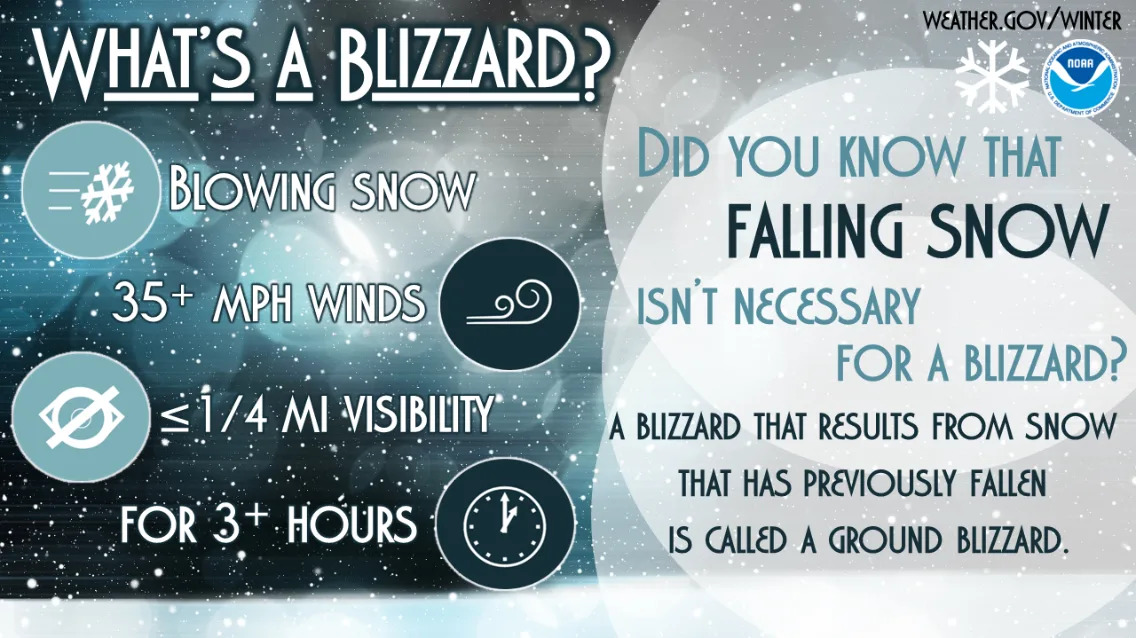
Blizzards, according to the National Weather Service:
-
contain large amounts of snow or blowing snow
-
have winds exceeding 35 mph
-
have visibility of less than 1/4 mile for at least 3 hours
A bomb cyclone is a powerful low-pressure system that intensifies rapidly. It’s a process that meteorologists call bombogenesis.
The “bomb” part happens when pressure inside a storm cell falls so quickly that it gives the storm explosive strength. The scientific term “bombogenesis” refers to a storm that drops at least 24 millibars of pressure within 24 hours. So the lower the pressure drops within a cyclone, the more intense the storm.
A nor’easter is a large, intense area of low pressure that can produce heavy rain, heavy snow, severe coastal flooding or even blizzard conditions in the east. They typically form along the Atlantic coast and move northward or northeastward, according to the NWS.