
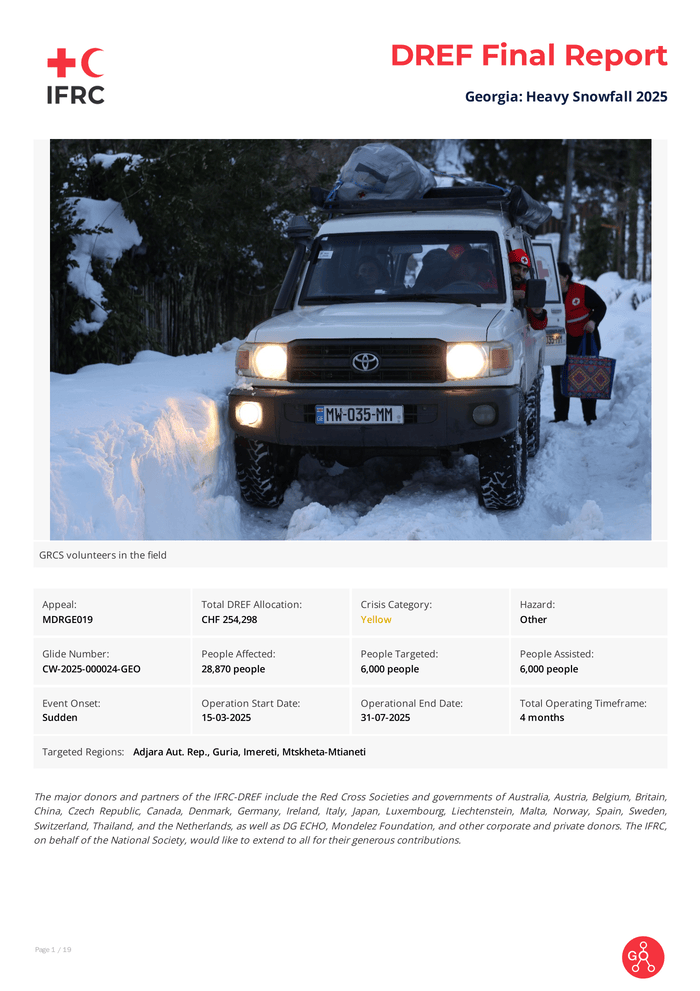
What happened, where and when? A severe winter storm that hit Western Georgia between February 21 and 27, 2025, caused extensive humanitarian issues in Guria, Imereti, Adjara, and Mtskheta-Mtianeti regions. In total, about 179 villages remained completely isolated from the surrounding areas for more than weeks’ time, and up to 28,800 households were left without electricity for days. In addition to the closure of kindergartens, daycare centers, and schools, damaged fences, roofs, and frozen water pipes, causing disruptions in drinking water access made impacted families’ situation even more severe. Older people living alone, people with mobility issues, as well households with infants and people requiring consistent medical care were most severely impacted, as the delivery of necessary supplies was restricted by impassable roads. In Adjara, 20 villages spread across Khulo, Shuakhevi, and Keda were encircled by snow, while in Guria, villages like Chokhatauri, Gogole, and Ozurgeti were cut o by snowdrifts. The disaster claimed the lives of three people, and numerous households reported serious home damage. Within the rst 24-48 hours of the snowstorm, the Georgia Red Cross Society rapidly mobilized its emergency response mechanisms: GRCS Disaster Management Team was deployed to the aected regions to assess the needs of the aected, deliver some immediate assistance and plan for structured response aimed at alleviating the most pressing medium- and longer-term needs. GRCS helpline stayed active 24/7, responding to over 300 calls in the rst few days of the disaster, providing emotional support, information, and referrals. Coordination was established with the national Emergency Management Service , national defense forces, and local government authorities to support rescue operations and road-clearing eorts where needed. A fundraising campaign was launched, and in-kind donations were mobilized from businesses, hypermarkets, individuals, and pharmacies. As a result of these eorts, and through the mobilization of in-kind donations, GRCS sta and 184 volunteers provided food, non-food items (including blankets, hygiene kits, and warm clothing), and medications to 810 households in most vulnerable situations across nine municipalities. Seven sta members traveled to Chokhatauri and Ozurgeti to support local teams and oversee distributions. Additionally, medical parcels were delivered to 70 households in two municipalities. The volunteers also supported the DM team in conducting rapid needs assessments and extending psychosocial outreach to the aected. Door-to-door Psychological First Aid visits reached even the most remote households, with trained operators ensuring prompt and accurate responses. Special attention was given to older people living alone, who faced heightened risks during the crisis due to physical isolation and preexisting health or socioeconomic vulnerabilities.
Add A Comment