
Monday’s Coverage: Russia Kills Policewoman, Wounds 25 in “Terrorist Attack” in Lviv
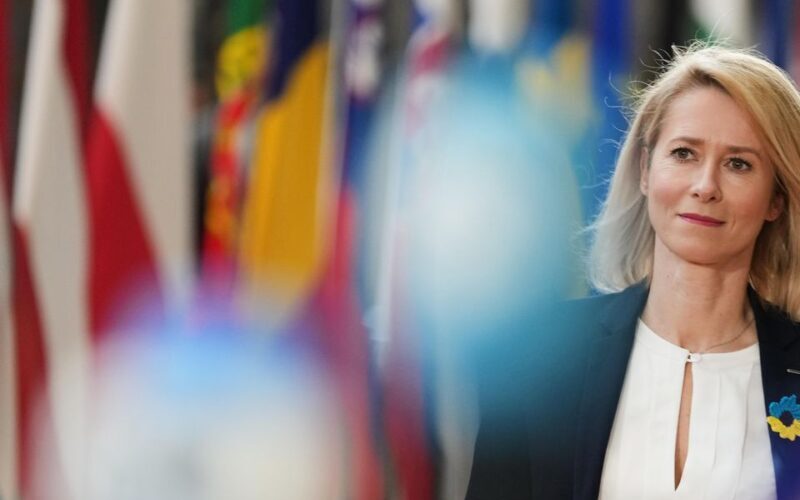
EU foreign policy head Kaja Kallas confirmed that Monday’s meeting of foreign ministers could not overback the veto of Hungary, led by Vladimir Putin’s ally Viktor Orbán.
It’s not easy. It’s never easy, but the work continues.
I really regret that we didn’t [secure] an agreement today considering that tomorrow is the sad anniversary of the start of this war, and we really need to send strong signals to Ukraine that we keep on helping Ukraine, but also putting more pressure on Russia.
Hungary and Slovakia are demanding the reopening of the Druzhba pipeline, running from Russia, which was damaged on January 27 by a Russian drone strike on western Ukraine.
Rather than blaming Moscow, Budpest and Bratislava, led by pro-Kremlin Prime Minister Robert Fico, are threatening punishment of Ukraine, including the cutoff of electricity supplies.
Hungary said over the weekend that it will also block the EU’s €90 billion loan to maintain Kyiv’s finances through 2027.
European Council president António Costa appealed to Orbán to honor the EU decision in December for the loan.
When leaders reach a consensus, they are bound by their decision. Any breach of this commitment constitutes a violation of the principle of sincere cooperation.
No Member State can be allowed to undermine the credibility of decisions taken collectively by the European Council.
But Slovakia’s Fico reiterated in a Facebook video that he plans to halt electricity to Ukraine, whose energy infrastructure has been badly damaged by Russian missile and drone strikes amid freezing temperatures.
He said the suspension will be lifted as soon as Ukraine resumes oil transit via the Druzhba pipeline, insisting that it remains operational. He warned he is ready to escalate the dispute further if Kyiv does not respond.
EU in Kyiv for 4th Anniversary of Invasion
EU leaders had hoped to confirm the sanctions before their visit to Kyiv on Tuesday for the 4th anniversary of Russia’s full-scale invasion.
Polish Foreign Minister Radosław Sikorski said, referring to Hungary’s Parliamentary elections in April:
I would have expected a much greater feeling of solidarity from Hungary for Ukraine. Instead, with the help of state propaganda and private-but-controlled-by-the-government media, the ruling party managed to create a climate of hostility towards the victim of aggression, and…now is trying to exploit that in the general election.
German Foreign Minister Johann Wadephul said he was “astonished” by the Hungarian position. Estonian counterpart Margus Tsahkna emphasized, “If we are not able to put the sanctions on Russia, then Russia will be happy.”