
Wednesday could see the hottest day of the year so far, with temperatures climbing to an unseasonably warm high of 18C.
The year has been dominated by cold weather and torrential rain, with some areas hit with downpours every day for several weeks.
However, the weather has taken a mild turn in the UK this week, with Tuesday seeing temperatures climb to over 16C in Essex, marking the warmest day of the year – and Wednesday could be even warmer.
Met Office maps show temperatures reaching 17C in the south-east, with 18C possible, and a dry, sunny day forecast for many – several degrees above the typical February temperature.
The forecaster said that while Scotland and Northern Ireland will be cloudy with spells of rain, much of England will be “very mild”, with spells of sunshine throughout.
With a dramatic change in the weather, many people will be wondering if the warm weather is here to stay and if spring has finally sprung.
Here, Yahoo News UK looks at the forecast for the weekend and beyond.
How long will the warm and sunny UK weather last?
After the midweek warmth peaking at a possible 18C today in parts of southern England, it may be easy to think that warm weather has finally arrived in time for the start of spring.
But the outlook after Wednesday is not quite the departure from winter that some may be hoping for.
Met Office maps show a noticeable drop in temperatures into and over the weekend, with unsettled conditions dominating the picture across the UK.
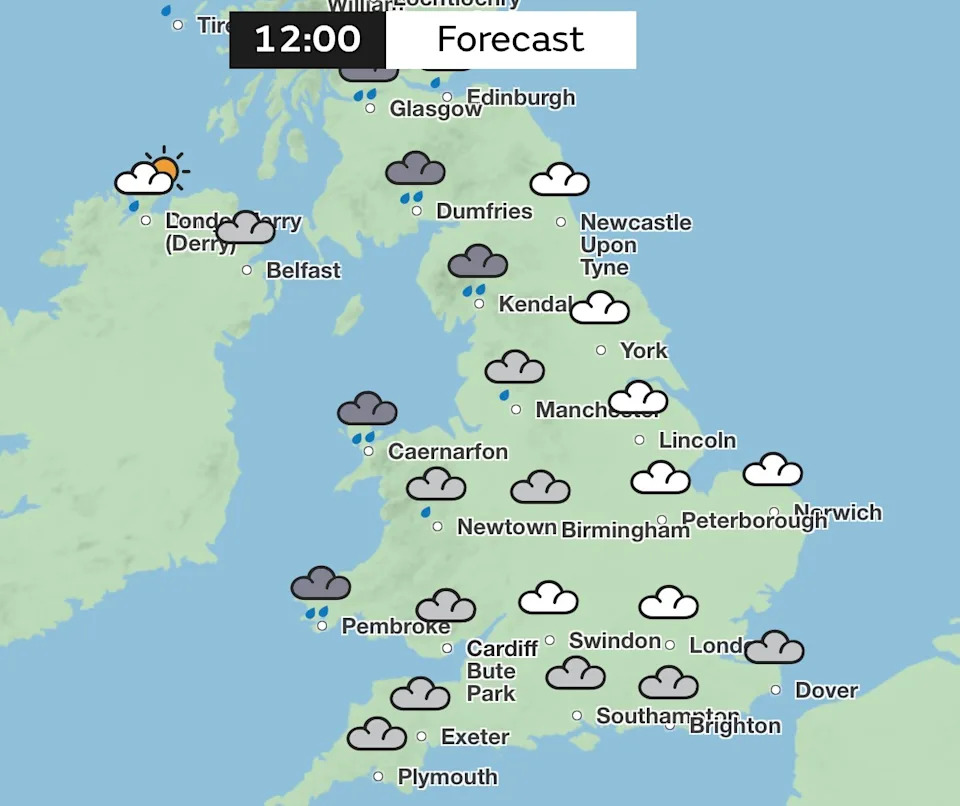
Sunshine will be replaced by cloudier skies on Thursday and Friday – but temperatures should remain higher than usual.
(Met Office)
Thursday and Friday will see rain fall across much of the UK, with cloudier conditions bringing a sudden halt to the sunshine. Temperatures will drop; however, this will not be by any dramatic amount, with highs of 12–13C on both Thursday and Friday,
Saturday will start relatively dry across many areas, but will see rain spreading widely from the west, accompanied by strengthening south-westerly winds.
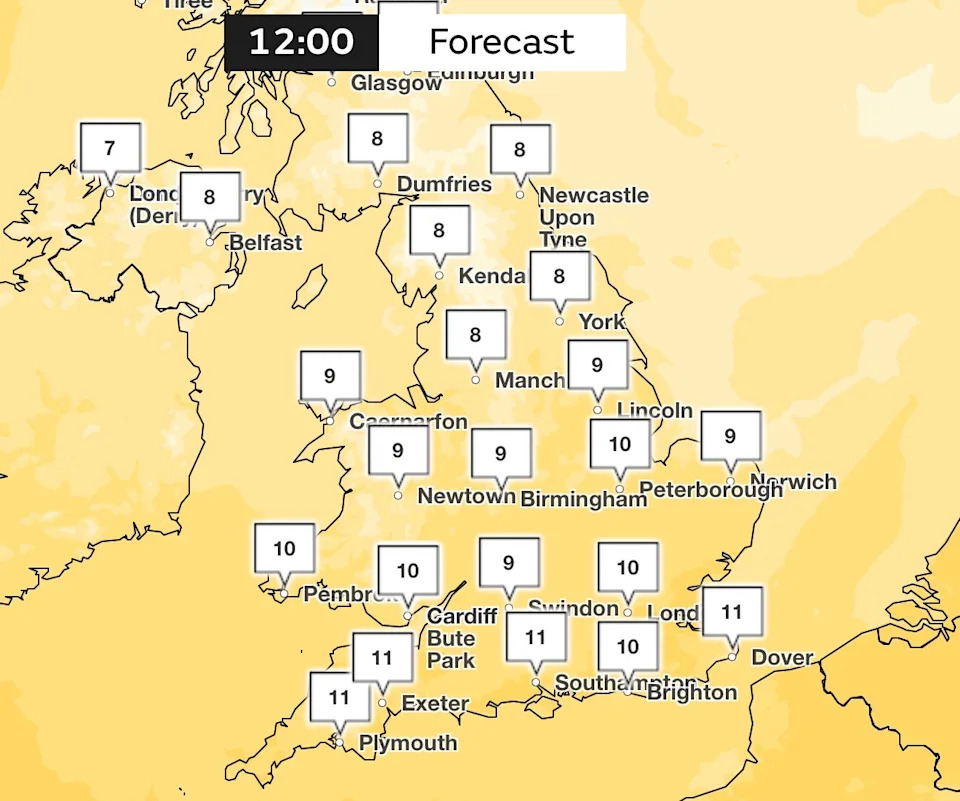
Saturday temperatures will be closer to the February average.
(Met Office)
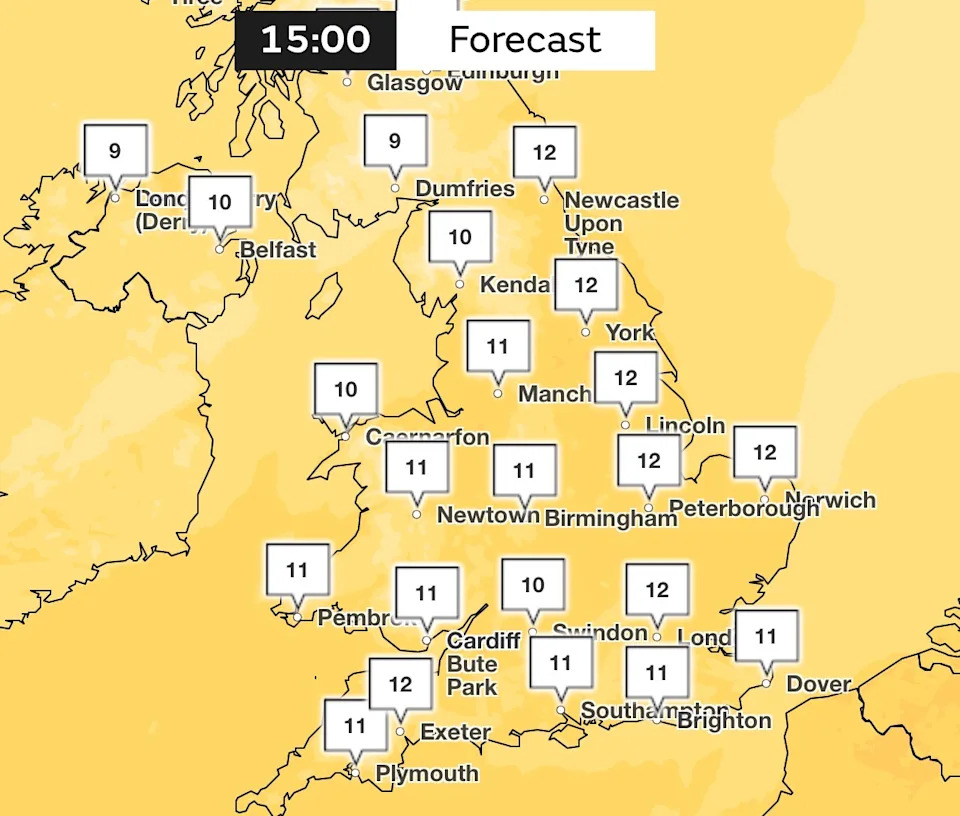
Sunday will see a slight rise in temperature.
(Met Office)
Sunshine will be less widespread, with cloudier skies expected, although some brighter spells could emerge in the east.
Daytime highs are predicted to reach around 10-11C in the warmest spots, particularly in southern and eastern England, while northern and western regions will be slightly cooler at 8-9C.
Temperatures are expected to increase slightly closer to around 11–12C across much of the country, but cloud and rain could limit any bright spells.
The midweek high comes as Met Office records show that the UK’s highest ever February temperature was 21.2C at Kew Gardens in London on 23 February 2019.
Other notable highs include 18.1C at Pershore in Worcestershire and Teddington in Middlesex on 26 February 2024, and 17C at Hull East Park in East Yorkshire in February 2025 – far higher than the national average temperature of around 7C for February.
When does spring start?
There isn’t one single date when spring starts in the UK, and the answer is a little more complex than some might think.
The Met Office recognises two main definitions of the start of spring: meteorological spring and astronomical spring.
Meteorologists and climatologists use meteorological spring, which always runs from 1 March to 31 May.
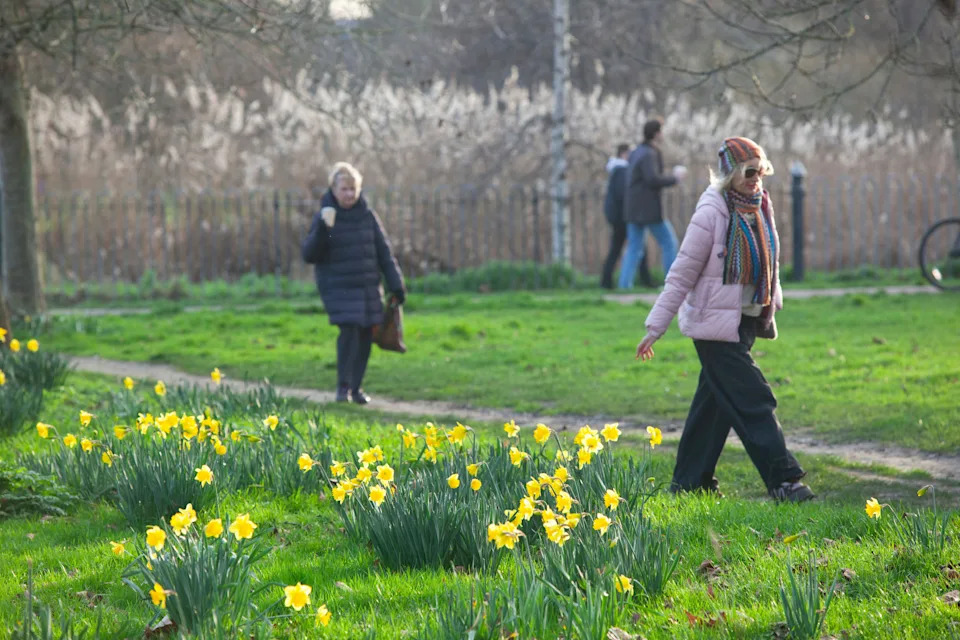
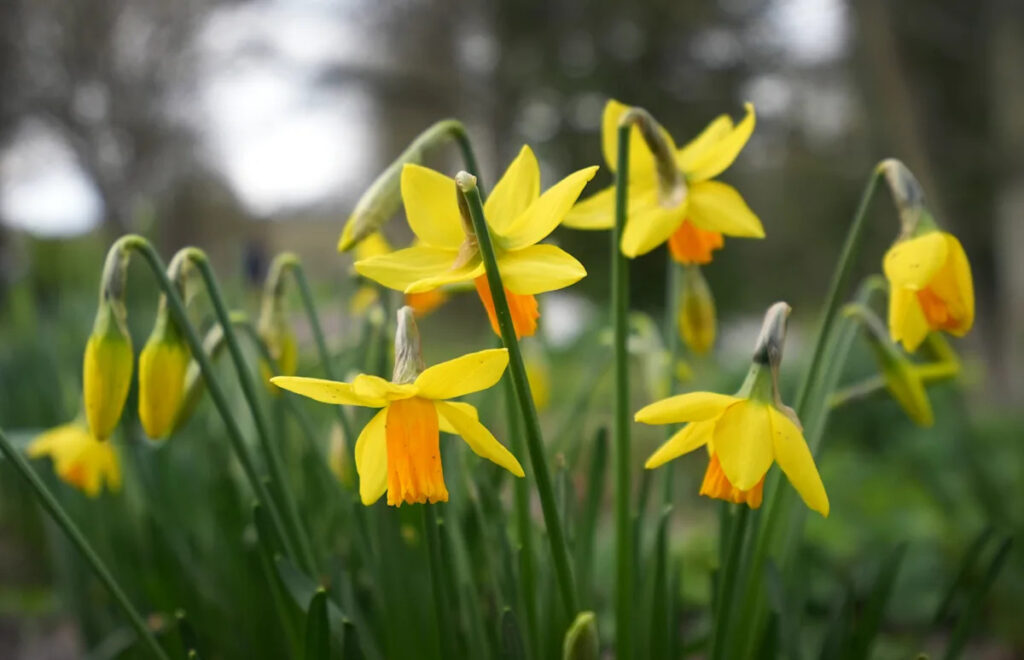
Walkers on Clapham Common, south London, go past open daffodils as milder weather replaces the rain.
(Anna Watson)
This fixed three-month period makes it easier to compare weather data, track long-term climate patterns and produce consistent statistics.
In 2026, it means meteorological spring begins this Sunday.
However, the start of astronomical spring differs, as it is tied to the Earth’s position relative to the sun and begins on the spring equinox – when day and night are roughly equal in length across the planet, marking the point where daylight starts increasing more rapidly in the Northern Hemisphere.
The exact date varies slightly each year, due to the Earth’s orbit and axial tilt, typically falling between 19 and 21 March. In 2026, the vernal equinox occurs on Friday, 20 March.