
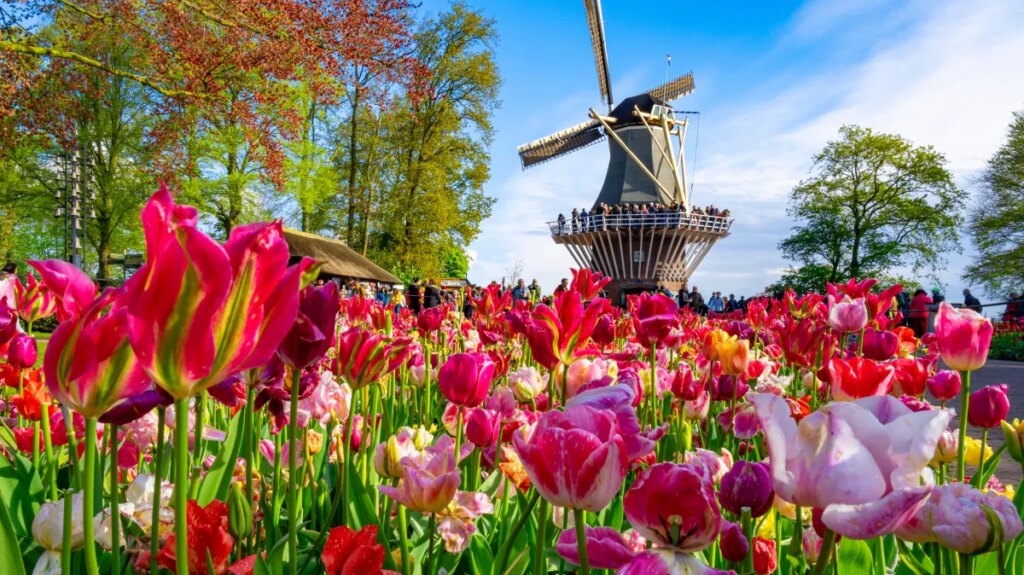
Following one of the wettest starts to the year on record, we Brits are in serious need of some colour. From mid-March to mid-May, Keukenhof Gardens in Lisse is the place to find that. The 79-acre site, a 40-minute drive from Amsterdam, showcases seven million flowers tended by a small, green-fingered army of 45 gardeners, who begin planting the bulbs in autumn. Tulips, making up over a half of the display here, are what most of the 1.4 million visitors flock to see each year.
The gardens, which are only open for a six-week period — this year from March 19 to May 10 — transform into a catwalk where over 800 varieties of tulips strut their stuff, with petals that range from flame-coloured and candy-striped to show-stopping feathered, ruffled numbers. It’s easy to lose four hours or so ambling along the nine miles of pathways that wind through the parkland. Beds are set alongside gurgling water features and there’s a lake which reflects the rainbow of colours that shine like a halo around its banks.
Choose a weekday and arrive when the gates open at 8am for your best shot at avoiding the crowds which noticeably swell as the hours tick by (£18.30, keukenhof.nl/en). This is also the point at which you should bag one of the boat tours — only available to book in the flower park on the day — which will take you on a cruise alongside the tulip fields next to the gardens. Having arrived in May we’d missed that boat, literally — and the tulip fields were empty by then.
What you need to know
- Where is it? The tulip fields, gardens and an open-air museum all under an hour’s drive from Amsterdam
- Insider tip? Book your tickets for the Keukenhof gardens now
- Who will love it? Tulip-lovers, Dutch history fans
Fortunately Tulip Experience Amsterdam, a five-minute drive from Keukenhof, saves the day. It’s the brainchild of a local family who have turned their farm into show gardens. Here we wander through fields still striped with millions of tulips as far as the eye can see before exploring a museum that explains the process from planting to trading with authentic machines on show (£10.45; tulipexperienceamsterdam.nl).
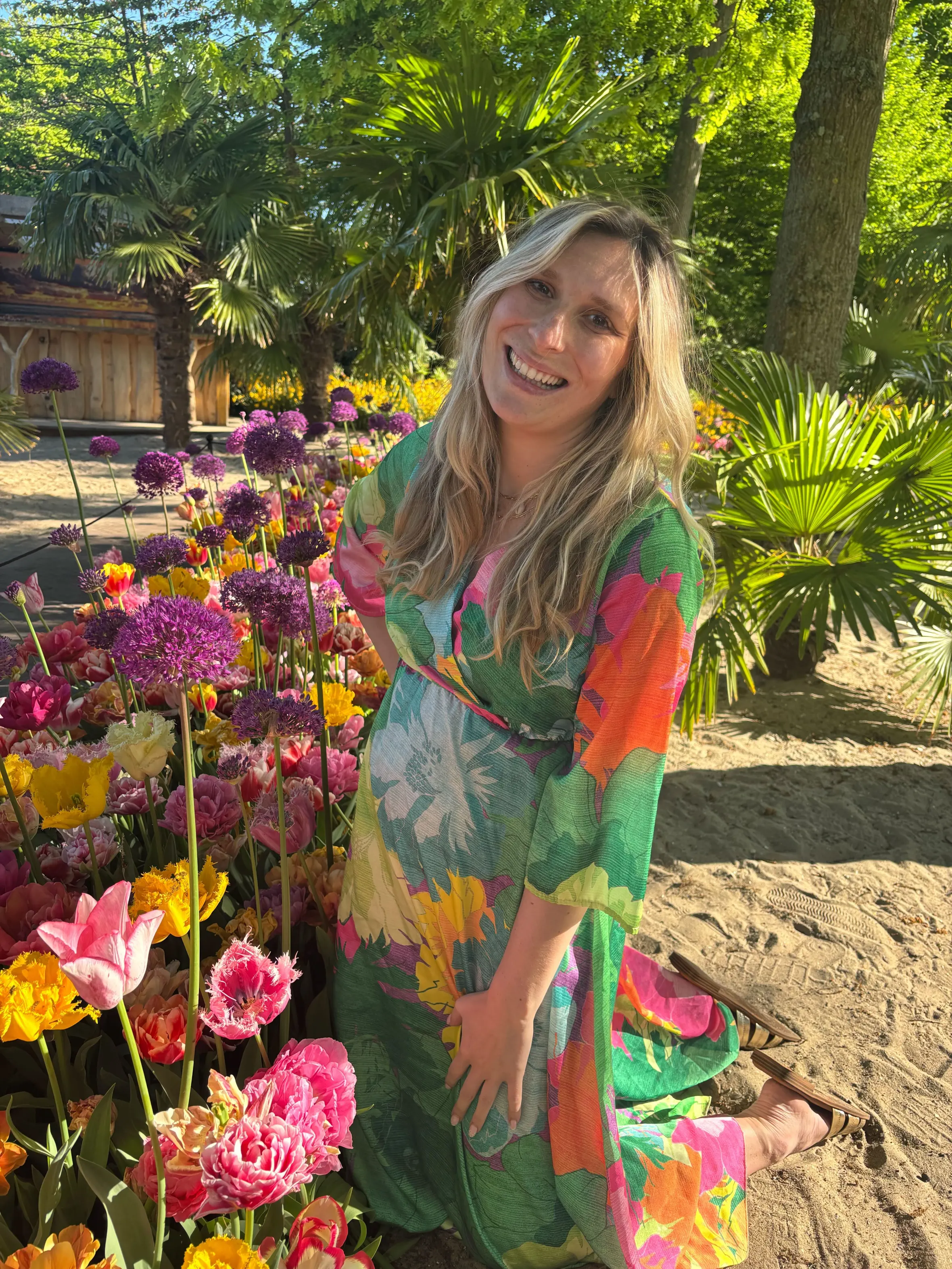 Lucy in Keukenhof Gardens
There is, like anywhere, an etiquette for tourists to follow when visiting the fields and farmers are keen to make sure their neat rows of single colours aren’t contaminated by dirty shoes that could spread pests or contaminate the varieties. Our driver tells us of a prince from Saudi Arabia who ignored the warnings on a visit to a nearby farm a few weeks ago. His quest for the perfect selfie ended in him being chased by a group of furious, pitchfork-wielding farmers.
We get a feel for just how valuable the flowers are to farmers (echoes of 17th century tulipmania) the following morning with a visit to the Royal FloraHolland auction. It’s a 30-minute journey south from central Amsterdam and en route our driver, Dirk, tells us about the billions of revenue that’s generated here every year — 60 per cent of the world’s flower trade happens here (private driver from £109 for four hours; marcus.nl). Given that it’s just before Dutch Mother’s Day when we visit, the factory floor, which guests can peer at from elevated walkways, is the equivalent of Santa’s workshop on Christmas Eve.
Four thousand workers zoom around on scooters with trollies transporting giant metal crates of flowers. On the walls, giant screens play out the action where traders from over 60 countries bid. Most orders are picked, packed and on the road within an hour of purchase; most sales happen at 7am when the auction kicks off (you have to arrive before 11am or it’s all over). Behind giant glass windows we watch flowers being tested for freshness and longevity before being whisked off to hot or cold store rooms depending on their type; this is essentially Willy Wonka’s chocolate factory for horticulturalists (£10; royalfloraholland.com).
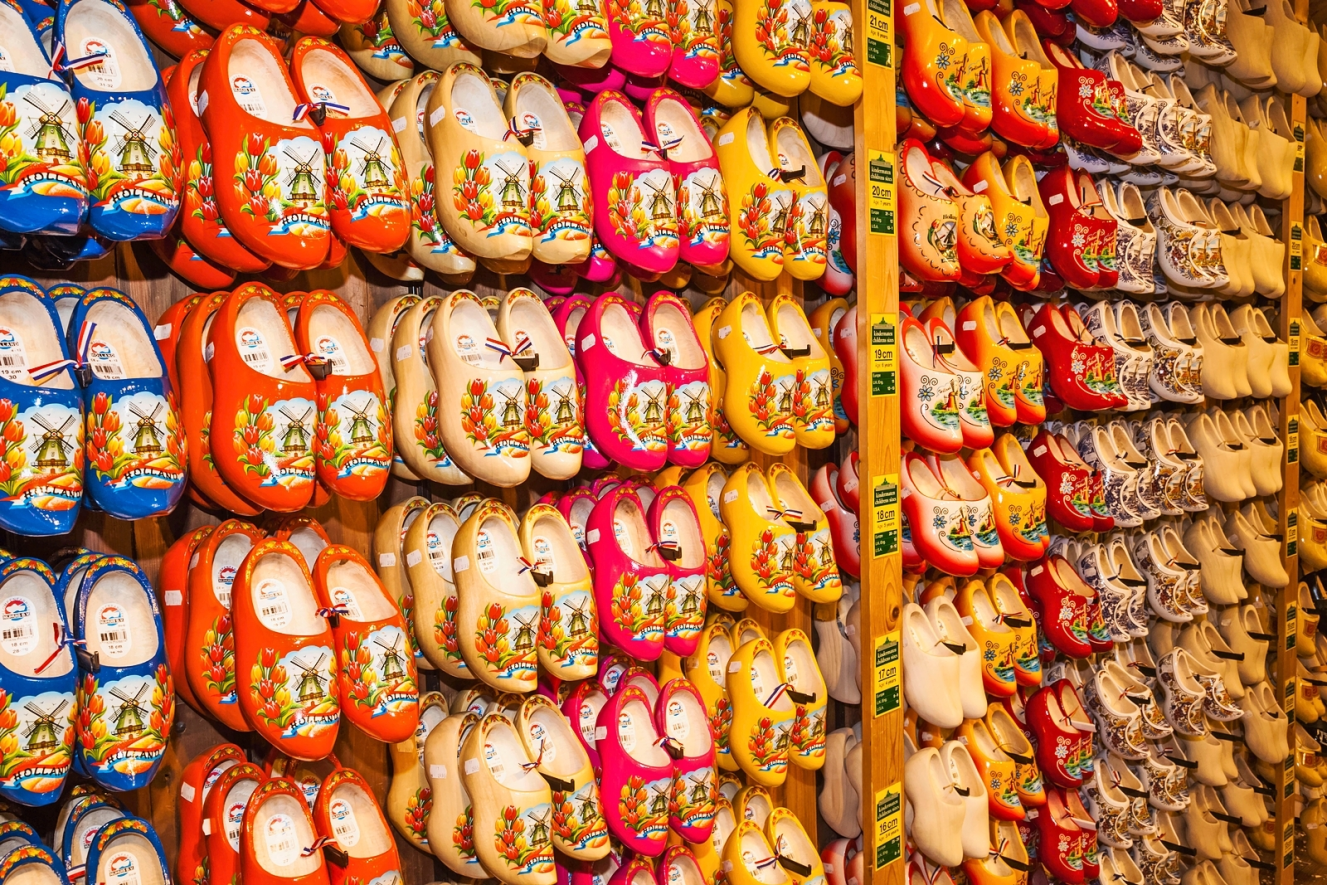 A clog maker’s workshop in the Zaan regionAlamy
Later that day we experience a much slower pace of life on the River Zaan at Zaanse Schans, an open-air museum that tells the story of the Zaan region, which at one point in the 18th century had more than 600 windmills powering the production of everything from paper to paint. Some of the historic buildings were moved to this amazing museum, which has everything from a clog maker to a cheese factory. We putter along the water on a schooner and learn about the history with our skipper, Ebai, who points out the 17th-century windmills that whir away on the banks, grinding seed oil and pigment for paint, then, downriver, the rows of wooden green merchant houses, which line the banks (£10; dutchboattours.nl). It’s a great excuse to ogle at those closest to the water. When extensions were added to the front of homes following a weighty annual profit, they became known as “good year end houses”.
Where to stay and what to do in Amsterdam
We find our own swanky base at Conservatorium Hotel, a gorgeous 19th-century building that’s been transformed by the Italian architect Piero Lissoni, who has kept the original stained-glass windows, original mosaic tiles and vaults from its time as both a bank and a music school while adding his own trademark touches — steel beams and bold splashes of bright colours. Half of the 129 bedrooms are set over two floors with giant, floor-to-ceiling windows and plenty of luxury flicks like travertine bathrooms and Dyson hairdryers. There are also some classic traditional nods including Delft ceramics and wooden clogs on the wall.
Keen to make the most of the rise in flower-fuelled tourism, the hotel has launched a new Tulip Celebration package for guests. Along with sweet floral gifts in the room, including a bottle of La Tulipe perfume from the boutique Skins, the hotel can incorporate everything from floral-scented massages to day trips to the gardens into your stay. Even the desserts at its Japanese restaurant, Taiko, lean into the theme. We tuck into an incredible tasting menu where a giant drum — an original from the music school — is beaten as we enter for a feast that culminates in cherry blossom-infused chocolate followed by a mock koi pond with handmade carp in flavours of coconut, passionfruit and pineapple.
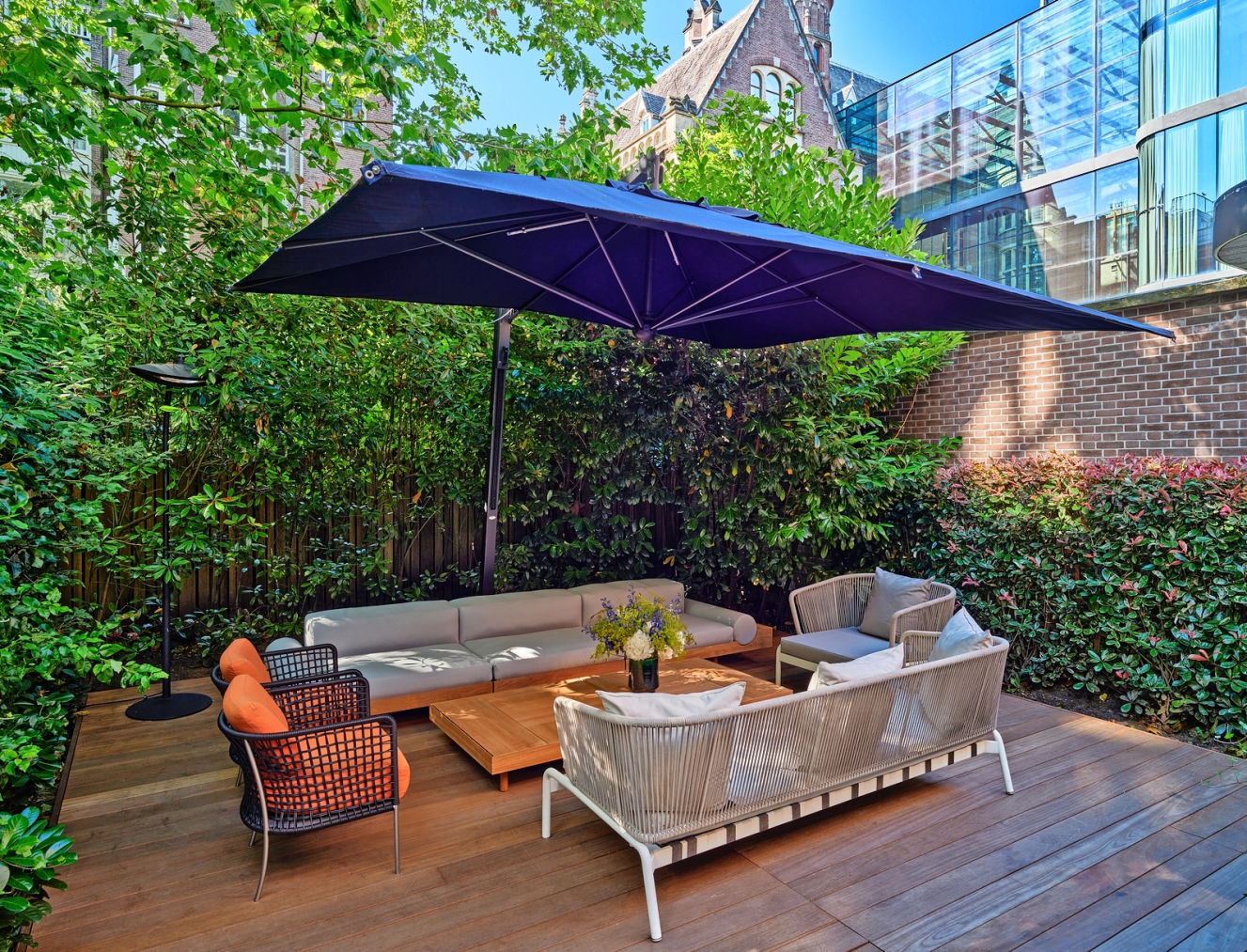 The Conservatorium Hotel is the perfect base, says Lucy Perrin
The hotel’s handy position in the upmarket museum quarter, steps away from the Rijksmuseum, the Stedelijk museum and the Van Gogh Museum, makes an ideal base. A 30-minute stroll away is the village-like neighbourhood of Jordaan, where Amsterdammers outnumber tourists and the city shows off just how good it looks in spring. Blossoms float over canals like confetti, quaint cobbled streets are packed with boutiques and canals strung with traditional houseboats light up the water like floating Chinese lanterns.
We hire a boat, grab a bag of still-warm poffertjes (Dutch mini pancakes) and glide to the Negen Straatjes, the nine streets, a warren of independent shops and cafés where artisans once set up shops to sell their wares to wealthy canal house owners (£78 for two hours; mokumboot.com). Like any city, the main issue is a lack of parking and we spend half an hour bobbing along the water before we find a space to switch off the engine. There’s just enough time left before the shops shut to buy the one thing I came for: a big bunch of tulips.
Lucy Perrin was a guest of Conservatorium Hotel, which has B&B doubles from £764 (mandarinoriental.com); plus GetYourGuide, which has Keukenhof tours from £219pp, including transfers (getyourguide.com) and easyJet which hasNewcastle-Amsterdam returns from £78 (easyjet.com)