
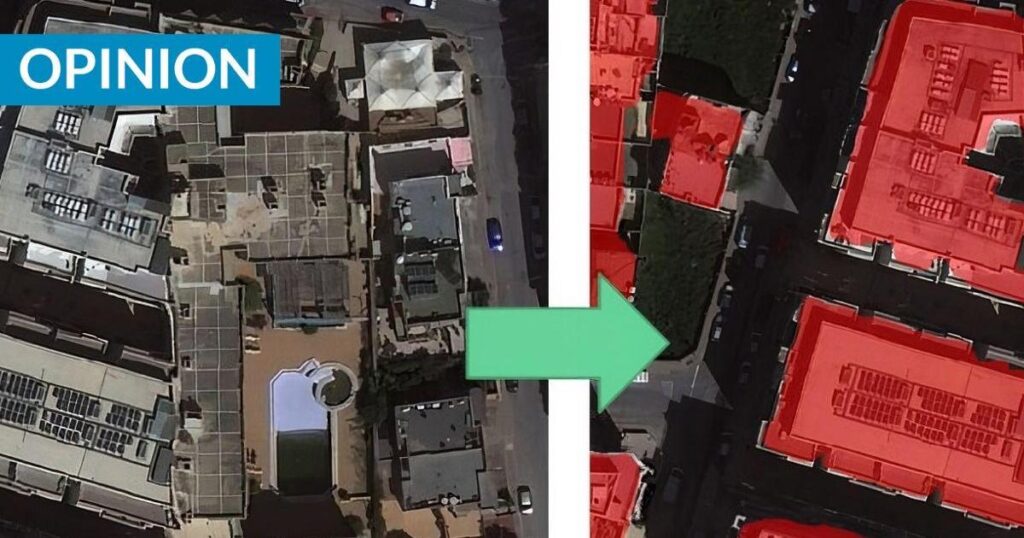
Maps are intrinsic to spatial planning.
From development permits and infrastructure upgrades to enforcement and policy, the national basemap underpins how land is understood, regulated, and managed. Yet maintaining an accurate, up-to-date basemap is slow and demanding. Malta’s dense urban fabric, characterised by irregular roof geometries and constant small-scale development, makes manual updates labour-intensive and hard to scale.
Currently, much of this work relies on expert interpretation of aerial and satellite imagery. Specialists compare images captured years apart, manually delineating building outlines using Geographic Information System (GIS) tools to determine if a structure was altered or demolished. This precise work is time-consuming and increasingly unsustainable as data volumes grow.
This challenge sparked the Enhancing Malta’s Basemap with AI Technology (EMBAT) project. Led by the University of Malta’s Department of Artificial Intelligence in collaboration with the Planning Authority (PA), it is funded by the Malta Digital Innovation Authority (MDIA) through the MARG Scheme 2024. Dr Dylan Seychell leads the research team, which includes Prof. Matthew Montebello, Dr Mark Bugeja, and Research Support Officers Andrea Filiberto Lucas and David Lee Parnis.
Rather than replacing planners or geomatics experts, the project strengthens existing workflows through automation and decision support.
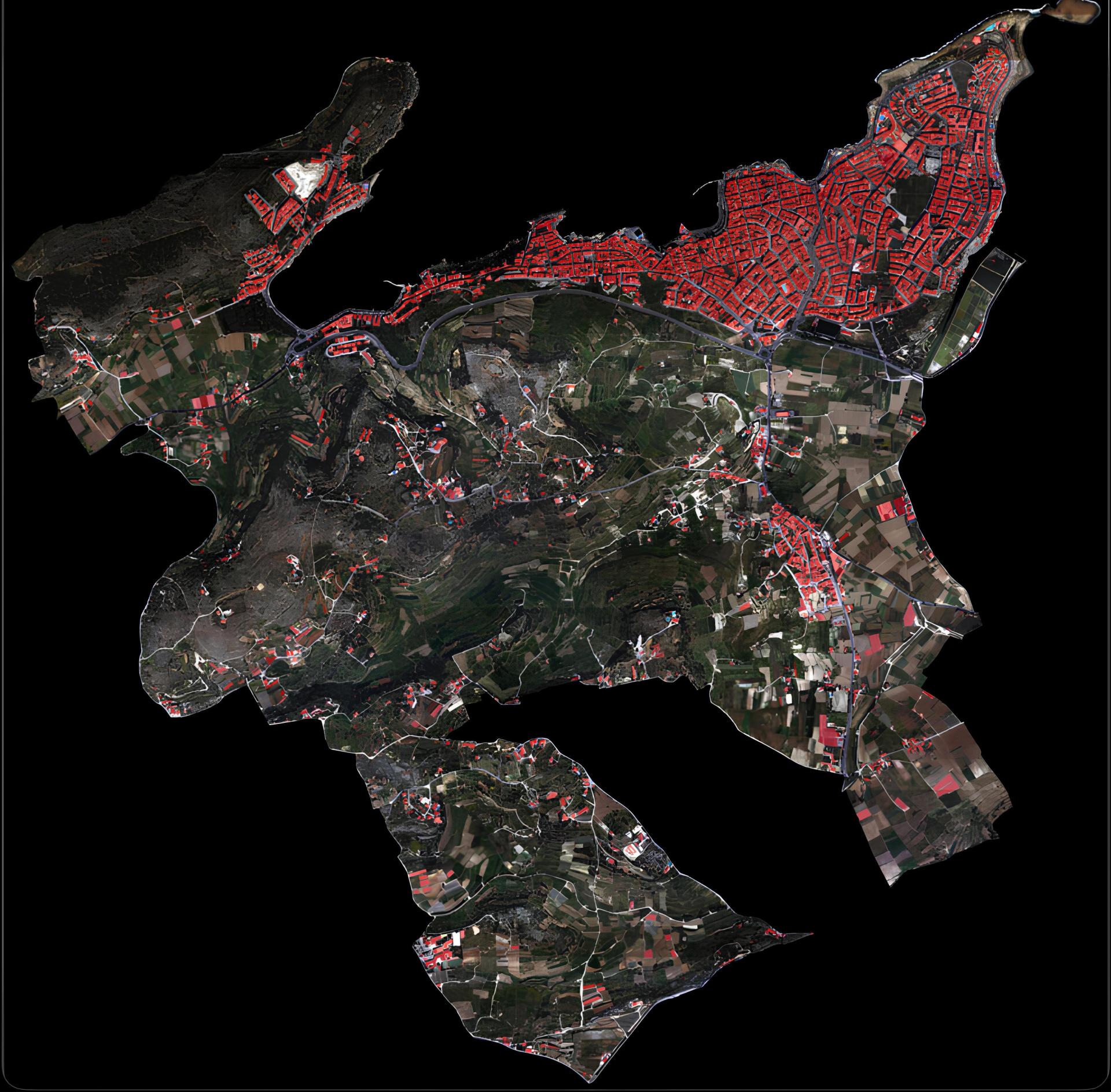 Image: EMBAT
Why updating a basemap is complex
At first glance, detecting buildings from above sounds straightforward. In practice, it is anything but.
Malta’s buildings vary widely in shape, colour, and material. Roofs are frequently obscured by shadows, neighbouring structures, or vegetation. Imagery captured at different times and across different years introduces further complexity: shadows shift, lighting changes, and resolutions vary, especially between older aerial imagery and newer satellite data.
A shadow can completely hide a roof edge, while a dark surface might be mistaken for an empty plot. Even small-scale structures in rural areas may occupy only a handful of pixels yet carry significant planning and enforcement weight.
Generic off-the-shelf software struggles under these conditions and is rarely suited to the Maltese context. Consequently, EMBAT was designed from the outset around these specific local challenges.
Teaching systems to see consistently
Achieving consistent interpretation across large volumes of imagery is difficult, particularly in complex urban environments. EMBAT tackles this with an end-to-end AI pipeline that learns how buildings appear in Maltese aerial and satellite imagery, applying that knowledge systematically across large areas.
The process begins with high-resolution imagery and authoritative PA building footprint data. These are broken down into smaller image tiles suitable for AI analysis. Each tile is paired with precise building outlines, teaching the system to recognise a roof edge, a boundary, or a building footprint from above.
However, a critical step occurs before building detection even begins: dealing with shadows.
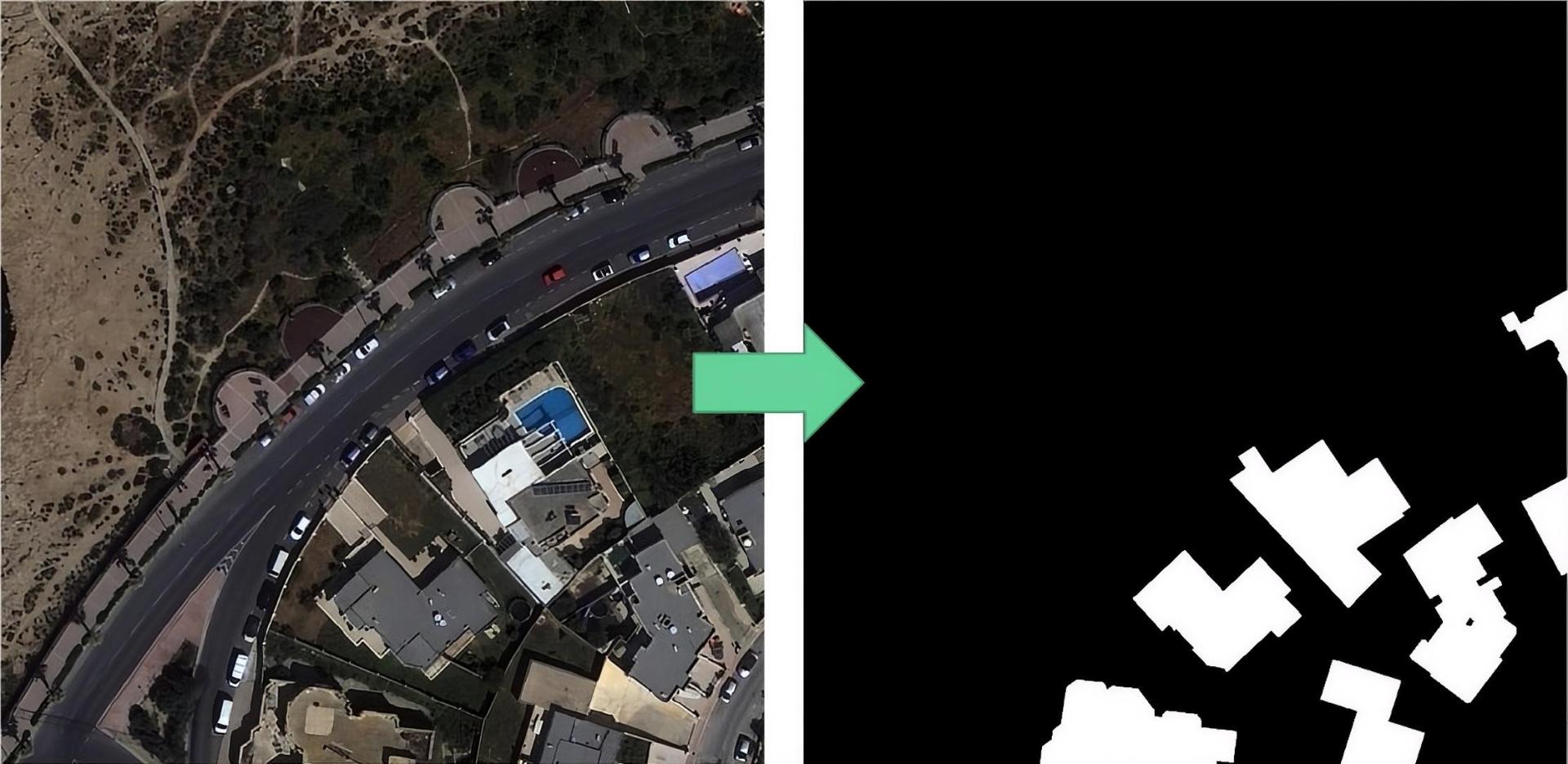 Left: tile extracted from orthophoto imagery. Right: corresponding binary mask representing building boundaries
Why shadows matter
Shadows are not simply a visual inconvenience. They alter pixel brightness unevenly, distort edges, and frequently cause automated systems to miss parts of buildings. In dense urban areas like Malta, shadows can merge with roof surfaces or mask narrow structures entirely.
EMBAT tackles this by explicitly detecting and correcting shadow regions prior to analysis. By normalising illumination across image tiles, the system produces imagery that is far easier for both AI models and human reviewers to interpret accurately. This single step yields a meaningful improvement in reliability, particularly where narrow streets and tall party walls dominate.
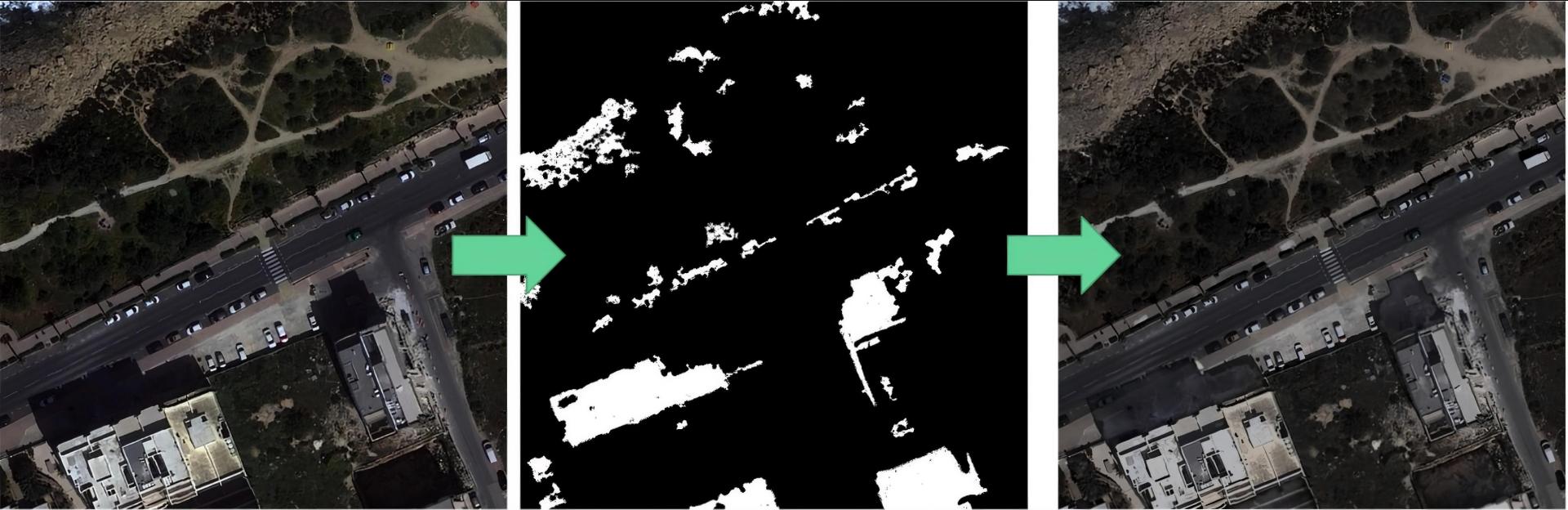 Left: shadow-affected orthophoto image tile. Centre: detected shadow mask. Right: shadow-corrected image produced after illumination normalisation.
From images to usable planning data
Once the imagery is corrected, AI models trained on hundreds of annotated examples segment buildings at the pixel level—not simply flagging a building’s existence, but outlining its precise footprint. This state-of-the-art image segmentation approach has been fine-tuned specifically on local data.
These predicted footprints are then compared across different years. By contrasting 2018 aerial imagery with 2024 satellite data, the system produces a structured picture of change, automatically flagging new buildings, demolitions, and modifications.
Crucially, the outputs go beyond illustrative visualisations; they are delivered as operational GIS data layers that integrate directly into existing PA workflows, allowing geomatics staff to review, validate, and act on the detected changes.
Keeping humans in the loop
EMBAT is designed as a decision-support system, not a replacement for professional judgement. The “human-in-the-loop” concept is central to its operation: AI handles large-scale, repetitive scanning at speeds and consistencies unmatched by human teams, while qualified experts retain full responsibility for interpretation, verification, and final decisions.
In practice, PA geomatics staff do not receive a machine verdict. Instead, they receive a prioritised list of flagged changes to assess, approve, or investigate further. Reducing the time spent on manual tracing and visual comparison frees specialists to focus on complex cases, policy implications, and on-the-ground verification where genuinely needed.
Laying the groundwork for data-driven planning
Malta’s built environment is changing rapidly. On a small island with finite land, every unauthorised structure, unrecorded demolition, or undocumented modification carries real consequences for planning, enforcement, and public trust.
While keeping the basemap accurate will never be simple, EMBAT illustrates a future where the gap between what is built and what is recorded closes rapidly. With AI handling prediction, geomatics staff spend less time tracing rooftops. The decisions that matter most deserve human expertise. Map tracing does not.
Andrea Filiberto Lucas is a Research Support Officer in the Department of AI at the University of Malta