
Updated 10.37pm
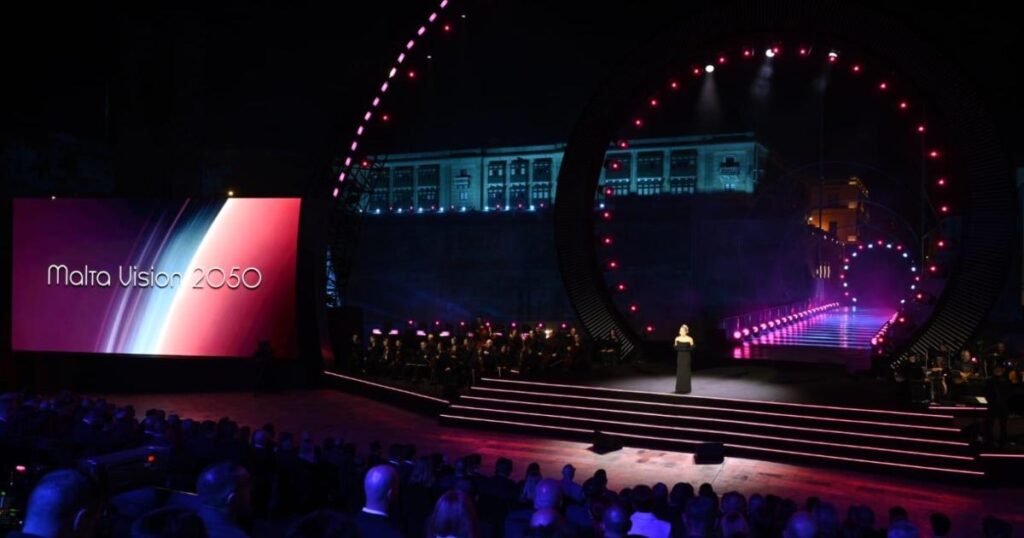
The government launched its Malta Vision 2050 strategy on Friday night in a lavish ceremony outside the gates of Valletta, where it committed to delivering on 100 targets by 2035.
The high-profile televised event featured speeches by Cabinet ministers, entertainers and sports personalities, and featured a live orchestra, drones and a large illuminated set.
International opera star Joseph Calleja performed the national anthem, backed by a choir — including the participation of Prime Minister Robert Abela — rounded off by a fireworks display.
The strategy, described as a holistic plan for the next 25 years, is anchored in the stated ambition of creating “a safe and resilient nation, inspired by its heritage and driven by progress, which promotes a healthy quality of life for all”.
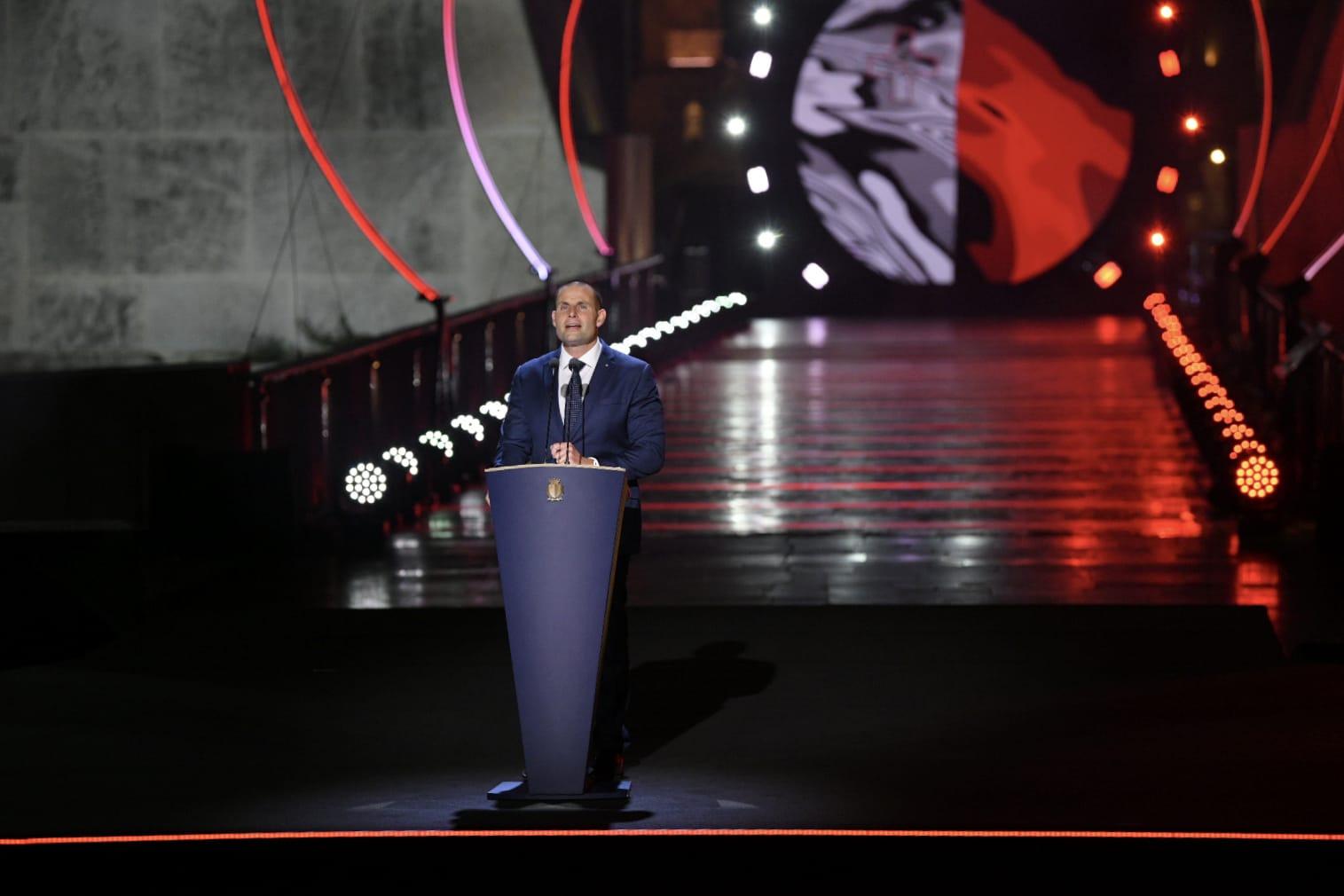 Prime Minister Robert Abela laid out the aims of the government’s strategy. Photo: Matthew Mirabelli.
It consists of 100 so-called macro measures, each supported by baselines and key performance indicators.
Through a dedicated website, citizens will be able to follow implementation via a public dashboard.
A reporting system managed by a Project Management Office within the Office of the Prime Minister will coordinate delivery across ministries, while a steering committee will oversee updates to ensure the document remains “relevant and responsive”.
‘New era of achievement’
Addressing the assembled audience, which also included foreign dignitaries, the prime minister described Malta Vision 2050 as, “A promise that we will do our very best to be the best we can be”.
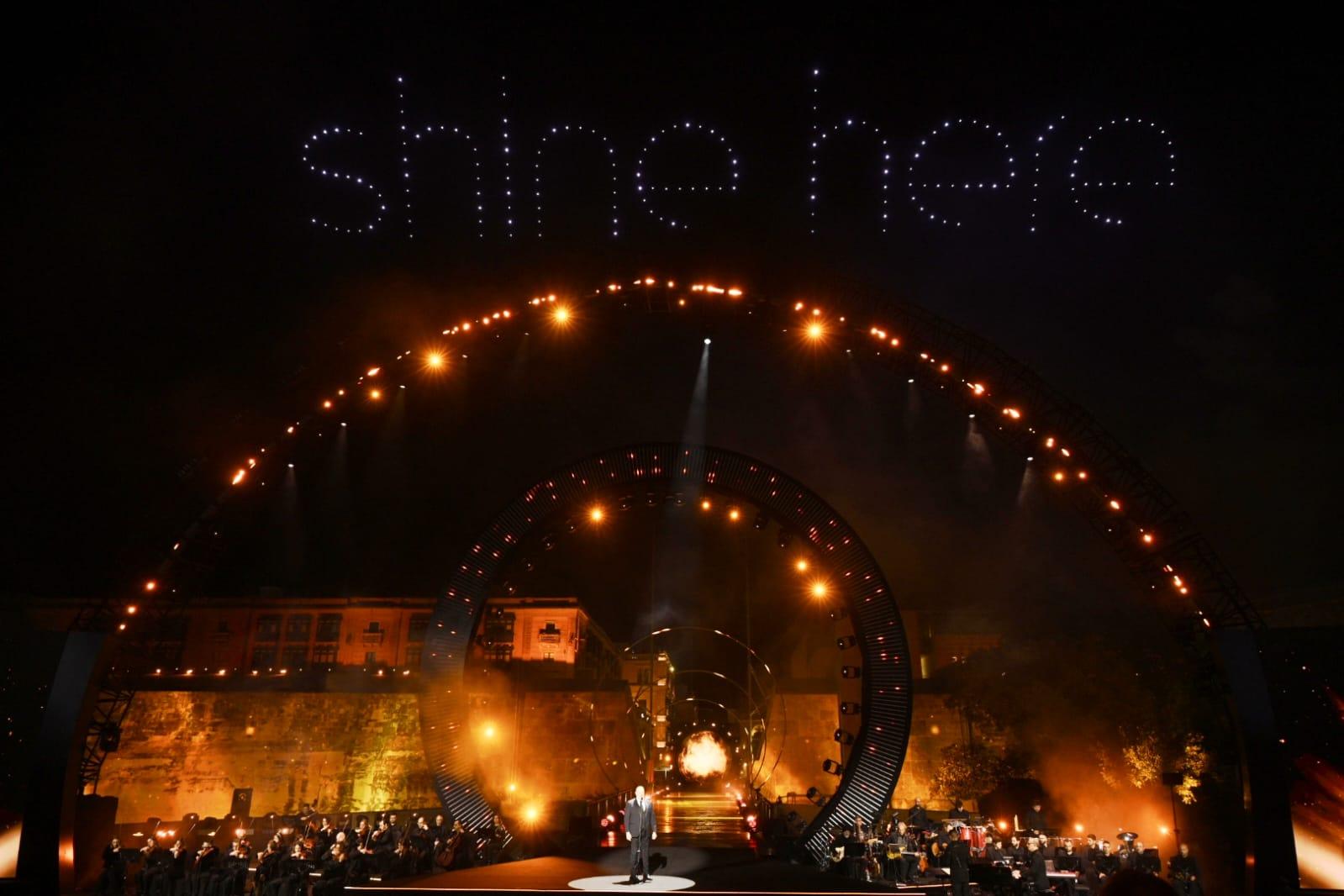 Drones took to the skies overhead. Photo: Matthew Mirabelli.
“The time has come for a new era of achievement, the pinnacle of our times, in which we meet the best version of ourselves”, said Abela. “The time has come for our country’s destiny to be written, and for us to begin living it at its very best, for ourselves and for our children.”
Emphasising that in light of the rapid pace of change seen across the world, the country needed to move beyond five-year plans and instead plan further ahead and beyond each election cycle.
Describing Malta as an economic engine among the best in Europe, the PM said the government wanted to “enter a new chapter in the history of this country that is so dear to us”.
“Vision Malta 2050 is not just a plan. It is a new way of living… Together, we can build the best Malta.”
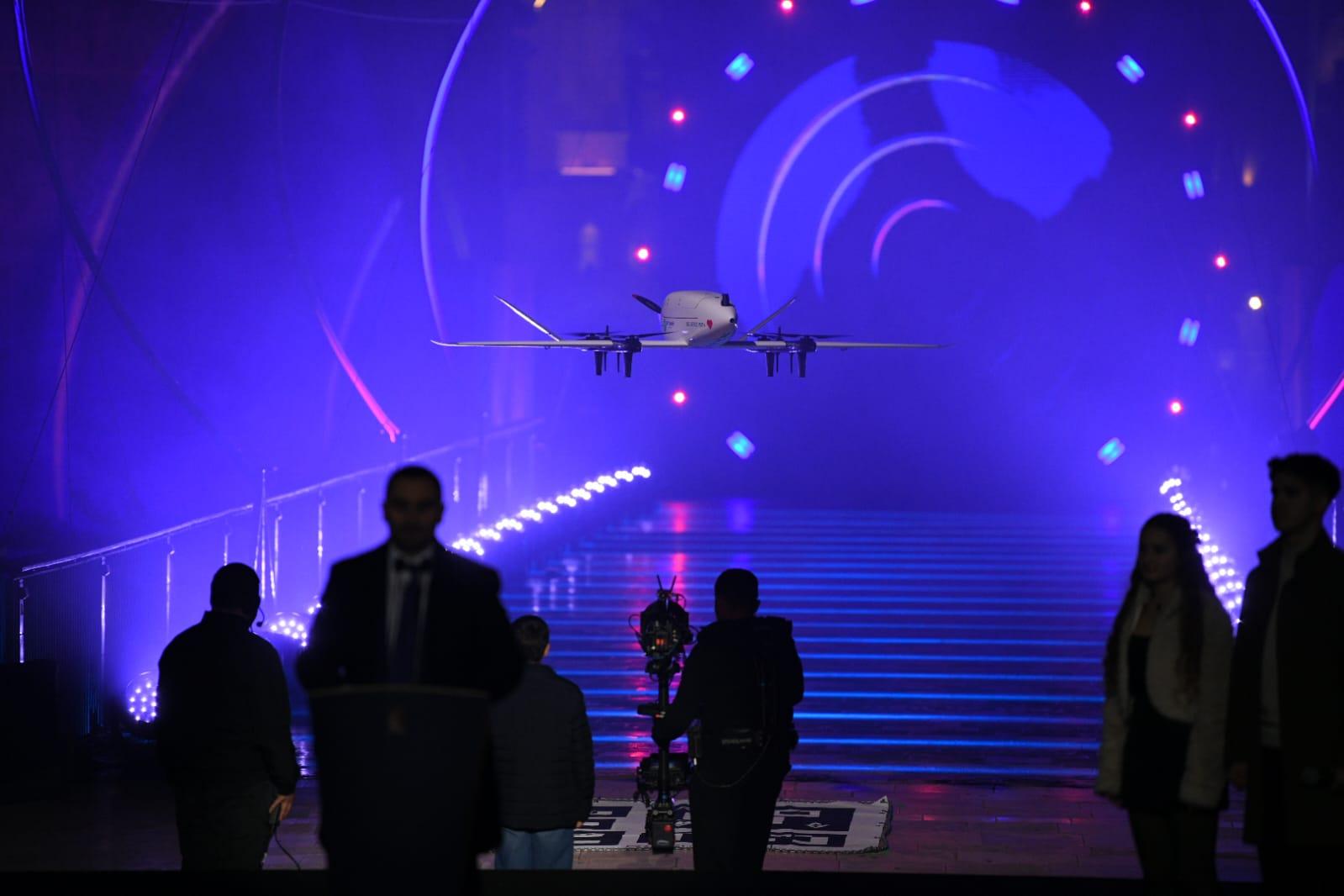 The event also saw the use of drones. Photo: Matthew Mirabelli.
Abela invited assembled dignitaries to pass on a “global message” that if Malta Vision 2050 resonated with those overseas, “then this can become their new home”.
He appealed to tourists, so-called digital nomads and others seeking to work in Malta, as well as retirees, to consider the country as their next destination.
“Our story will truly become a beacon of promise and hope to the rest of the world.”
Pledges
The high-profile event included some of Malta’s most well-known performers and sports personalities, who were asked to share their pledges for the next 25 years in a nod to the government’s strategy term.
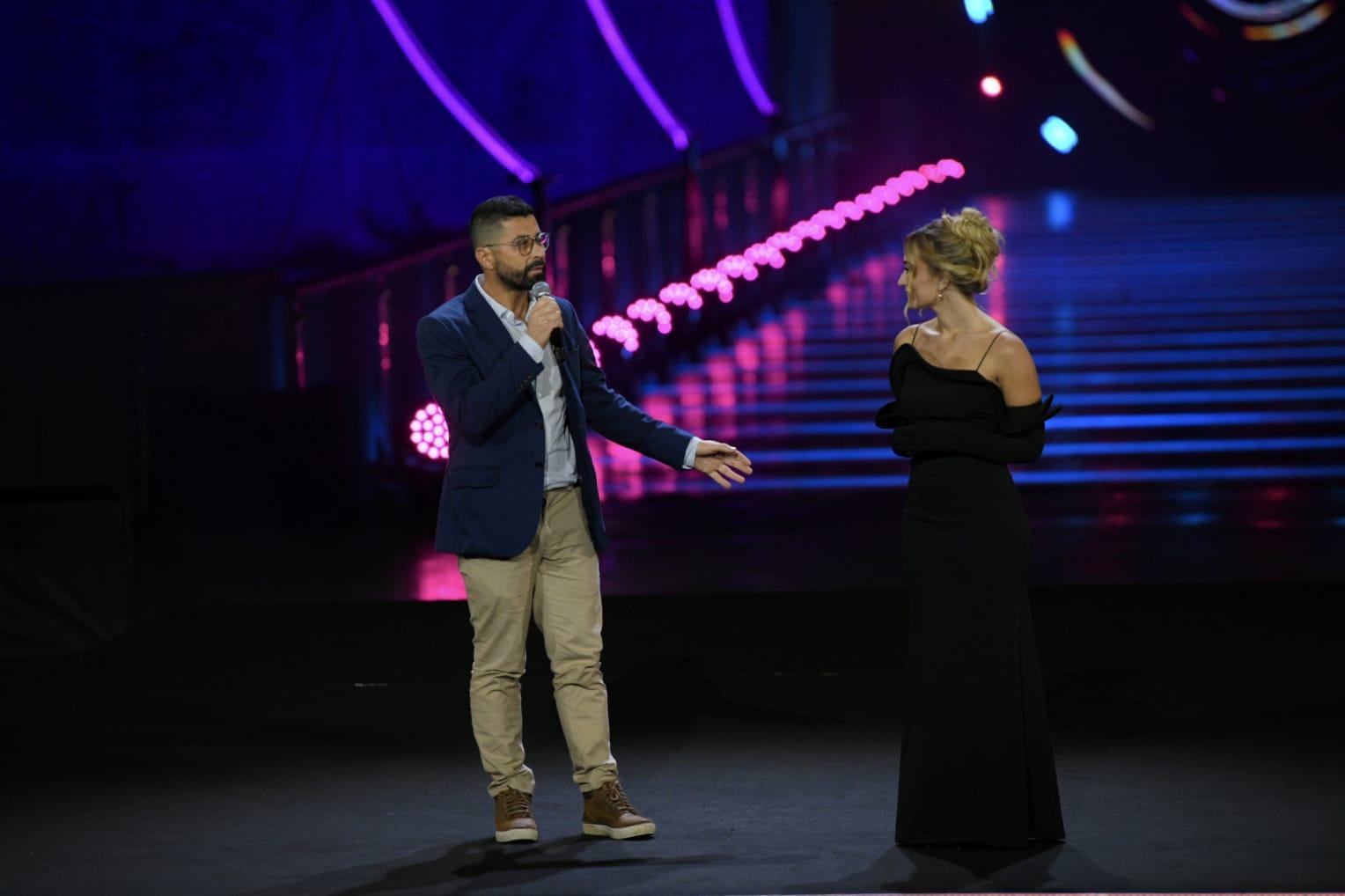 Neil Agius pledged to protect the sea over the next 25 years. Photo: Matthew Mirabelli.
Olympian swimmer Neil Agius stressed his enthusiasm for the sea, which he said had inspired him in his athletic feats over the years.
Asked his pledge for the next 25 years, he said: “I pledge to protect the sea, which inspires all of us… I pledge to be the sea’s voice when it’s silent.”
Popular singer Ira Losco was up next, performing a song backed by dancers. Her pledge spoke about the importance of pursuing one’s passion and believing in oneself.
Footballer Haley Bugeja pledged to “give back” to her country.
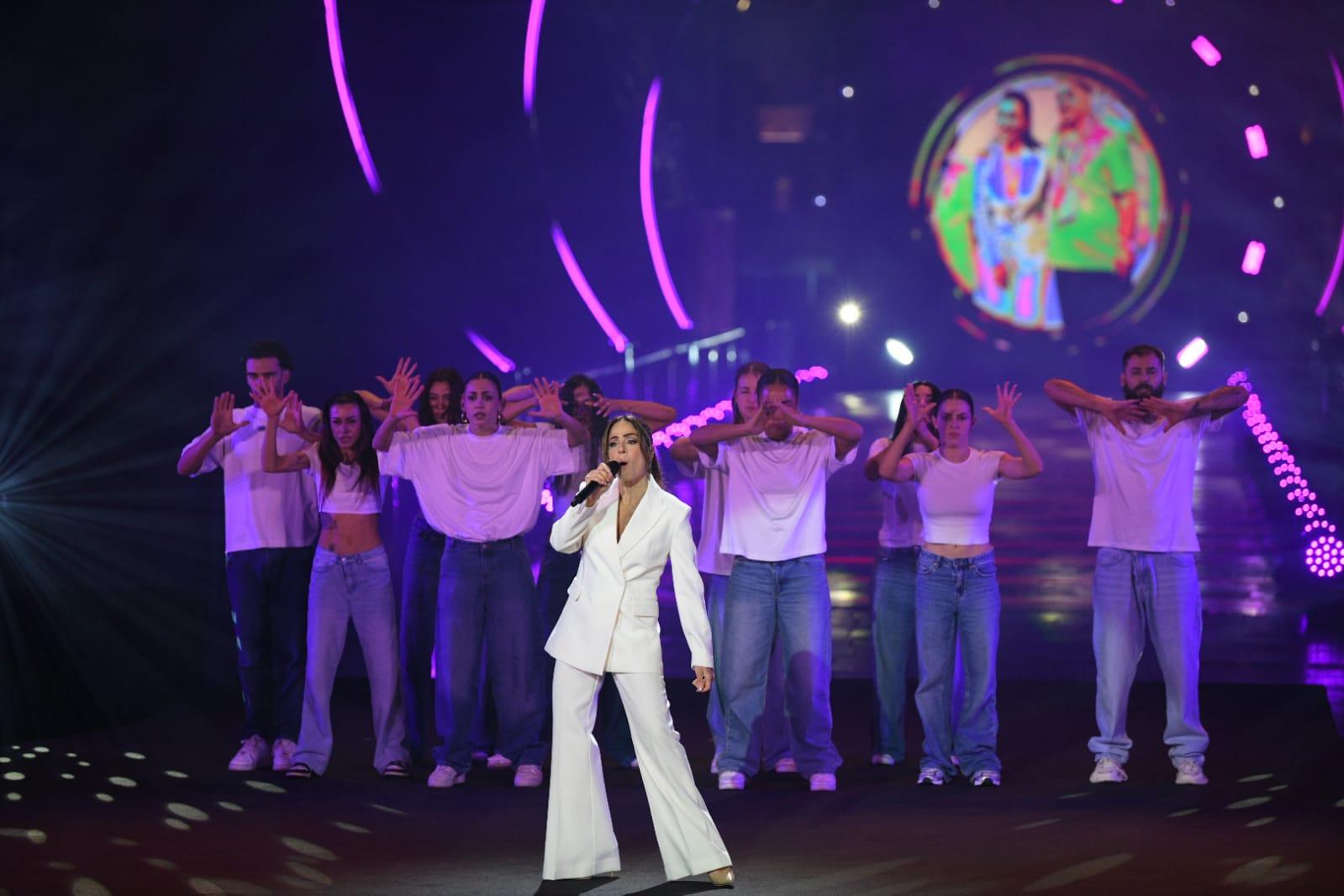 Ira Losco took to the stage backed by dancers. Photo: Matthew Mirabelli.
The night also saw dancers take to the stage, as well as, unconventionally, a rap-and-Għana performance.
Evoking a futuristic aesthetic, drones could be seen flying in formation above the stage, spelling out ‘Malta’ in the sky above the assembled guests.
Calleja returned to the stage for performances of the classic 1975 song Xemx and Puccini’s opera favourite Nessun Dorma aria.
Four pillars
Vision 2050 is structured around four core pillars.
The first focuses on sustainable economic growth, signalling a shift from expansion driven by volume to a model centred on productivity, higher value-added sectors and improved living standards.
The second pillar promises accessible, citizen-centred services, with reforms in mobility, healthcare and digital government aimed at improving everyday interactions between residents and the state.
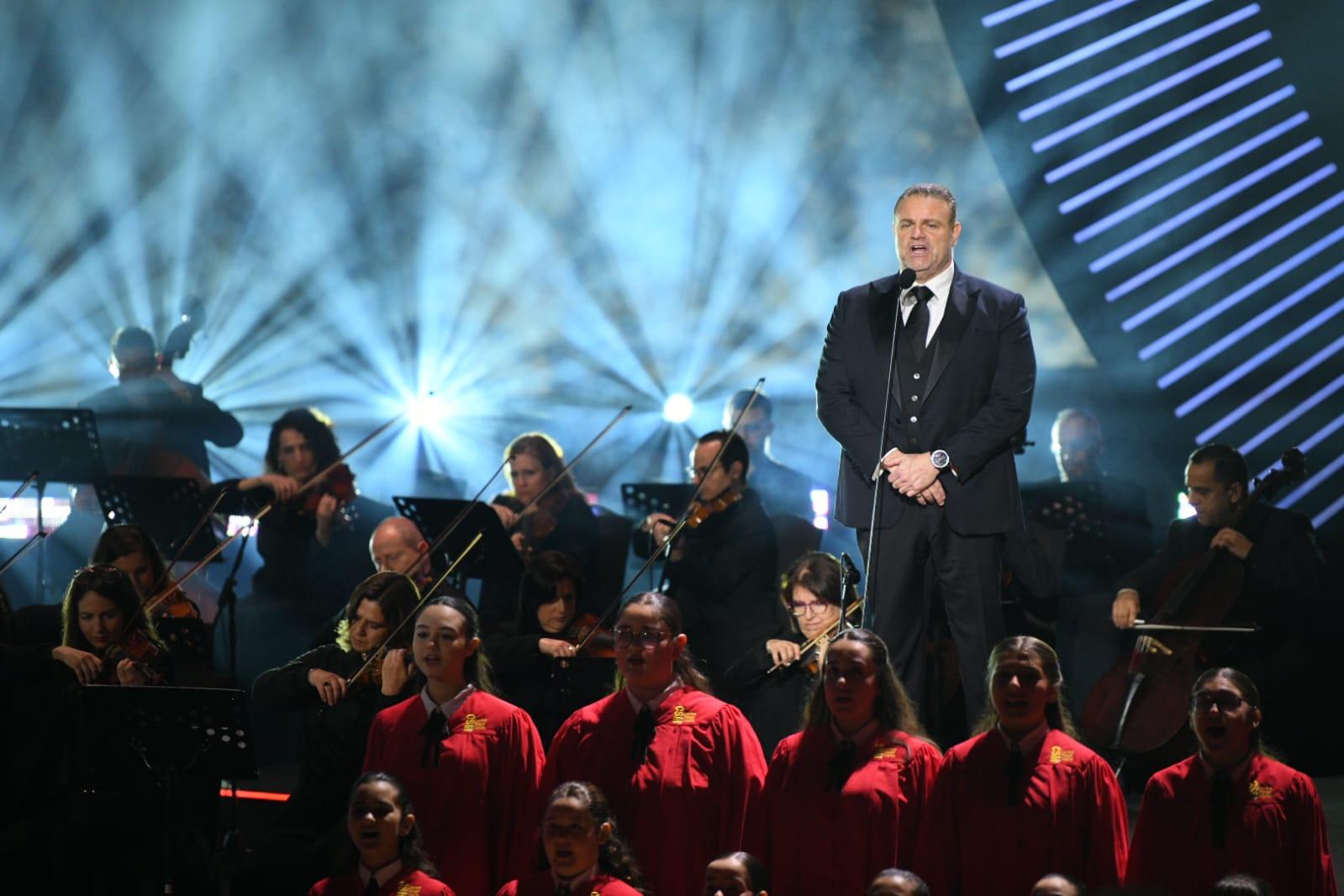 Joseph Calleja took to the stage for a performance of the national anthem. Photo: Matthew Mirabelli.
The third pillar addresses resilience and education, acknowledging pressures from technological disruption, climate change and demographic trends.
It includes curriculum reform aligned with STEAM and digital skills, a €91 million school modernisation programme and the establishment of a national skills intelligence system to anticipate labour market needs.
It also outlines energy security measures, including a €300 million second electricity interconnector, expanded renewable energy exploration and the development of a National Climate Resilience Plan.
RELATED STORIES
The fourth pillar focuses on smart land and sea usage, combining environmental protection with regeneration initiatives. Among the commitments are transforming Fort Campbell into a national park, converting White Rocks into an ecological coastal park, redeveloping Manoel Island as a car-free peninsula and creating or renovating 150 green spaces across Malta and Gozo.
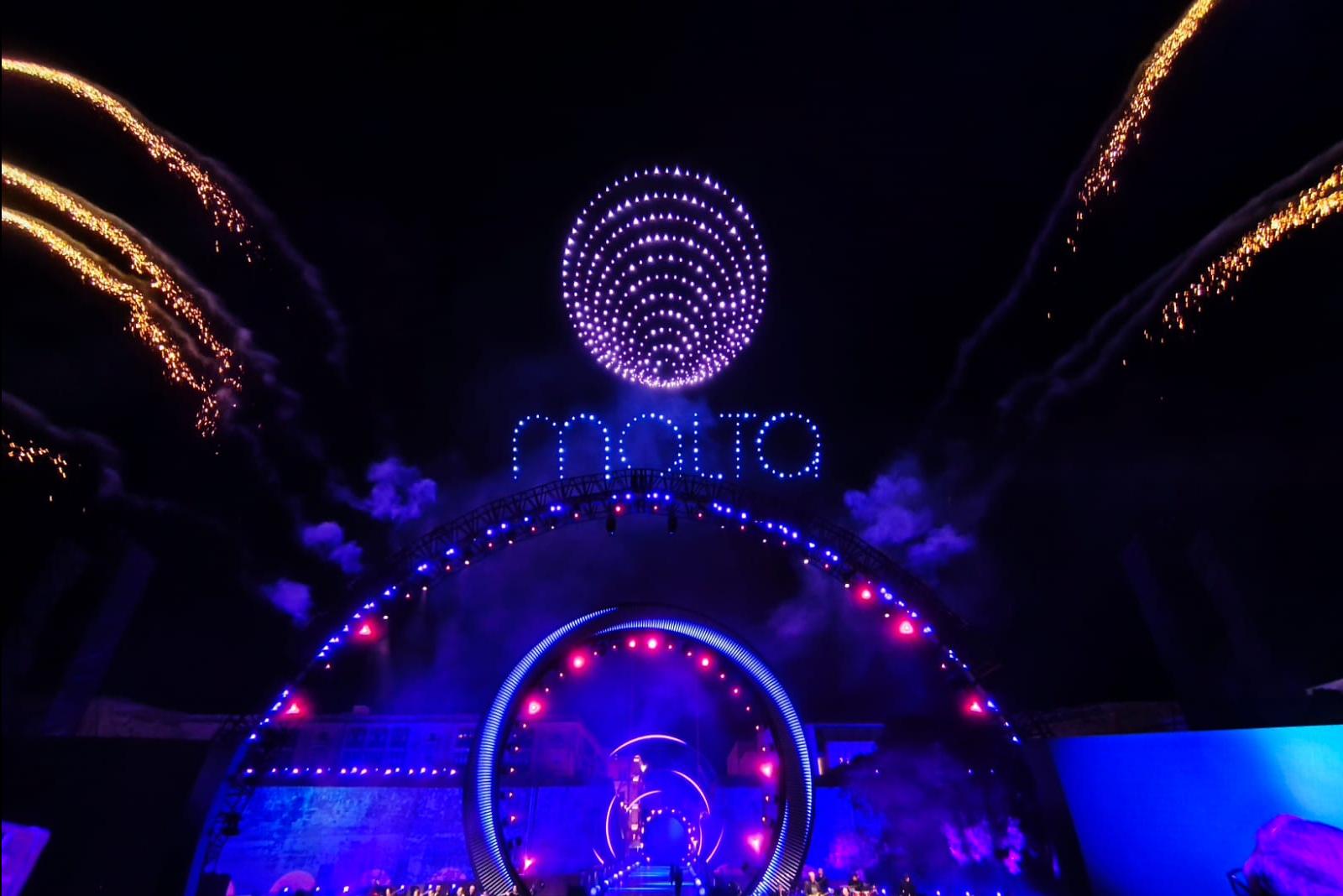 The ceremony featured a large illuminated set. Photo: Matthew Mirabelli.
Flagship projects – but limited detail
To make the strategy more tangible, the government has identified six flagship projects. These include the introduction of a mass transit system for the first time in Malta, reforms to public transport, expanded healthcare capacity, education reform, energy transformation and a comprehensive Grand Harbour regeneration and national gateway renewal plan.
However, several of the most significant proposals remain broad in outline.
While the strategy confirms that a mass transit system will form part of the mobility overhaul, detailed plans have not yet been published. Officials said specifics – including the system’s design, phasing and financing structure – will be unveiled in the coming months. No final model or cost estimates have been disclosed at this stage.
Similarly, while the document refers to measurable targets, many of the 100 macro measures are presented at a high level, with detailed breakdowns and costing yet to be made public.
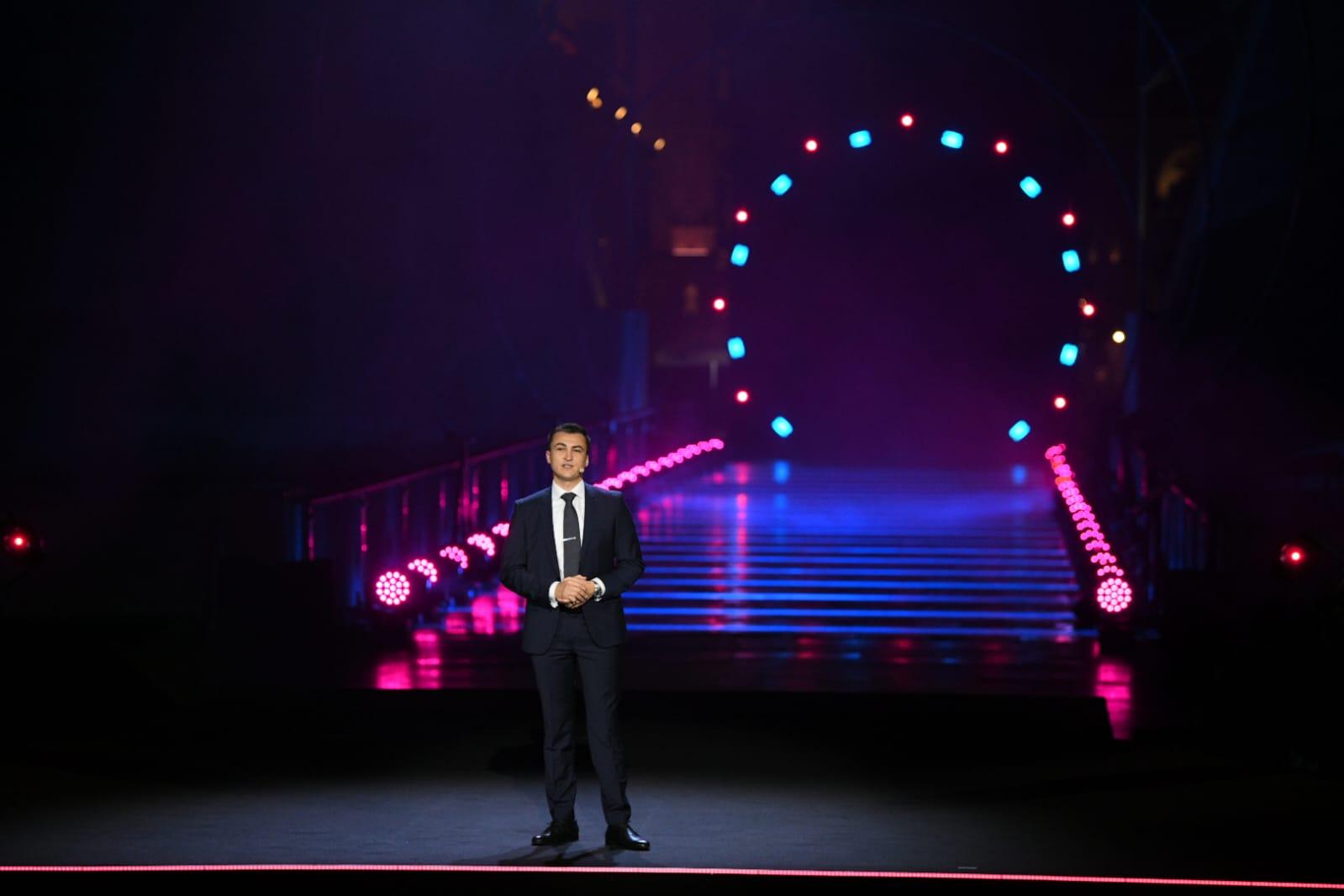 Economy minister Silvio Schembri was one of the first speakers at Friday night’s event. Photo: Matthew Mirabelli.
The overall budget of Vision 2050 has not been disclosed. Officials said it was premature to provide a total cost, given that some projects are still being refined and will rely on a mix of national funding, EU funds, public-private partnerships and private investment.
While the long-term price tag remains unclear, the government confirmed that €4.5 million has been allocated for the Vision 2050 launch and related initiatives, including the metallic cube-shaped pavilion in Floriana and associated events.
The launch forms part of what officials described as a broader national engagement process to promote the strategy.
The document states that Malta’s success will no longer be assessed solely through GDP growth. Instead, it introduces three international benchmarks intended to measure quality of life: the UN Human Development Index, EU median disposable income and life satisfaction rankings.
Malta aims to climb from 24th place globally in the Human Development Index to the top 20 by 2035 and into the top 10 by 2050. It also aims to rise above the EU average in disposable income by 2035 and move into the top five EU countries for life satisfaction by mid-century.