
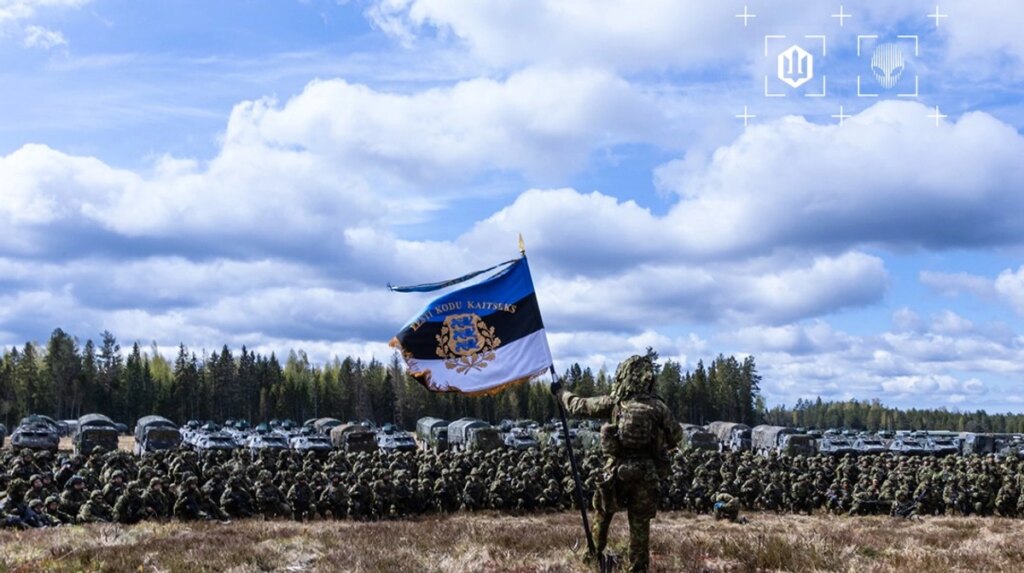
Among the Ukrainian units that took part in the May 2025 NATO exercises in Estonia – where European forces were reportedly “defeated” – were pilots from the 412th Nemesis Brigade. Over three days, they carried out nearly 30 bomber-drone missions and notched up 14 simulated equipment kills.
Source: Pavlo Laktionov, Deputy Brigade Commander of the 412th Nemesis Brigade, during the Ukrainska Pravda conference “War 2026. Humans vs Machines.”
Details: The success of Ukrainian troops during the NATO drills was first mentioned in February 2026 by The Wall Street Journal. Laktionov said the exercises brought together troops from 13 European countries, with total personnel reaching 16,000. Nemesis was represented by four servicemen: an operator, a navigator and two ground crew members – “the best of the best, taken straight from combat units as a bonus,” he said.
Advertisement:
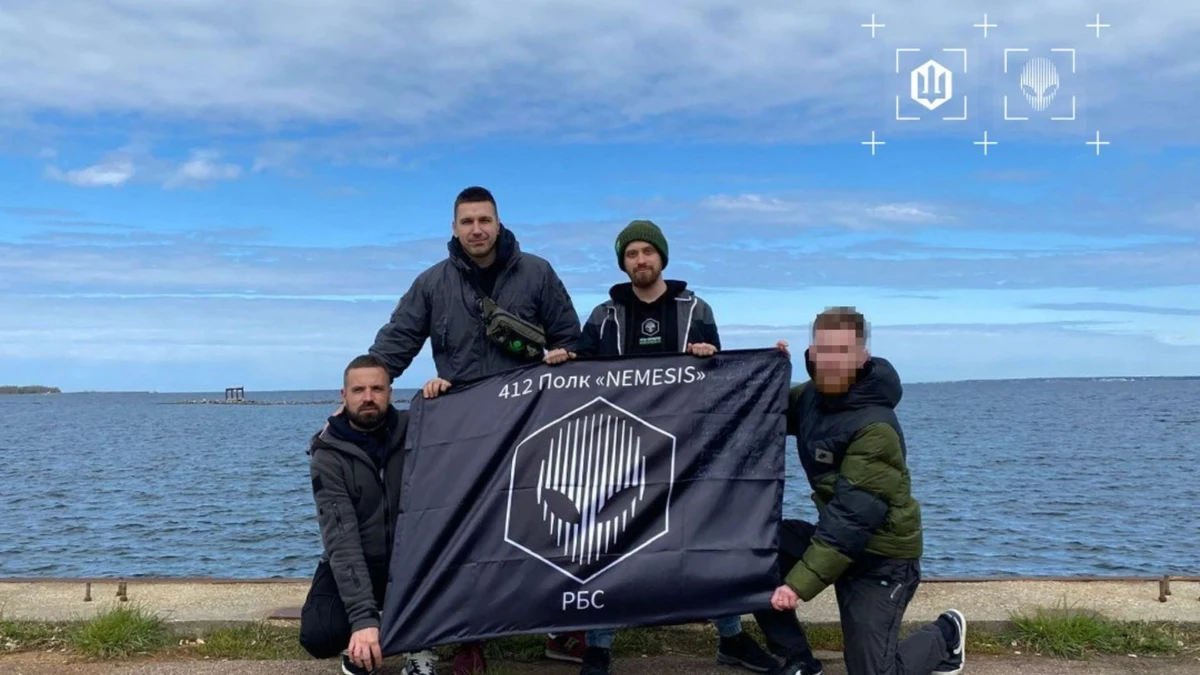
Nemesis servicemen during the NATO drills in Estonia in May 2025
Photo: 412th Nemesis Brigade
European forces initially struggled to understand how to integrate a bomber-drone crew beyond striking mock targets, meaning the Ukrainian pilots had to take the initiative.
“Our unit was attached to an Estonian Army formation and placed under an Estonian officer who coordinated the entire UAV component. At first, they just didn’t know how to use us – they simply waited for something to happen so we could take part.
Our servicemen took the initiative and explained how we could be useful: not only as bombers, but also for logistics, reconnaissance, strike planning and more,” Laktionov explained.
Nemesis drone operators worked together with an Estonian crew operating a Vector reconnaissance drone – the Estonians identified targets, and the Ukrainians struck them. First, the units jointly reconnoitred a location where the assault group had set up a vehicle staging area. Laktionov said that the armoured vehicles were positioned as if in a car park, “concealed” under bushes and trees. The defending side, which included the Ukrainian crews, then mapped out the targets and the operation.
“It was like a shooting range – we were ‘destroying’ the equipment, choosing what exactly we could destroy. After just the second drop of our dummy munitions, we were asked not to hit the target directly but to drop it beside the target because a driver-mechanic nearly got injured in the head – he was sitting inside waiting for the buzzing to stop and got hit on the head with a mock munition,” the officer recalled.
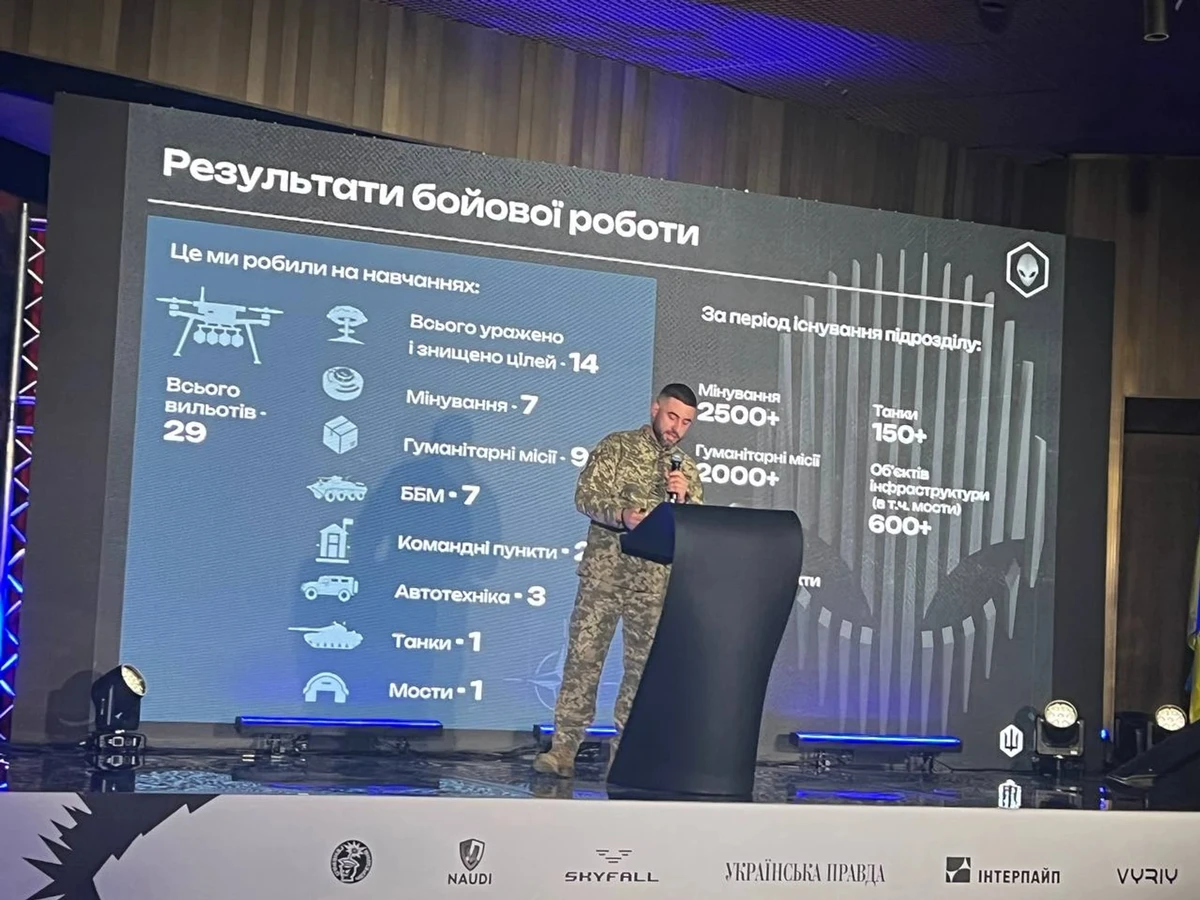
Deputy Commander of the Nemesis Brigade Pavlo Laktionov, during his speech at the Ukrainska Pravda conference “War 2026. Humans vs Machines”
Photo: “Oboronka” / Volodymyr Fomichov
The NATO exercise lasted five days. During that time, Nemesis fighters tried to explain to their European allies the various ways copter drones could be used, as well as how to operate situational awareness systems.
“We suggested: you’ve got a sniper team there, and you don’t know how to get Mavic batteries to them – let us deliver them. Once they figured that out, we kept bringing that sniper team batteries, water and Snickers. Then we brought them sleeping bags because they were freezing there.”
Over three days of flying, Nemesis fighters carried out 29 sorties – including logistics missions, target destruction and remote mine laying. They were credited with 14 destroyed targets: seven armoured combat vehicles, one tank, three cars, two command posts and a bridge. They also conducted seven remote mining missions and nine humanitarian UAV missions.
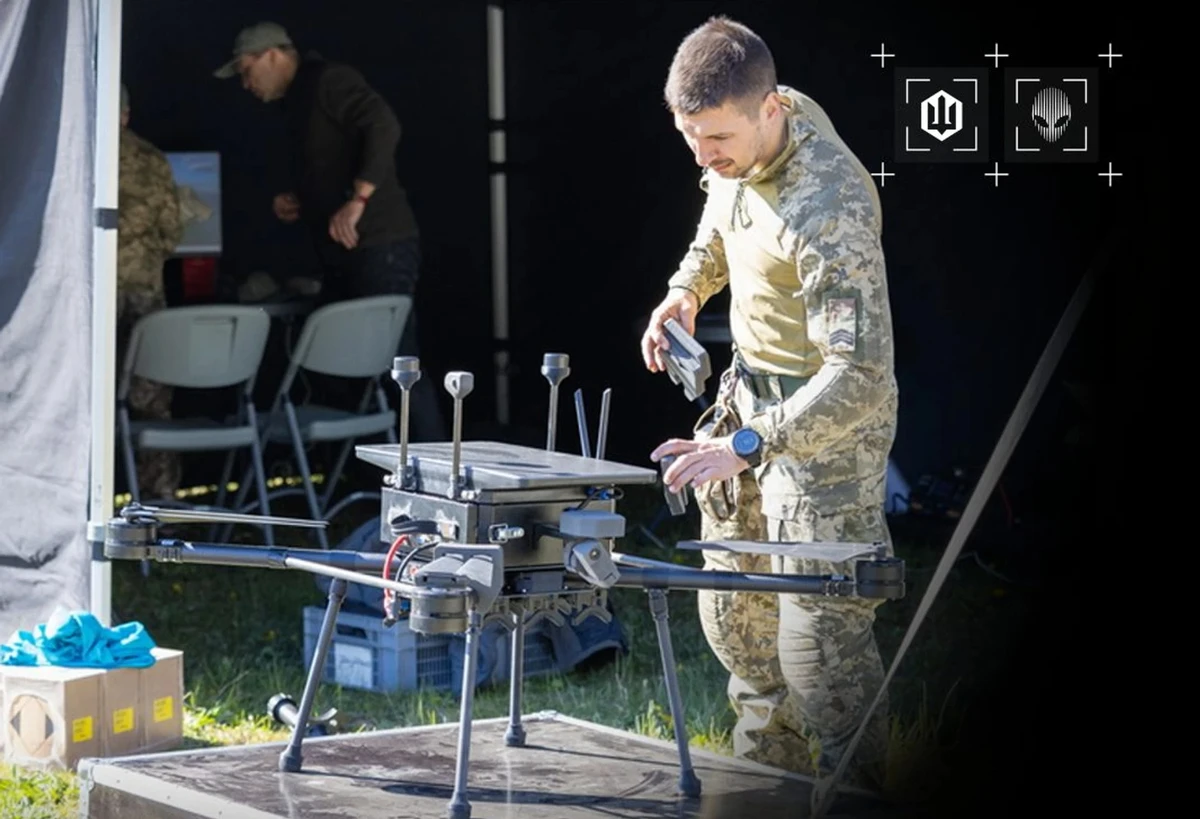
A Ukrainian drone operator prepares a copter drone for take-off during NATO exercises
Photo: 412th Nemesis Brigade
Pavlo Laktionov said that NATO forces were guided by experience from past wars, whereas for Ukraine’s defence forces, drones and other modern battlefield technologies are routine.
“The notional enemy relied on hiding their equipment in the forests, assuming it wouldn’t be accessible. They didn’t check roads for mines, even though key routes had been provisionally mined by us. This came as a complete surprise to the participants in the exercise, whereas for our guys it was ordinary routine work, carried out as if at a training ground, without any resistance,” explained the deputy commander of the 412th Brigade.
Since the brigade’s creation, Nemesis pilots have carried out more than 2,500 remote mining missions and over 2,000 humanitarian missions. Their crews have also struck more than 150 tanks, 300 armoured fighting vehicles, 70 command posts, 1,000 vehicles and 600 infrastructure facilities.
“In NATO, everything is very well written out – doctrines, rules, standards, protocols – but they are about war as it used to be. We had our own Delta system there, a situational awareness platform. We told them right away: you give us the targets, and we’ll strike them. For the first two days, a runner kept bringing our pilots a paper map saying: ‘Here’s the target, here are the coordinates, you need to hit it!’ Once, twice, three times. On the fourth day, we said: ‘No more paper – only Delta. Mark the points there; you can also drop a note in the chat, and we’ll see it.'”
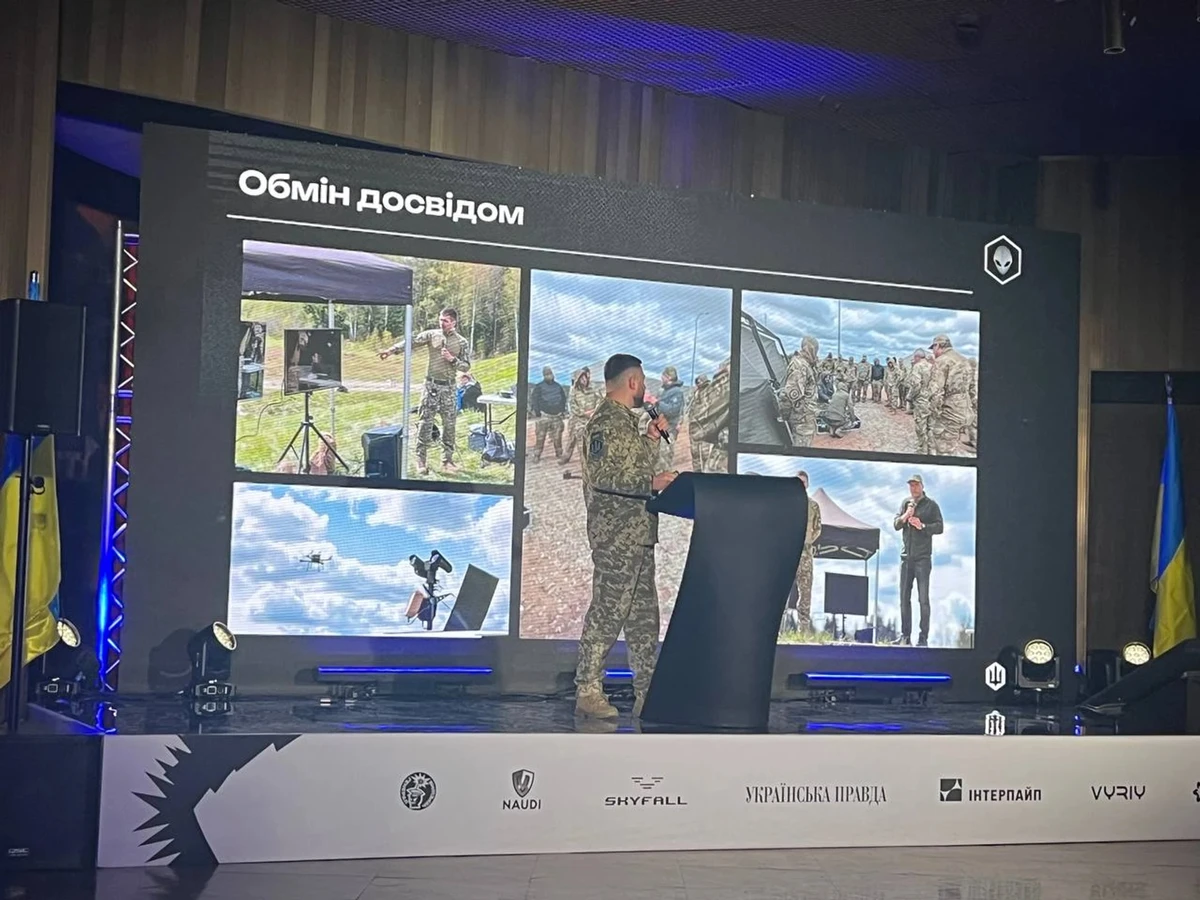
Ukrainian servicemen tried to teach Europeans the technologies of modern warfare
Photo: “Oboronka” / Volodymyr Fomichov
Pavlo Laktionov said that the experience of the NATO exercise in Estonia suggests that the war in Ukraine is shaping new standards and rules of warfare, which are also influencing NATO doctrine. The officer hopes that the setback will serve as a “cold shower” for allies and help them better understand modern war.
How the future battlefield may look, and the role drones will play in it, was analysed by Oboronka in the article: Drone swarm: the future of modern warfare or fantasy?
Support Ukrainska Pravda on Patreon!