
A mother from the Ukrainian city of Mykolaiv, who four years ago abandoned her entire life amid the chaos caused by Russia’s war against Ukraine and took refuge in Romania to protect her two children, has managed to launch her own fashion collection.
‘I came to Romania about four years ago, after the onset of war in Ukraine. I lived in Mykolaiv, the area where the major front line was. I came with two minor children; at first we stayed in Piatra Neamt, then we settled in Targu Mures. The children liked Romania, and my older son, Roman, told me he wanted to stay in Romania and learn the language. We didn’t know a single word of Romanian. My elder son, who was 14, was the first to learn Romanian. For me it was harder, but even so I quickly managed to find a job. I am a fashion designer and I found work at a tailor’s studio in Piatra Neamt, where I also began learning Romanian. After a year I met a Romanian man whom I married the following year. I have been living in Targu Mures for three years now and, with my husband’s help, I opened this fashion studio, because I have the necessary experience – in Mykolaiv I was running such a studio. But I left absolutely everything behind and came to Romania with two backpacks and two children,’ Yuliia Toma told AGERPRES.
With her husband’s support, she opened a studio specializing in wedding and evening dresses. Two years of hard work now culminated in her first public fashion show – a personal and professional success.
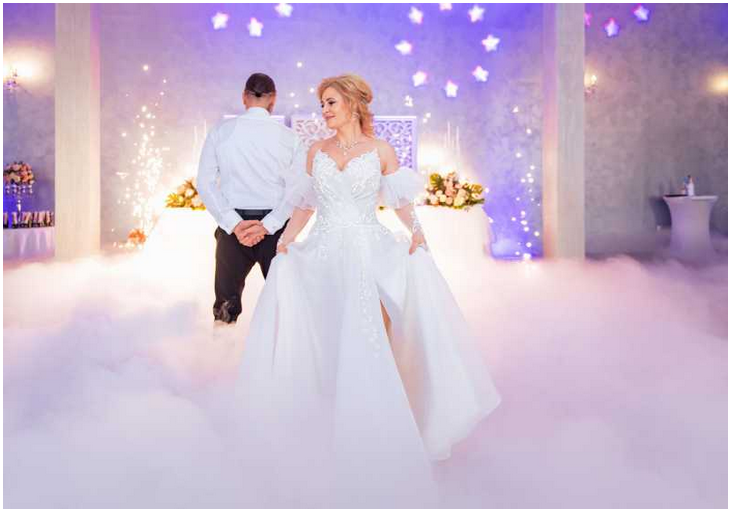
‘For two years I’ve been running this studio, where I make wedding dresses and evening gowns. I’ve put in a tremendous amount of work, but the results have already started to show, because recently I had my first fashion show with a live audience. In the collection (…) I presented 13 dresses designed and sewn by me: five evening gowns, two children’s dresses, and the others were wedding dresses. It was very interesting to see them on the models – I knew they were my creations, but it still felt like something new even for me. I loved the audience’s reaction, and I received invitations to continue presenting this collection. That means my work is appreciated and of good quality. So I was invited to present my collection again, on May 16, at the AutentiCita Gala organized by Carmina Cotfas, who was Miss Universe Romania. Well-known designers will be featured there, and I’ll be among them,’ Yuliia Toma says with excitement.

In this way, Yuliia has earned a respected place in the local community, and her story of resilience and success in a completely new world already inspires other refugees.
Despite the very difficult beginning in Romania – as the language and culture were completely unfamiliar to her – Yuliia managed to overcome all obstacles and follow her dream, proving that hope and success can flourish even from the ashes of war, if you truly strive for them.
‘It was easier in Ukraine because I was born there, I knew the language, the mentality, the traditions. (…) Here, in Romania, the first shock was that I didn’t know the language and it was very hard because of that. I felt very alone, and this weighs down on one’s mental state. But after I learned the language, everything became much easier,’ she says.
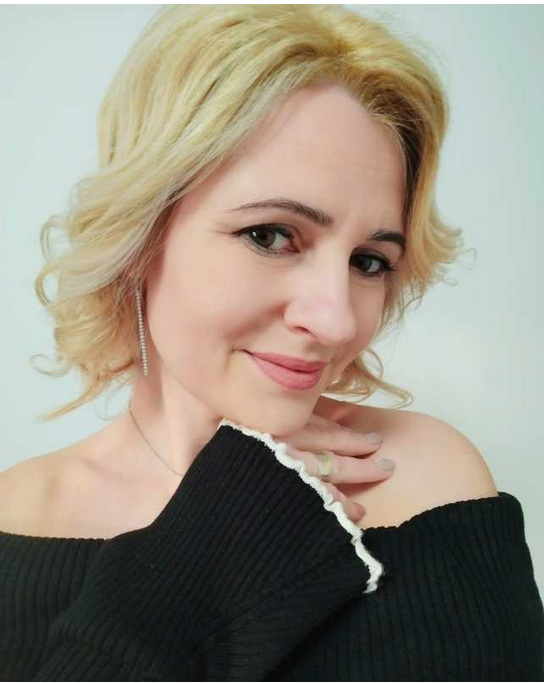
Mykolaiv was among the first cities attacked on February 24, 2022, it came under heavy bombardment as a strategic gateway to Odessa. Yuliia remembers that Mykolaiv was the scene of heavy fighting between Russian and Ukrainian forces, subjected to bombardments with cluster munitions, and that hundreds of casualties were recorded there in the very first days of the attack. She was extremely afraid for her children, so she decided to leave, even though this upset her mother.
‘They were dropping missiles right next to our house, so I bought tickets and left – I couldn’t stay any longer.’
Her mother and younger sister remained in Ukraine, which caused some tension. ‘Many families fled to other countries, and those back home don’t understand it – they see posts from there and think that life is easier for us. It hasn’t been easy at all, and we have worked very hard. I had to think first of my children, that they would be safe and able to go to school,’ she recounts.
‘Back in Ukraine I had been working in a fashion studio and I had just started building my own atelier, where I left all my mannequins, all the tools I needed, the invoices, the contracts – everything. I left it all behind and started again from scratch. Even though I knew how to design and sew, and I had hundreds of ideas, after arriving in Romania I was a bit afraid because I didn’t know if people would come, if they would like what I do. But I overcame that fear and kept going. I gained confidence when I saw people coming after I opened the studio, and that’s when I felt things were easing up,’ Yuliia emphasized.
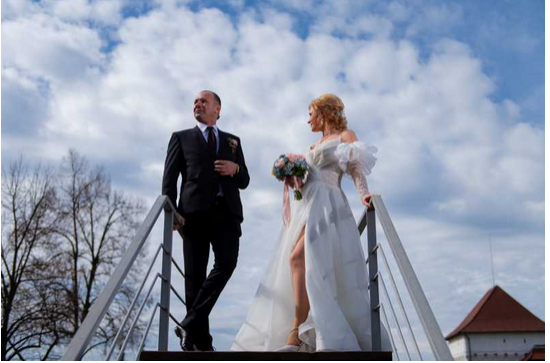
In her Targu Mures salon she currently works alone but hopes to hire others some day. ‘I love what I do – it’s hard work, but I love my job. For this collection I did a lot of thinking, spent sleepless hours, I worked 14 hours a day, but I constantly felt the support of my husband and my children, and that gave me strength. I like life in Romania, I like Romanians – they are very open, warm, and they smile a lot. Of course, there are also people who speak harshly, but around me I have always had very kind people. I’ve had some difficult moments, but I always received help. I always had someone to talk to, my children were never bullied at school, and we had no problems integrating. We understood that we now live in Romania, and if we want to be able to talk to Romanians, we must learn their language, not expect them to learn Ukrainian or Russian. It was a bit easier in Piatra Neamt because many people there are from the Republic of Moldova and they knew Russian, which helped me when I started learning my first Romanian words. I still have a lot to learn, but now I can communicate with people. I like life in Romania, I like the people here – they are forthcoming, they talk, they smile, they offer hugs, they are open and very warm,’ the designer said.
Her eldest son, Roman, was the first to learn Romanian, thus inspiring the whole family. Now 18, he studies at one of the most prestigious schools in Targu Mures, the ‘Alexandru Papiu Ilarian’ High School, and the younger one, Artem, is in fifth grade. Both children have learned Romanian and are doing very well in school, they like Romania and want to stay here.
‘I felt so sorry for my mother because, two weeks after we arrived in Romania, she started working without knowing the language, in an unfamiliar place. After she began working and I saw how serious she was about everything, I decided that if we wanted to stay here, we had to learn the language. I couldn’t talk to people in English or Ukrainian – my English wasn’t very good anyway. We were living in a village, and the people there spoke only Romanian. So I told myself that if we wanted to communicate – you can’t just stay home all day – we had to start speaking Romanian little by little. Then a priest’s wife took me to the National College of Informatics in Piatra Neamt, and I saw how the students there learn – they finish eighth grade and then enter high school. So after finishing middle school, I could either go to a high school in Ukraine or look for something in Romania. When I saw the high standards there and the big difference between a Ukrainian school and a high school in Romania, in Piatra Neamt, I seriously put my mind to it and decided I had to learn the language, I had to get this education. I had the whole summer to learn Romanian, to study math – I had problems there too – and to learn other things. Slowly, I entered ninth grade. It was a bit hard at first because I had to get used to everything, but the town was smaller and that helped us a lot,’ Roman recalls.
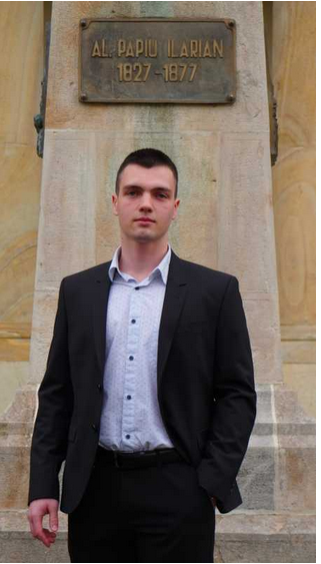
The young man admires his mother’s courage and determination, and he reveals that Yuliia’s life has been far more difficult than she lets on.
‘When you listen to my mother, everything sounds easy, almost like a beautiful story, because she doesn’t talk about many of the things that actually happened. But the truth is that behind it all there is an enormous amount of work. Even though this collection is beautiful and truly an achievement, many don’t understand that behind it are countless sleepless nights, Saturdays and Sundays spent working. Instead of going to a barbecue or taking a holiday, my mother would stay in the studio and work. So it wasn’t easy for her. It wasn’t easy in Piatra Neamt either, because to be a good seamstress without knowing the language, you have to find ways to manage. But I’m glad she succeeded, and I’m proud of what she has accomplished,’ Roman confessed.
The young Ukrainian not only made it to one of the best high schools in Targu Mures and even in the country, but also became an Olympiad competitor, qualifying for the National Chess Olympiad and later for the Economics Olympiad.
‘In ninth grade I had a fairly good grade. At ‘Papiu’ the last admitted average was 8.70, and I scored 9.12, so I qualified. It’s true that at that time Ukrainians had certain advantages: as a Ukrainian, if you wanted to attend a top university in Bucharest, Iasi, or Cluj, and learned Romanian or knew English well and had a diploma from Ukraine, you were supported to continue your studies. The same applied for high school. It was a major benefit offered by Romania, one that other countries did not provide. In Germany or elsewhere it was much harder to start studying if you didn’t know the language. In my case, learning Romanian helped me manage quite well, and now I take part in Olympiads all the time. I received a commendation at the National Chess Olympiad, I won the county-level Economics Olympiad, and I qualified for the National Olympiad. I’m doing well, and I’m sure it was also an advantage for the school to accept me. But the main element was the grade – if you have good grades and you work hard, you manage. And I’m really glad, because I’m doing well. It’s an extraordinary opportunity for someone who, four years ago, couldn’t imagine such a thing was possible,’ Roman said.
Yuliia confirms her son’s hard work: ‘I didn’t have to push him to study – he just did it. We encouraged each other, even when we were afraid and didn’t know the language. Having your family say ‘Keep going’ helps enormously. It means a lot when my husband tells me ‘You can do this, we’ll manage, we’ll figure it out’. Having your family’s support matters tremendously – emotionally, it makes all the difference,’ Yuliia Toma confesses.
Roman, who seems to have inherited his mother’s determination, says he defined his life goals as early as age fifteen.
‘I’m very interested in finance and economics. At fifteen I began reading extensively on these subjects; in tenth grade I even worked through an entire economics textbook on my own, although it wasn’t part of the curriculum. In eleventh grade I won the county round of the Economics Olympiad with a score of 9.40 and qualified for the national stage. Since September I’ve been preparing for the county round, and my aim is not only to reach the national competition but also to perform well there. I’m considering studying economics, probably at ASE, and working in finance, investments, or banking. I’m also passionate about history, including Romanian history, and I’m interested in political studies and understanding how a country can develop, how Romania can improve. This is the plan I’ve set for myself, although just as I couldn’t foresee my life five years ago, I can’t predict what the future holds in store for the next five years,’ he said.
Asked whether he regrets leaving Ukraine, Roman says he believes his mother made the right decision.
‘To be honest, I didn’t have much tying me to Ukraine. My family is my mother, my younger brother, and now my stepfather. We have relatives there, but we weren’t close. At fourteen, and with my brother only seven, leaving was clearly the best choice, especially since the region was crucial for Ukraine’s defense, with access to the Black Sea and the country’s ports. Mykolaiv was seen as a sort of stronghold, because it was believed that if it were occupied, the entire southern region would fall. So the city was heavily bombarded. And during the first three weeks, when it was a frontline city between Russia and Ukraine, it was subjected to extremely intense shelling. It was extremely dangerous to stay. I believe it was the right decision for us children and for my mother to leave and try to build a safer, more peaceful life,’ he replied.
He adds that he has no regrets and, although he didn’t fully understand the situation at the time, he now sees how important that decision was.
‘I think Ukrainian women and children who remain there could manage in other countries and could build a better life elsewhere, then return to Ukraine if they wish, once there is peace. Especially for children, living in a war zone is deeply traumatic,’ Roman argues.
His mother agrees with him: ‘I was afraid to leave, but after a bombardment near our home I saw the eyes of my younger child and understood his fear. Even here, when he hears an ambulance or fire-engine siren, he becomes uneasy. The good part is that he hasn’t withdrawn, as some children do after such experiences. He has turned the trauma into strength – he studies chess, does well in school, and integrates. It matters enormously that the parent stays determined and doesn’t give up, even when things are difficult.’
Roman is pleased that his younger brother, Artem, follows him while he studies economics and seems to be developing the same interest.
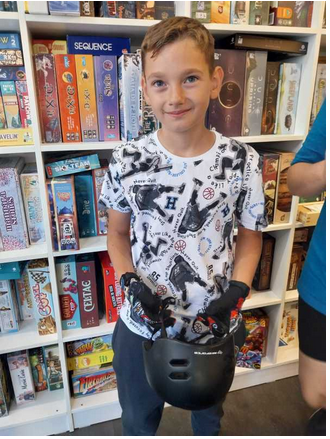
‘He pays close attention and asks many questions – it really surprised me. He has begun to show real curiosity, and now he’s reading Animal Farm by George Orwell, which is quite demanding for his age, but we discuss it together. I read Dostoevsky’s Crime and Punishment at fourteen, and that was my starting point. It’s the same for him. I want him to read different books, because you can’t grow your mind if you spend all day playing on the computer. I spend time with him, we talk, and when I tell him that one day we might work together, he becomes motivated,’ Roman said.
Carmina Olimpia Cotfas, Miss Universe Romania 2021, and who is now active in the fashion industry, says she began working with Yuliia Toma two years ago and that Yuliia has proven to be a highly reliable collaborator.
‘She is a true professional and takes her work very seriously. She works down to the last detail, aiming for perfection. She never settles for less than what she envisions, and her creations reflect that – they are beautifully made and appreciated for their quality. Yuliia has just presented 13 evening outfits for women and children, including bridal and semi-bridal designs, all created specifically for our models, which shows how seriously she approaches her craft. The collection is expected to expand and will be presented again at our upcoming AutentiCita Gala, a fashion and cultural event in Targu Mures, scheduled for May 16 at the Palace of Culture. What truly sets her apart is that every piece is handmade from start to finish, in hours and days of work. She is fully specialized in bridal and occasion wear,’ Carmina Olimpia Cotfas told AGERPRES.
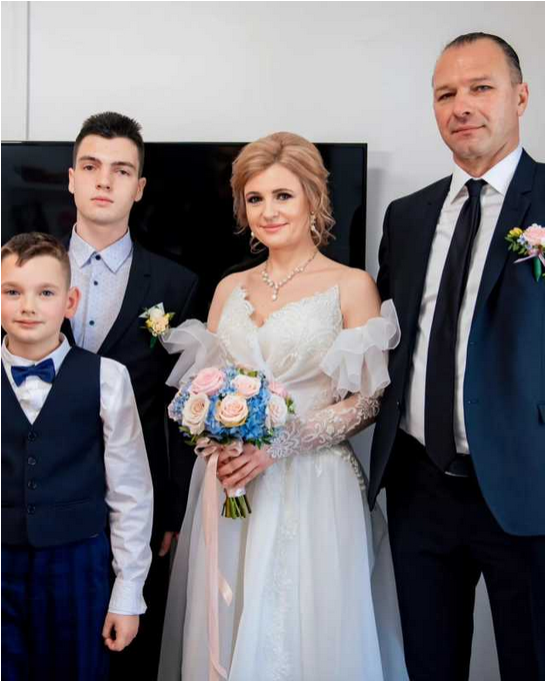
Yuliia Toma’s story is a testament that determination and love for family can lead to extraordinary achievements. Romania was not just a refuge, but the place where she was reborn as a designer and rediscovered herself, proving that with perseverance and work, success is only a matter of time. AGERPRES (RO – writing by: Dorina Matis; EN – writing by: Simona Klodnischi)