
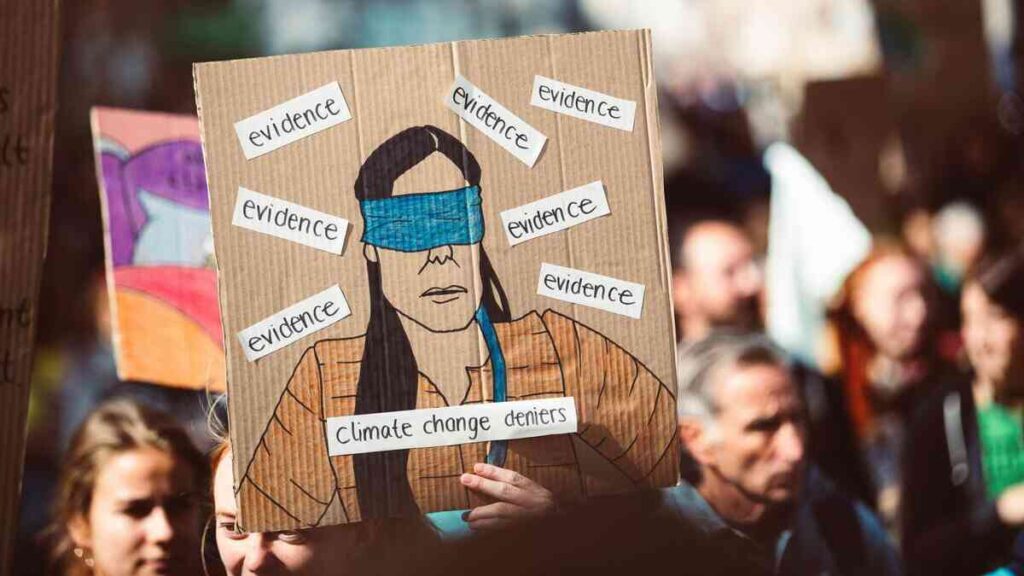
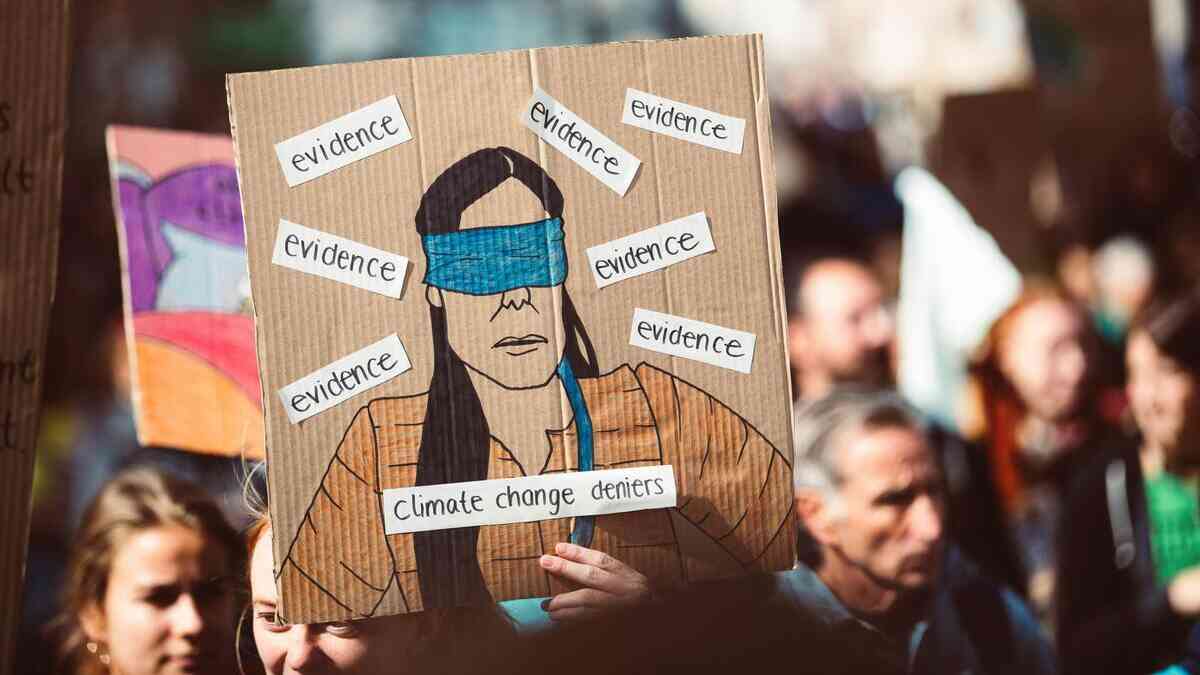
Is our fear of a climate apocalypse proportionate to scientific data, or has it become the fuel for ruinously expensive political mandates? The debate is shifting from global temperatures to household energy bills and the limits of social endurance. In the tension between climate anxiety and common sense, the middle class is finding itself holding the invoice.
For the average citizen in the developed world, climate concerns have shifted from the abstract to the atmospheric—specifically, the atmosphere of the local gas station. This isn’t a “metaphysical” dread about the end of the world; it’s a very tangible economic anxiety. Rising fuel prices, new emissions trading systems (like the EU’s ETS2), and mandates for electric vehicles are transforming climate policy into a monthly line item. We are no longer debating the planet’s future in a vacuum; we are debating the survival of the household budget.
This raises a question that borders on heresy in today’s discourse: does manufacturing mass-scale fear—and implementing high-cost social policies based on that fear—make sense if the underlying scientific models are less certain than we are told?
Cracks in the Consensus: The Solar Cycle Factor
The scientific picture of our climate is showing unexpected cracks. Nicola Scafetta, a physicist at the University of Naples, argues in a 2026 study published in Gondwana Research that global climate models fail to accurately reproduce even the Holocene—the last 11,700 years of natural warming and cooling cycles. The Medieval Warm Period and the Little Ice Age occurred with amplitudes similar to modern shifts, yet they happened during periods of stable CO2.
Scafetta doesn’t deny human influence, but he suggests that the models driving trillion-dollar policies—from carbon taxes to the 2035 ban on internal combustion engines—ignore two long-term solar rhythms: the Eddy cycle (approx. 1,000 years) and the Hallstatt–Bray cycle (approx. 2,500 years). Both have been in a rising phase since the 17th century, forcing a difficult question: how much of the observed warming is truly ours?
Climate anxiety and common sense: The Sensitivity Gap
The core of the dispute lies in Equilibrium Climate Sensitivity (ECS)—essentially, how much the Earth warms if we double CO2. While the IPCC estimates ECS between 2.5°C and 4.0°C, Scafetta’s empirical data suggests a much lower 2.2°C. If solar activity plays a larger role, that value could drop to 1.1°C.
The difference between 3.0°C and 1.1°C isn’t just academic; it’s the difference between a world where you can no longer buy a gas-powered car because “the earth is burning,” and a world where we modernize the economy at a sustainable pace. It is the difference between policies that force families to choose between heating and eating, and those that respect the limits of human adaptation.
The Profit of Fear
Critics of Scafetta note that he is a physicist, not a climatologist, and that his focus on solar cycles sits on the periphery of the mainstream. They argue that the role of the sun cannot account for the rapid warming seen in recent decades.
These counterarguments are vital, but they don’t change a fundamental fact: uncertainties exist in climate science—regarding cloud cover, aerosols, and natural cycles. Yet, in the public square, these uncertainties are often treated as heresy. Meanwhile, the psychological toll is mounting. Marlis Wullenkord, an environmental psychologist at Lund University, studies klimatångest (climate anxiety). She describes it as a rational response to a real threat, exacerbated by “pluralistic ignorance”—the feeling that one is alone in their concern.
The “Forgotten Man” of the Green Transition
History is littered with “scientific” apocalypses that never arrived. Thomas Malthus famously predicted a global famine as population outpaced food production; he failed to foresee the “Green Revolution” and human ingenuity. In the 1970s, some scientists warned of a coming Ice Age—a trope later immortalized in the 2004 disaster film The Day After Tomorrow.
These stories should teach us distance. They show that human innovation often follows paths that no computer model can predict. When we rely solely on fear to drive policy, we end up ignoring the “Forgotten Man”—the taxpayer who quietly does his job and pays his bills, only to find the cost of every “higher goal” resting squarely on his shoulders.
In the end, those who produce and sell fear—politicians, subsidized corporations, and specialized therapists—often profit the most. But for the rest of us, balancing climate anxiety and common sense means recognizing that while the planet requires stewardship, our social and economic foundations require stability. Fear is a powerful motivator, but it’s a poor architect for the future.
Read this article in Polish: Strach o klimat ma swoją cenę. Kto naprawdę za to płaci?