
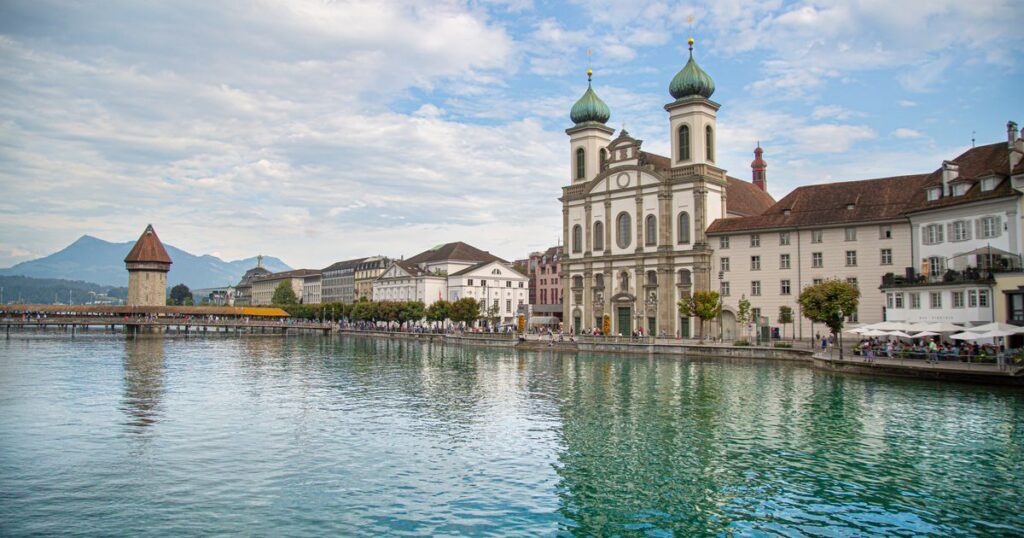
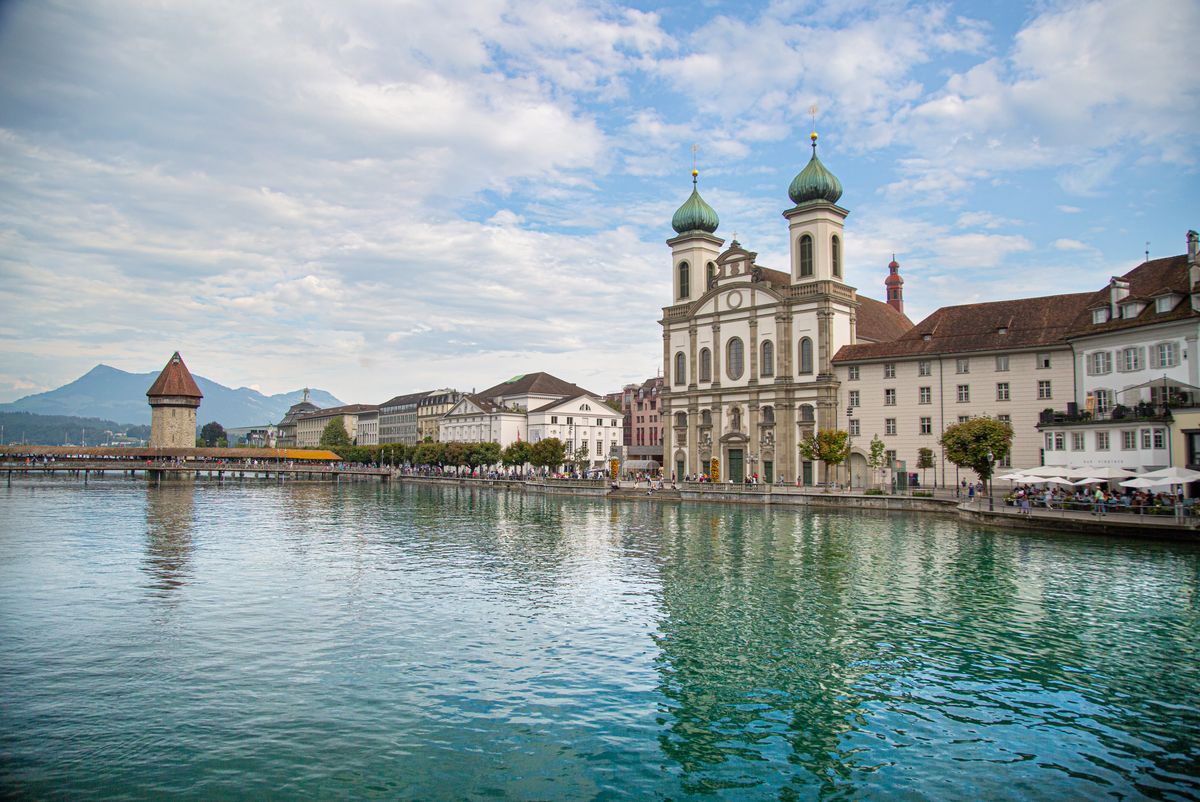
Jesuiten Kirche, Luzern
I step off the train into the freezing fog of Lucerne, Switzerland’s city of light. Turning onto the busy Banhoffstrasse, a bell tolls in the mists hanging over the river Reuss. Then I see the lights.
It’s like the medieval city – named after the Latin word for lantern – is lit by a kaleidoscope of stars.
Lucerne’s iconic landmark, the octagonal 13th century water tower – the Wasserturm – stands brightly illuminated in vibrant green and pink. You’d never think it used to be a torture chamber, where those accused were lowered into its dungeon by a rope.
READ MORE: ‘I was Ryanair flight attendant – never put this one item in checked baggage’
READ MORE: Roe Valley Resort is Ireland’s top spot for a family getaway
Its famous Chapel bridge – Kappellbrucke, the oldest wooden bridge in Europe – is aglow. I’ve landed into the heart of Lucerne’s famous festival of light, known as LiLu (lichtfestivalluzern.ch)
Lichtfestival Lucerne – or LiLu – is the annual Winter event where streets, squares, bridges and landmarks are lit up with projections and installations all over the city.
It gives the place a trippy effect – there are giant illuminated sunflowers in a square in the old town, near the five-star, 180-year-old grand hotel, Lucerne’s Hotel Schweizerhof. The sight fools your brain into thinking it’s warm, when in fact it’s below zero.
Later, a psychedelic light show transforms the beautiful baroque Jesuit Church in Switzerland’s Catholic city into a virtual reality world.
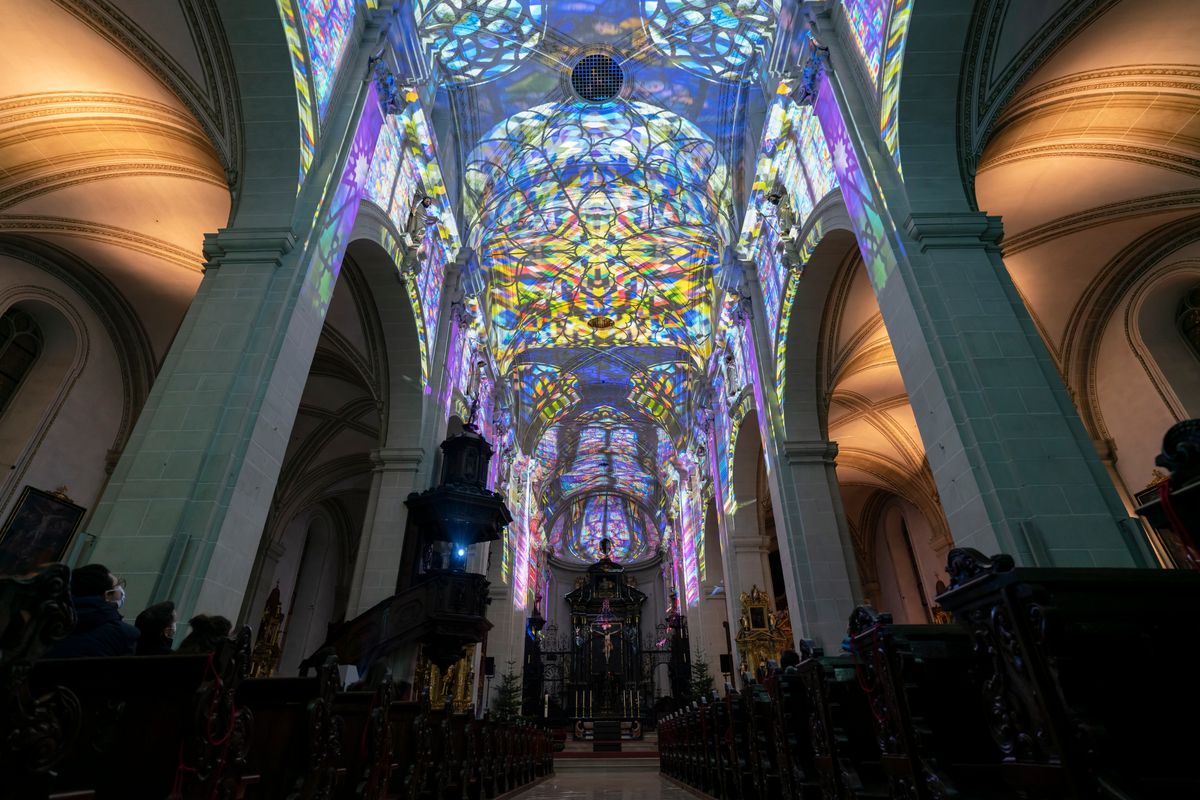
A psychedelic light show transforms the beautiful baroque Jesuit Church in Switzerland’s Catholic city into a virtual reality world
There’s a lot more to Lucerne than this impressive festival. But LiLu is a great excuse to visit the fairytale Swiss city, set between the lake and the mountains.
Known as the gateway to the Alps, Lucerne is located in the middle of Switzerland, between Zurich and Bern. It’s a place loved by artists and aristocrats throughout history, particularly in the mid-19th century. Author Mark Twain and painter William Turner spent time here and Queen Victoria spent five weeks here in 1868. Indeed, it still has a feel of the Romantic era about it.
The world-famous Swiss transport system makes it easy to reach. I flew from Dublin to Zurich in two hours and on arrival at Zurich airport, simply took an escalator down to the train station and was in Lucerne 45 minutes later.
Soon I was sitting in the restaurant of the centrally-located 500-year-old Hotel Wilden Mann (wilden-mann.ch), savouring the local Lucerne dish of chugelipastete – filo pastry filled with veal and cream sauce, perfect for a traveller on a cold winter’s night, with a glass of Swiss red wine.
Lucerne is a sophisticated city with the natural beauty of the countryside on its doorstep. Atop the hill, looking down on the city, is the classy Gutsch hotel (chateau-guetsch.ch), adding old Hollywood glamour. It can be reached by a modern funicular and is a favourite spot for locals and tourists alike.
A compact and walkable city, Lucerne is easy to get to know and get around. It’s full of small surprises, like the Lion of Lucerne, which Twain described as “the most mournful and moving piece of stone in the world.” Carved into a cliff, the lion monument honours the Swiss guards killed in the French Revolution.
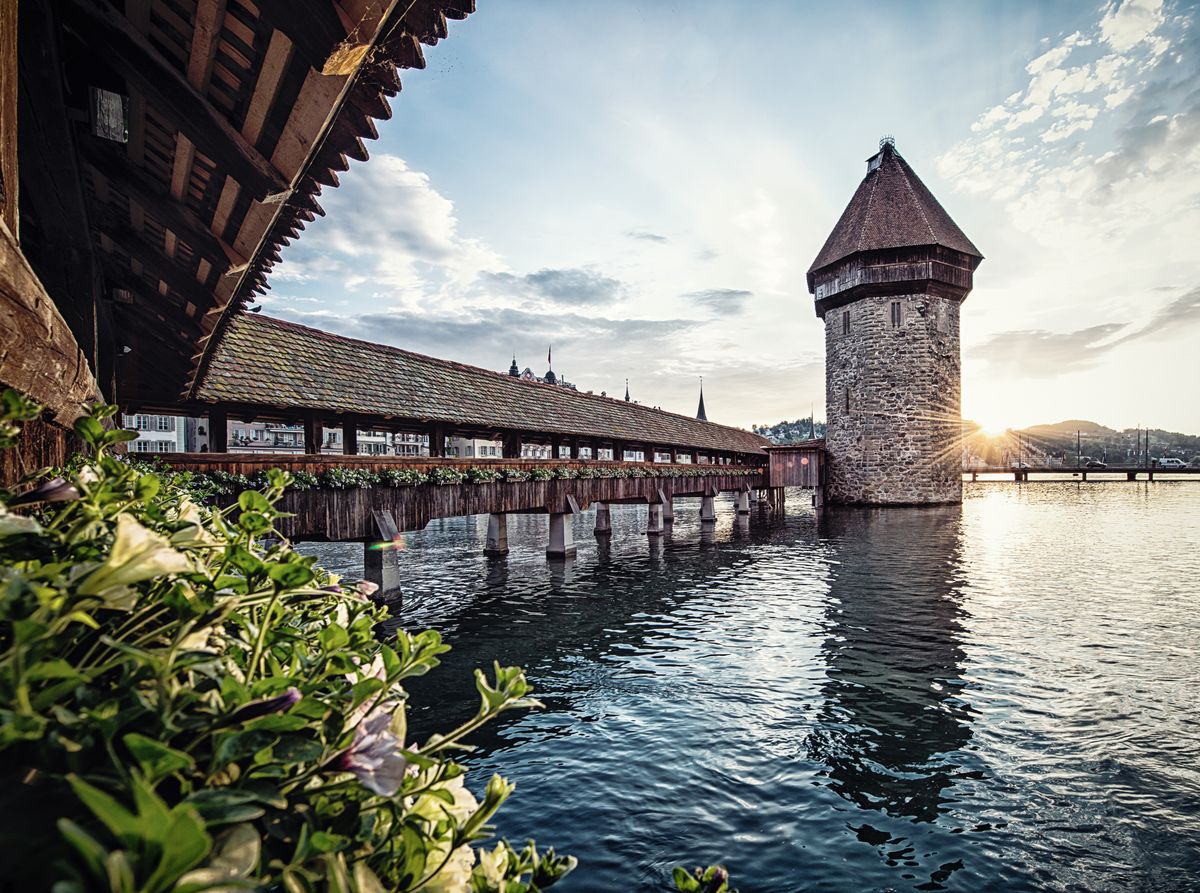
Lucerne Chapel Bridge
This landlocked country knows how to make the most of lakeside living. Lucerne’s lakeside lifestyle allows swimming at bathing spots and pools, picturesque promenade walks and decadent boat cruises.
The azure waters, gorgeous bays and fjord-like rock faces of Lake Lucerne make it perfect for a lunch cruise. As Queen Victoria said: “Nothing can surpass the beauty of the lake’s sapphire blue and emerald green waters.”
Lake Lucerne – its name in English – spans four cantons, or Swiss regions, hence in German, it’s called Vierwaldstatersee; in French, Lac des Quatre Cantons.
I spent a memorable early afternoon on Schifffahrt Vierwaldstatersee’s cruise, enjoying a lunch of the regional dish Nidwalden meat patties. (lakelucerne.ch)
We found how Lake Lucerne was the region where William Tell – the legendary hero of Swiss independence – fled from his Austrian bailiff on these shores.
We saw the queen of the mountains, Mount Rigi; and the majestic Pilatus mountain, ahead of our planned trip up there the next day. Later that evening, we went to the hotel Ameron for an immersive dining experience called Le Petit Chef.
This tiny 3D animated chef – just 6cm tall – was projected onto our dinner plates, telling the story of every coming course. (lepetitchef.com/lucerne).
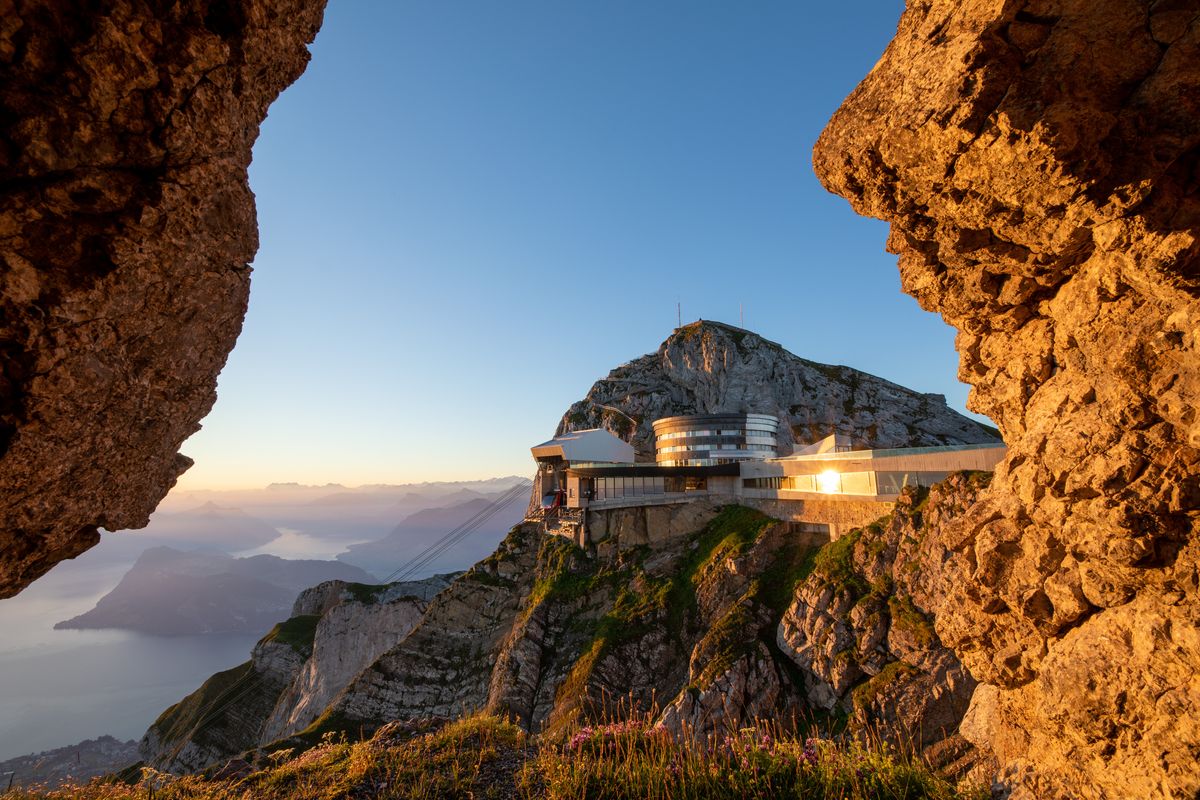
Mount Pilatus
It’s a bit of Swiss idiosyncrasy, and more suitable for kids – but the four course meal was haute cuisine, especially the bouillabaisse.
After a good night’s rest in the comfortable and spacious Wilden Mann, it was an early start to make it up Mount Pilatus. This excursion up the 7,000ft (2,132m) mountain – above the clouds and into the sunshine – was the best part of the trip to Lucerne.
Not only is Pilatus a wonder of the world, but the infrastructure of it is a miracle of Swiss engineering.
We took a short bus ride to the Kriens station, where I was thrilled to find panorama gondolas ready to take us halfway up Pilatus to Frakmuntegg station, before an aerial cableway known as the dragon ride took us to the top, Pilatus Kulm.
Each gondola comfortably seats four people. We drank champagne as we floated up the mountain, courtesy of the champagne basket special we bought with our ticket. (pilatus.ch)
When you get out at Frakmuntegg, the view is breathtaking. We explored the area with a winter walk, before getting the Dragon Ride up to Kulm, which was so high, it felt like being on a plane. Legend has it, dragons used to live in the caves here.
There’s a summit hotel here, built in 1890, a pioneering feat in the Belle Epoque. How they built it is a feat of Swiss engineering, possible only due to the creation of the Pilatusbahn railway the year before. It runs during the summer and remains the steepest cogwheel train in the world.
After all the mountain rambling, it was time for a memorable traditional lunch of Swiss fondue in Restaurant Pilatus-Kulm, dipping our bread into the delicious gruyere, emmental and white wine hot pot, as synonymous with Switzerland as chocolate.
Soon, it was time to leave and we took the gondola back down to earth again. A short bus ride from the station took us back to Lucerne city, where we made a visit to the Swiss Museum of Transport.
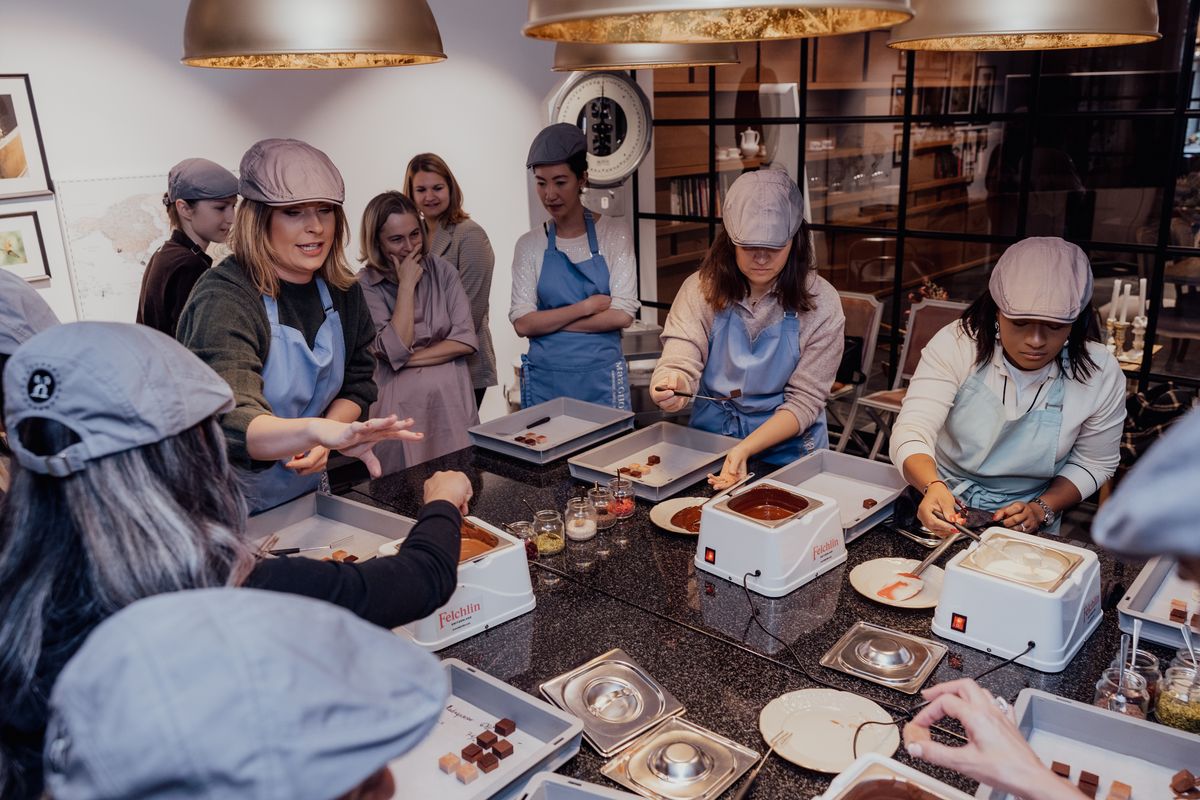
Max Chocolatier Class
We learned all about the history of these gondolas – and the Swiss mountain cable car pioneers – at this world-famous museum, the most visited in Switzerland.(verkehrshaus.ch)
This 20,000 square metre exhibition space covers road, rail and aviation and is a fascinating story of transport.
Another great tourist visit was to the city’s Max Chocolatier, Lucerne’s home of handmade chocolate. Named after the owner Patrik Konig’s beloved son Max – who has Down Syndrome – it’s like a stylish Wonka factory, where visitors to the workshop can make their own bar of chocolate. (maxchocolatier.com)
Special mention must go to the riverbank Mill’Feuille restaurant, which is named after the famous puff pastry. This romantic spot on the lakes of the Reuss served the best dish I had here – its mouth-watering house special, pulled beef lasagne. (millfeuille.ch)
Before bed, we dropped in for a schnapps in the Bistro Krienbreuggli, a relaxed local bar where all sorts of people gather to sit and drink, indoors and out.
Next day, there was time for one more treat – a sauna on board a boat, called the Sauna Boot. It was the ultimate chill-out activity.
Our little boat was waiting for us at the beautiful Seehotel Kastanienbaum, a wellness hotel with pools and hot tubs and chalets, just 15 minutes outside the city centre on the banks of Lake Lucerne. (seehotel-kastanienbaum.ch/en/hotel/sauna-boat)
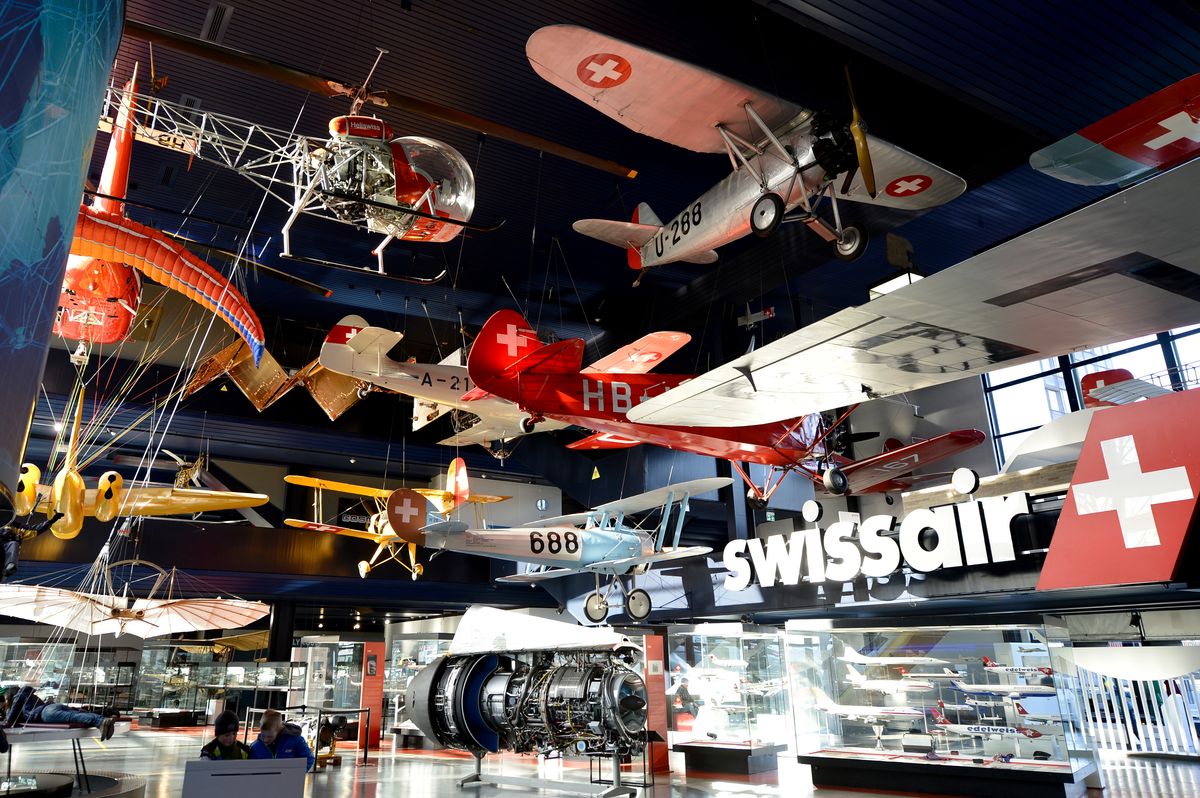
Museum of Transport
The boat is simple to operate, and after a few clear instructions, we steered her out to the middle of the lake, dropped anchor and enjoyed pure luxury time in the boat’s sauna room, dipping into the lake’s freezing waters when it got too hot.
Then it was back to the train station for a healthy and tasty lunch at Le Piaf, before the return journey back to flughafen Zurich.
I recommend the delicious Croque Montagnard: gruyere with savoy cabbage and onions on sourdough bread, with mustard.
I’ve been to Switzerland many times, as a long-time Swissophile. Lucerne is quirky, cool, unique and better value than other Swiss cities, such as Zurich and Geneva.
This is Switzerland, but not as you know it.