
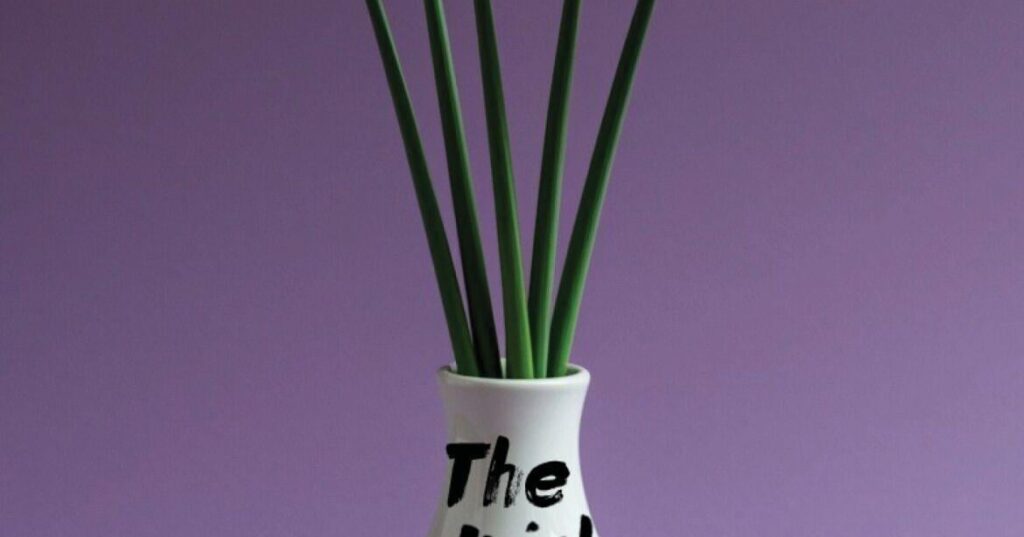
“The Irish Goodbye: Micro-Memoirs,” by Beth Ann Fennelly, Norton, 144 pages.
I love authors that swerve, those multi-talented multihyphenates. Case in point, Beth Ann Fennelly, who started as a poet, publishing three collections of personal, frequently humorous verse that rank, in my estimation, as modern classics. She then published a compilation of epistolary essays on motherhood, “Great with Child,” followed by a novel, “The Tilted World,” co-written with her husband and University of Mississippi colleague, Tom Franklin.
In 2017, while serving as Mississippi’s poet laureate, she swerved once again, releasing “Heating & Cooling,” a collection of what she calls “micro-memoirs” — short-form, poetically informed, often quite intimate prose. Years later, I can still recite a few of her punchier pieces, many just a sentence long.
She returns to the form in “The Irish Goodbye,” an as-always revealing book that finds Fennelly mourning family, redefining relationships with old friends and posing for a naked self-portrait.
Fennelly will appear at the New Orleans Book Festival March 14, and, the day following, will lead a micro-memoir workshop with the New Orleans Writers Workshop.
This interview has been condensed and edited.

Author Beth Ann Fennelly
PROVIDED PHOTO
What was the impetus for the micro-memoir form?
I confess it’s not anything I plotted out in advance. What happened was I had written a collaborative novel with my husband, Tom Franklin, and it was a pretty big project. After it was published, I wasn’t sure what was going to come next. I thought, “Maybe I’m going to write my own novel now.” And every day I would go to my notebook, and I would wait for this big novel to announce its grand arc.
Meanwhile, I’m scribbling little funny thoughts or a bizarre memory that I didn’t know why I remembered or something I’d overheard. At some point I looked at my notebook and thought, “Okay, I don’t know what this is.” It’s not a novel, clearly. It’s not essays. It’s not poetry. But I’m having fun. And, as I’ve gotten older, I’ve learned to follow the fun.
So I thought of the word micro-memoir. And when I thought of that word, it changed everything. It actually gave me permission, because now I had a thing to call it. It wasn’t that I wasn’t writing, it was that I hadn’t recognized what I was writing.
I looked back at my notebook, and I realized I’d probably written a book already in there. I’m still finding out what this form has to teach me.
When it comes to the observations you’re making, the act of recording, do you now immediately see things as micro-memoirs, or could they be poetry?
What I love from poetry is that extreme compression and abbreviation and lyrical thrust. And what I love from fiction is creating a narrative arc and maybe suspense. And what I love from nonfiction is truth telling.
This form allows me to steal from those different genres and create this thing that takes the best of all three. Right now, even though my training is in poetry and I love poetry and I do hope to return to it one day, I’m still just crushing on the sentence.
I love the idea of crushing on the sentence.
My whole life was organized around the line break. For someone who’s spent so much time balancing and thinking about the rhythm of the line break, it felt really liberating to stretch all the way to the period. And it allowed me to have a different ability to craft narrative.
Can you talk about the role of humor in your writing?
I grew up Irish Catholic in a very conservative neighborhood, going to Irish Catholic schools. It was a very, very patriarchal society. Women didn’t crack jokes or seek the limelight. When I got to graduate school and I wanted to be taken seriously as a poet, I thought at first I had to be very serious.
And what the serious poets were doing at that time was writing poems about Greek myths, like everyone had their Odysseus poem or whatever. And so I thought, “Okay, I want to be taken seriously, so I better write my Odysseus poem.” And I don’t give a [expletive] about Odysseus.
It took me a while to find my voice and give myself permission to think, “I don’t care if anyone else thinks this is interesting or important. I think it’s interesting. I think it’s important.” I stopped forbidding myself from having this quirky worldview and just telling it like I saw it. And when I started doing that, I felt for the first time like I was writing in my own voice. I’ve gotten more me since then.
What do you think the micro-memoir can offer the writing community at large, whether that’s established writers or writers who are just starting out?
I’m teaching a class in the micro-memoir for the New Orleans Writers Workshop. One thing I really love about the micro-memoir is what a teachable form it is. It’s kind of low stakes and doesn’t come with a lot of pressure.
Sometimes I work with senior citizens, and they want to write their life story for their grandkids, but they don’t know where to start. So I’m not saying you have to write your whole life story, I’m saying let’s write this paragraph. Then they can do it. They can write another one and another one — these little pieces start adding.
I’ve done it with school kids who have learned from their phones that their attention span is approximately 36 seconds. And I can get something good out of them. So I have found it to be a really teachable, joyful form. It helps me help people who feel the urge to write and who need it to be made a little more user-friendly.
Rien Fertel is the author of four books, including, most recently, “Brown Pelican.”