
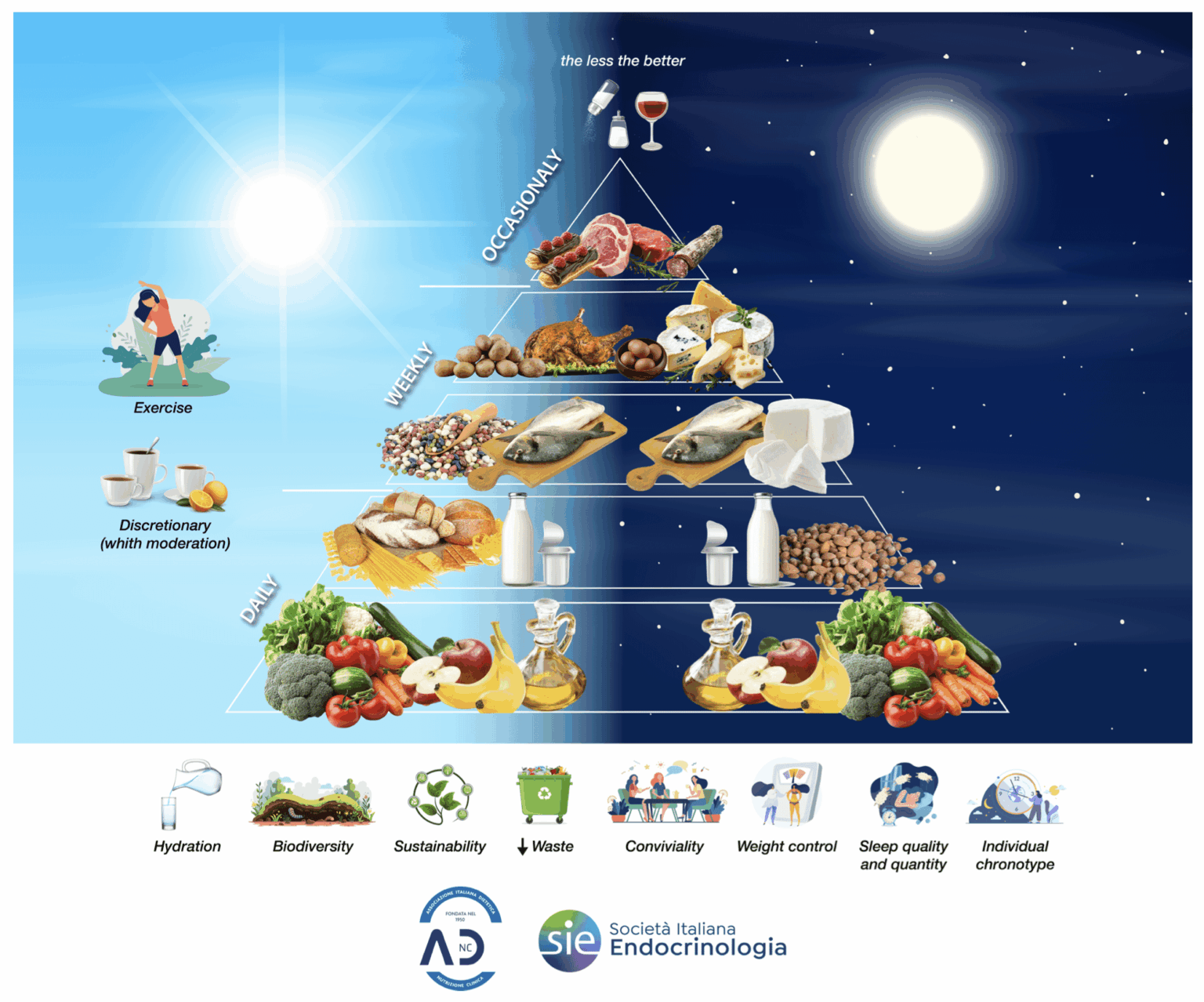
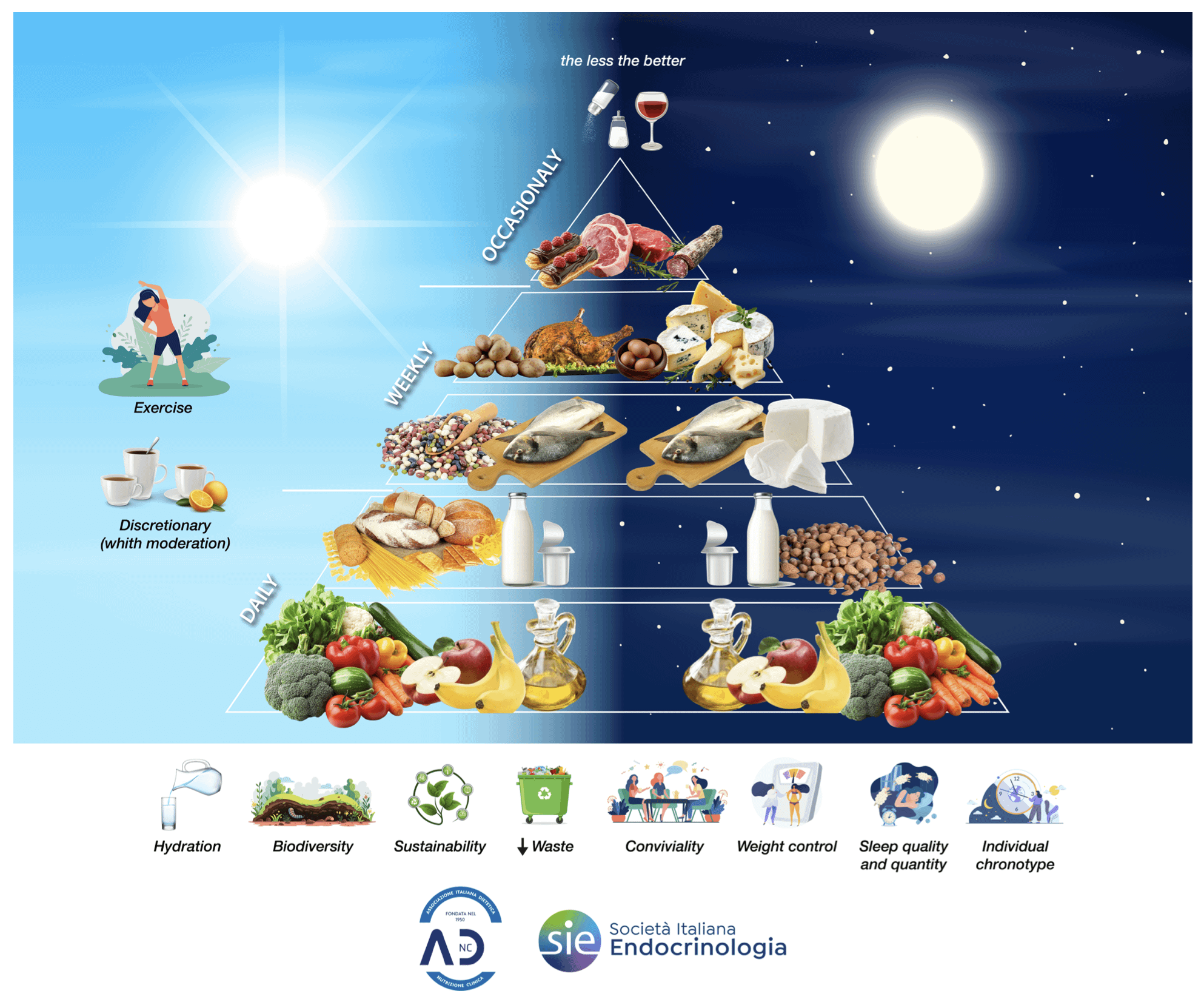
The Italian Society of Endocrinology and the Italian Association of Dietetics and Clinical Nutrition redesign the pyramid of the traditional Mediterranean diet. The new approach published in Current Nutrition Reports (https://link.springer.com/article/10.1007/s13668-026-00731-x)
The Mediterranean diet, a model of longevity envied throughout the world, is updated and becomes 3D, adding for the first time to the quantity and quality of nutrients, even their temporal location in harmony with biological, hormonal and metabolic rhythms, over the course of 24 hours.
The “temporal” pyramid “The Mediterranean diet is no longer just a question about what you eat, but above all about when you do it – declares Diego Ferone, President of SIE, Professor of Endocrinology at the University of Genoa and Director of the Endocrinology Clinic Unit, IRCCS Policlinico San Martino Hospital -. In fact, the most recent scientific evidence demonstrates that metabolism is profoundly regulated by hormones and follows a circadian organization. Key hormones such as insulin, cortisol, melatonin, leptin and ghrelin fluctuate over the course of 24 hours, modulating the metabolic response to nutrients, appetite, energy expenditure and sleep quality. Eating the same foods at different times of the day can therefore produce different metabolic effectswith relevant implications for the risk of overweight and obesity and endocrine dysfunctions associated with weight gain, not only type 2 diabetes mellitus but also alterations in the functionality of the endocrine glands”.
The structure of the Mediterranean “chronodiet” The new model introduces the temporal dimension, inserting the symbols of the Sun and the Moon next to the pyramid drawing, to indicate the best times to consume certain foods. “The symbol of the Sun suggests daily consumption within the first part of the morning, to exploit maximum insulin sensitivity, of complex carbohydrates (cereals, pasta and bread preferably wholemeal), legumes, fruit, vegetables and greens. The symbol of the Mooninstead orients towards evening meals, when the risk of glycemic peaks and fat accumulation increases, the consumption of lean proteins, vegetables and “sleep-friendly” foods such as nuts, seeds and dairy products, rich in tryptophan and melatonin which promote rest and nocturnal muscle regeneration”, explains Luigi Barrea, first signatory of the update document and SIE advisor, Professor of Clinical Nutrition and Applied Dietetics at the Pegaso University of Naples: “In fact – adds Barrea – consuming 40g of protein before bed can increase muscle protein synthesis by 33%, counteracting the loss of muscle mass. And shifting 5% of your energy from fat to carbohydrates during breakfast helps dramatically reduce your risk of metabolic syndrome”.
https://i.redd.it/4j35c19u3mmg1.png
Posted by sr_local
23 Comments
Bellissimo
vedo con piacere che zucchine e banane sono almeno 2, così una si mangia.
Per come la vedo io il vino va in cima alla lista, molto bene /s
Proposta interessante
mah, personalmente da quando mangio carne (bianca o rossa) tutti i giorni non mi sono mai sentito meglio
A vederla così mi sembra di rispettarla bene eccezion fatta per il formaggio e il pane, il primo lo mangio praticamente tutti i giorni e il second sia a pranzo che cena.
Il latte la sera raramente lo bevo ma faccio già il pieno a colazione visto che ogni mattina ne bevo poco più di 400 ml.
La punta è il venerdì. Dai che è venerdì….
Perdonatemi, io sono scema, ma mi pare che quanto scritto non coincida con l’immagine grafica.
Nel testo si legge che è bene consumare 20g di proteine alla sera, ma poi nella piramide illustrata non vedo particolari fonti di proteine sulla destra, a meno che non si intendano quelle del pesce (che però è settimanale) o dei latticini, che non ho mai sentito fossero quella gran fonte di proteine, ma ripeto che sono ignorante.
Inoltre non mi è chiaro, se pane, pesce e carne sono di giorno, uno cosa dovrebbe mangiare a cena. Solo verdura? Verdura e yogurt?
Non lo so, sono confusa.
Io faccio il contrario
una delle diete peggiori che esistano al mondo
Diamo priorità a pane e grano(pasta) vs i legumi? Mi sembra assai strano.
Consiglio una serie di video di Bressanini sull’alimentazione per riportare l’attenzione su temi seri e non queste puttanate.
Nessuno di noi è in grado di violare le leggi della termodinamica. Quante calorie mangi, bruci e meccanismo basale sono le uniche cose verificate dalla scienza.
Il resto è contorno e virgole. Non ci sono scorciatoie per una vita sana.
Ste cose sono come gli oroscopi
Formaggi settimanali? Vuoi che muoro?
Alla faccia di tutti quelli (soprattutto stranieri) che dicono che mangiare pasta ogni giorno fa male perché ha troppi carboidrati!
Non capisco, come dovrei assumere le proteine mangiando soltanto verdure, frutta, pane e pasta?
L’alimentazione è una cosa complessa e diversa per ogni individuo.
Riassumere il tutto ad un disegnino è inutile e disinformante.
“whith moderation”, “occasionaly”… non è obbligatorio farle in inglese eh..
La mia piramide purtroppo è al contrario
Stupita dall’aggiunta dell’ individual cronotype! Può anche andare bene al contrario, quindi.
Non vedo la pizza nella foto. questo perché ne posso mangiare at will giusto? giusto?
Chiaramente pensare che un genere di alimentazione vada bene per tutti è una gran porcata.
Se seguissi questi consigli, con la digestione lenta che ho e la facilità di infiammazione, in un paio di settimane sarei praticamente invalido.
Secondo questa piramide dove stanno i gamberetti, le vongole, le cozze, le seppie e i calamari?