
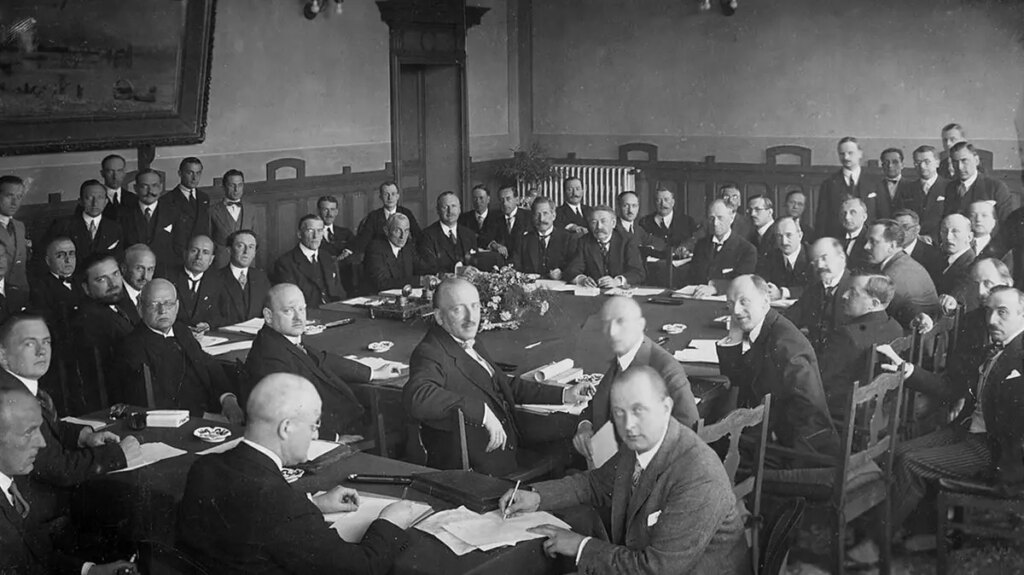
From The Times: March 3, 1926
On the eve of the important meetings of the League Council and Assembly, which begin in Geneva next Monday, most of the countries of Europe are anxiously defining their position on the much-debated question of the composition of the League Council. Important statements were made on this subject yesterday both by the French Prime Minister and the German Chancellor.
Speaking yesterday in the French Chamber in the course of the debate on the Locarno Treaty, for the ratification of which a considerable majority was secured, M Briand declared that the French Government were in favour of the extension of the Council because of the extension of its business, and that if the Council were enlarged, he would see Poland in it with very keen pleasure. He added that this was in the interest of Germany, since the Council was not a closed field of combat but an organ of conciliation, taking its decisions unanimously.
Last evening Herr Luther, the German Chancellor, declared, in a speech at Hamburg, that any alteration in the composition of the Council or the organization of the League would put Germany in an impossible position, and he intimated that the attitude of Germany towards applications for a permanent seat in the Council could only be determined after she herself had become a member. It is noteworthy that the Chancellor emphasized his approval of a phrase used this week by M Briand: “At Locarno we spoke a new language, the language of Europe.”
A note of greater restraint is perceptible in the comments of the French Press, and there is reason to believe that the opportunities of direct intercourse on this subject between Paris and Berlin are not being neglected. The very clear manifestation of British opinion against the proposal to admit other Powers to permanent seats has made a deep impression in Paris.
In the Polish Diet a majority of the Foreign Affairs Committee have recommended a reiteration of the Polish claim for a permanent seat in the Council. It is expected that the Diet will accept these recommendations, and that the Prime Minister, Count Skrzynski, will leave Warsaw to-morrow for Geneva, via Paris.
Explore 200 years of history as it appeared in the pages of The Times, from 1785 to 1985: thetimes.co.uk/archive