
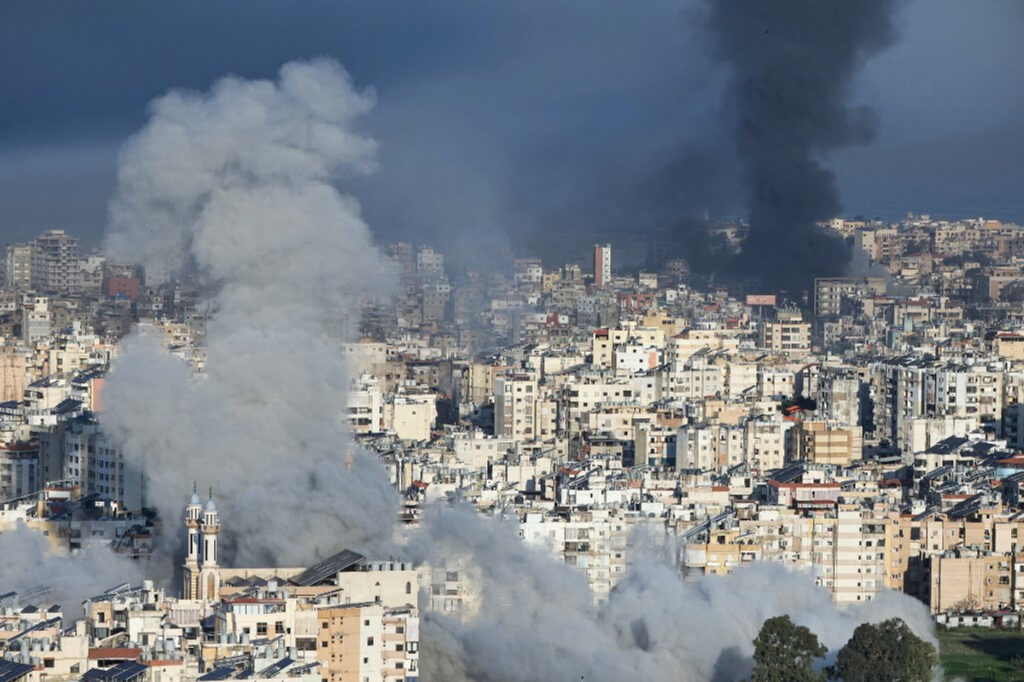
Iran has been described as the world’s biggest state sponsor of terrorism, but Russia is. The recent attack by Israel and America on Iran’s leaders and military is a welcome development. It’s too early to declare victory, but the decapitation of Tehran’s leadership is a great start. The US-Israeli operation also represents a major setback to Vladimir Putin because Iran props up Russia as its major weapons supplier. Its pummeling is also embarrassing to Moscow. The Kremlin was nowhere to be seen as American forces surrounded the Ayatollah’s regime, or when the U.S. recently assaulted its other allies, Venezuela and Cuba. Obviously, the next culprit that should be neutralized is Russia itself, which is the “Iran” of Europe. It has unleashed 57,000 Iranian-made missiles and drones against Ukraine, and Zelensky said that “whenever there is American resolve, global criminals weaken. This understanding must also come to the Russians.”
Follow our coverage of the war on the @Kyivpost_official.
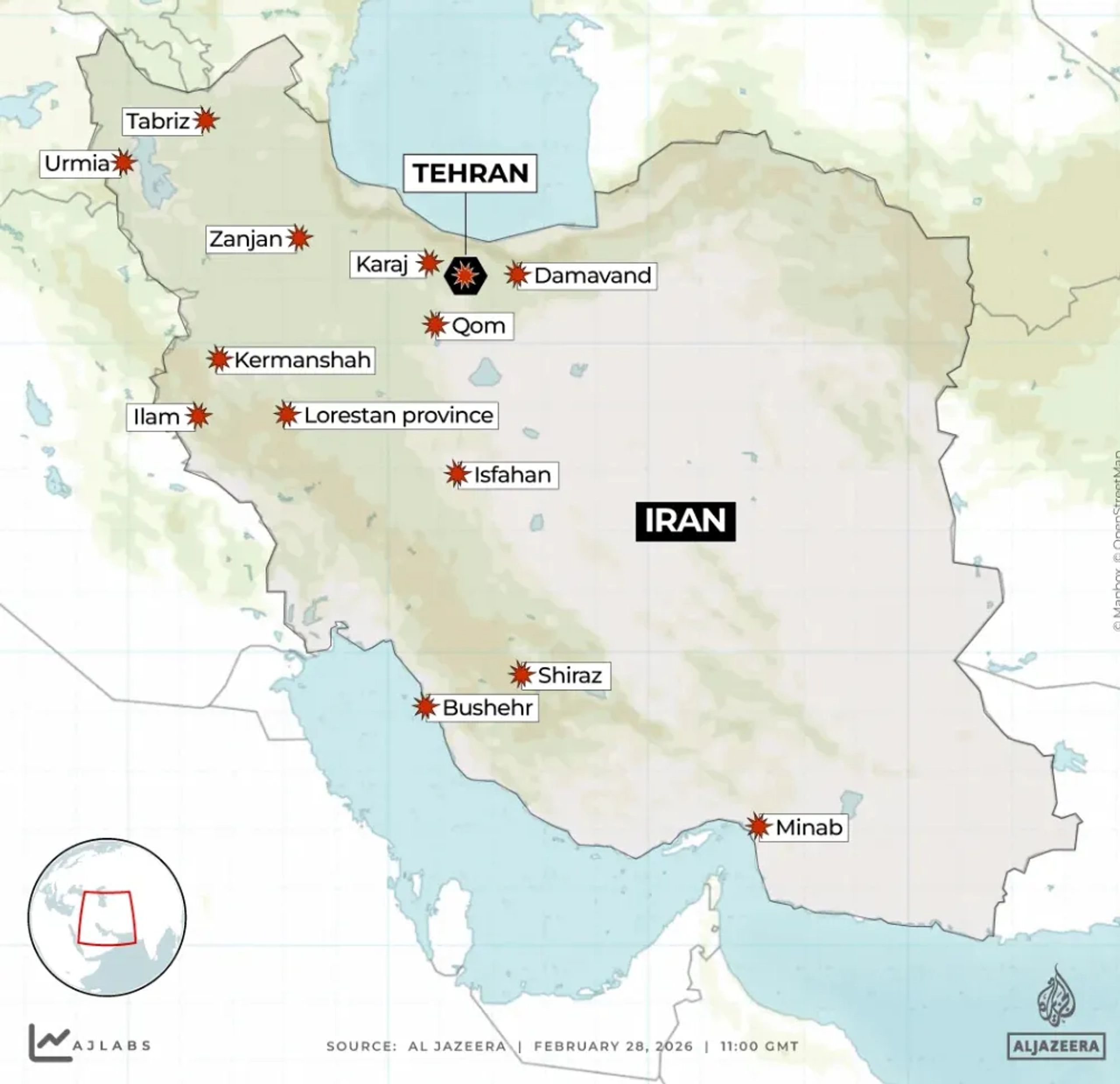
Israel and the US targets in Iran
Fortunately, Israeli and American bombs stopped the flow of ballistic missiles and drones to Moscow, which have devastated Ukraine. “Damaging Iran’s military-industrial base directly impacts Russia’s ability to sustain its [Ukrainian] invasion. From Kyiv’s vantage point, that’s unambiguously good,” wrote Kyiv Post Chief Editor Bohdan Nahaylo. “Iran’s diminished capacity will hurt the Kremlin where it counts. Tehran has provided Russia with thousands of Shahed drones, which have rained down on Ukrainian cities, destroyed power grids, and killed hundreds of civilians. The Islamic Republic has kept Putin’s war machine running when Russia’s own factories couldn’t keep pace.”

Other Topics of Interest
‘Return Home With Victory’ – the Kremlin Hybrid War Funded by Germany
Soviet-era mass deportations nearly eradicated Russia’s German minority. Now, the Kremlin is using that history to legitimize its war in Ukraine.
Crippling Iran also undermines Putin’s geopolitical reach. “Putin has staked political capital on the Iran relationship, holding it up as proof that Russia still matters on the world stage. The strike humiliates Moscow,” added Nahaylo. “When it counts, US military power still writes the rules in the Middle East, and Russia can’t do anything about it. This lands at an awkward moment for Putin’s courtship of Trump, which has lurched between talk of a ‘deal’ on Ukraine and unpredictable American shows of force. Now the question is whether Washington will show the same resolve in backing Ukraine to victory and Russia to defeat. The Iranian people deserve freedom. So do Ukrainians.”
The facts are that more than bombs will be required to neuter Iran. The assassination of Ayatollah Ali Khamenei and many of his clerical and military leaders is helpful, but a successor government is being selected among those still in charge. This means Iranians remain captive in a reign of terror and cannot flood the streets demanding complete regime change, or they will be shot. Trump’s statement before the attacks began was aspirational but not realistic: “It will be yours to take. This will probably be your only chance for generations.”
The New York Times called Trump “reckless” because his goals in Iran were ill-defined. An Israeli newspaper also warned before the attacks that the failure to have a concrete plan to seize control immediately was hazardous: “The systematic thinning of Iran’s military capabilities, mainly its ballistic missiles, and the completion of the ‘destruction’ of its nuclear installations are undoubtedly vital goals, whose attainment could significantly shrink the strategic threat posed by Iran, but these do not ensure the replacement of the government.”
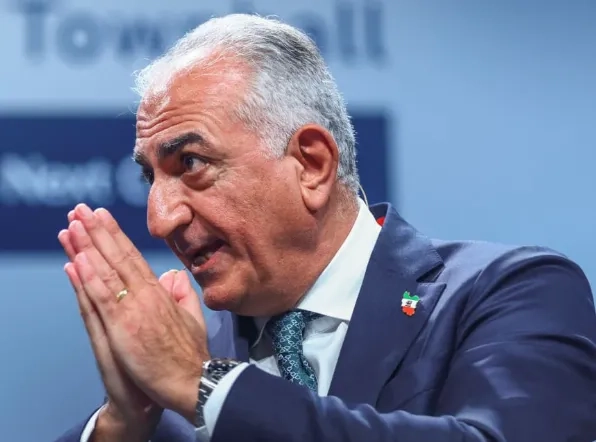
Reza Pahlavi, the transitional leader backed by the U.S. and Israel
Besides Trump’s stirring and wishful rhetoric about Iranian democracy, there’s little in place to bring about a desirable regime change. Currently, there are no landlines or cellphone service to help organize a “takeover,” and the chosen replacement, Reza Pahlavi, who is the son of the late and controversial Shah, is untested and needs the backing of Iran’s military. Concerns are that as an internal power struggle ensues among the Ayatollah’s remaining ruthless leaders, several possibilities loom: A military junta will take over that is more repressive and headed by another fanatic; or a civil war may develop among warring factions or ethnic groups, leading to a splintered or unstable country with 93 million that will export trouble throughout the region.
The New York Times was blunt: “There exists no Iranian opposition group of any stature, which creates deep uncertainty about what comes next. Ayatollah Khamenei had a succession plan that favored clerics, but US intelligence officials have assessed that the power vacuum could result in hard-line factions of the Revolutionary Guards seizing control. The risks of civil war, internal slaughter, and regional instability are profound.”
Besides that, the war is not over because the regime has not been eliminated. Those remaining have more cards to play: Shutting down the Strait of Hormuz is likely, which will send oil prices soaring and cause economic damage globally. (To counteract this, the wealthy Gulf oil state regimes preemptively agreed they will flood markets with oil to keep prices down. Even so, the disruption will be widespread.) The other “card” would be to roil the region by unleashing Iran’s terrorist proxies in Iraq, Lebanon, Syria, and Yemen to wreak havoc. Tehran has already begun to bomb its neighbors in the Gulf in retaliation for their support of the United States,
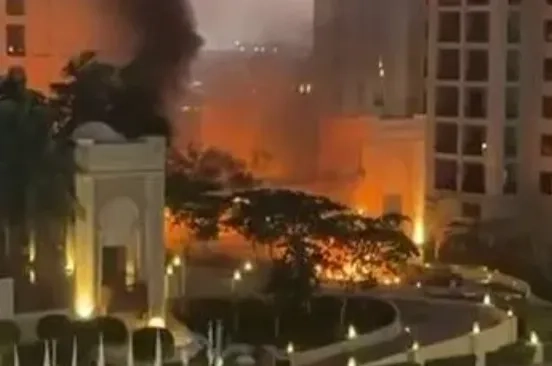
Iran bombs Dubai
The United Nations, as usual, has been useless because Russia sabotages the Security Council by vetoing any peacekeeping efforts involving its allies or victims. Putin publicly called the death of the Ayatollah “a murder committed in cynical violation of all norms of human morality and international law.” Russia used the UN platform to condemn the joint US-Israeli military operation by summoning a description of its own 2022 invasion of Ukraine: It was a “pre-planned and unprovoked act of armed aggression against a sovereign and independent UN member state in violation of fundamental principles and norms of international law.”
However, this Iranian intervention has gone a long way toward upending the current world order. Tehran’s collapse exposes the fact that Putin’s claim to great-power status is baseless. Russia can no longer claim hegemony in the Middle East without Iran’s missiles, drones, and terrorists. It will be impeded in conducting its war against Ukraine and Europe. Hopefully, Americans and Europeans will be emboldened to enhance the struggle by Ukrainians against Russia by boosting support and sanctions to disable the Russian economy and military permanently. This is a matter of survival. Former Israeli Prime Minister Naftali Bennett articulated the strategy against Iran, which should also apply against nuclearized Russia: “Anything is better than this regime”, he said, “which is a global octopus of terror hitting everywhere.”
Iran is a good start.
Reprinted from [email protected] – Diane Francis on America and the World.
The views expressed in this opinion article are the author’s and not necessarily those of Kyiv Post.