
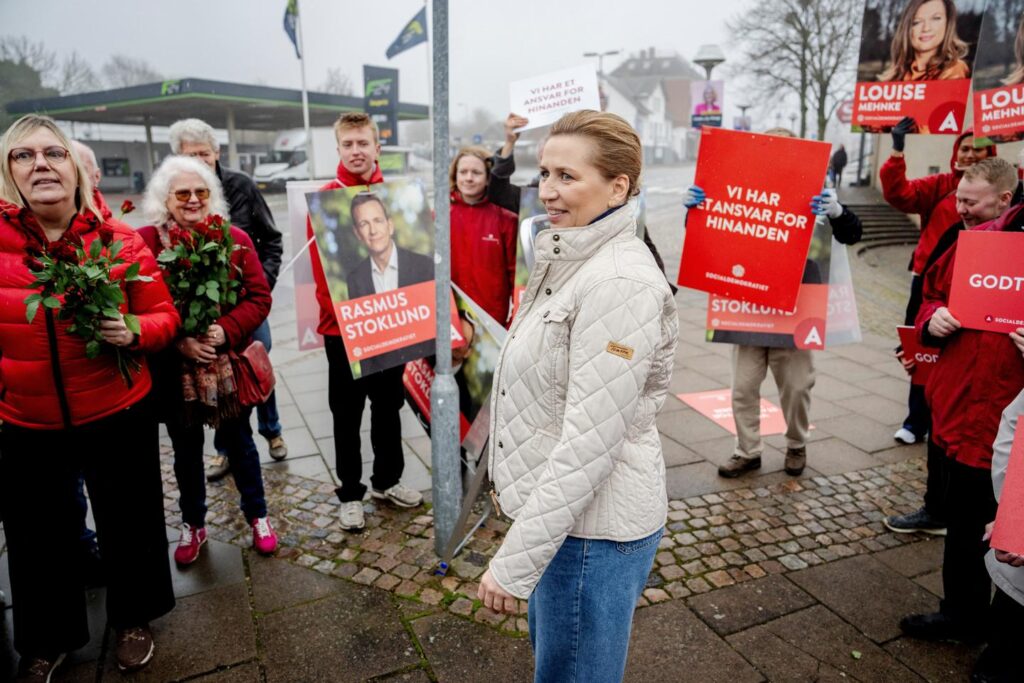
 Danish Prime Minister Mette Frederiksen during the March 24 legislative election campaign in Frederikssund, Denmark, February 28, 2026. MADS CLAUS RASMUSSEN VIA REUTERS
A wave of unrest has swept through Denmark’s business community recently. Even Robert Maersk Uggla, the chair and CEO of the shipping giant Maersk (the kingdom’s largest company), has broken his usual silence to express his anger. At the root of the discontent is the Social Democrats’ campaign promise to reintroduce the wealth tax, which was abolished in 1997.
Mette Frederiksen, who has been prime minister since 2019 and who is the leader of the Social Democrats, had until the end of October to organize legislative elections. Benefiting from a surge in the polls after the Greenland crisis earlier this year, she decided on Thursday, February 26, to call elections for March 24, thus officially launching the campaign.
As her party faces competition from the left – the Green Left won the Copenhagen mayoralty in November 2025, after coming in first in the 2024 European elections – Frederiksen has made a bold move by announcing that her party intends to impose a 5% tax on fortunes exceeding 25 million Danish kroner (€2.3 million).
Funding an education reform
“When the top 1% of the population hold about a quarter of Danes’ total net wealth, the situation has become far too unequal,” Frederiksen argued, citing a report published by the Economic Council of the Labour Movement [a Danish left-wing think tank]. The group noted that the fortunes of the richest 1% increased by 31%, reaching 58 million kroner per person between 2020 and 2024, while the median wealth grew by just 3.3%, for a total of 930,000 kroner.
You have 65.12% of this article left to read. The rest is for subscribers only.