
Why Kosovo won’t go to elections if no president is elected by March 5
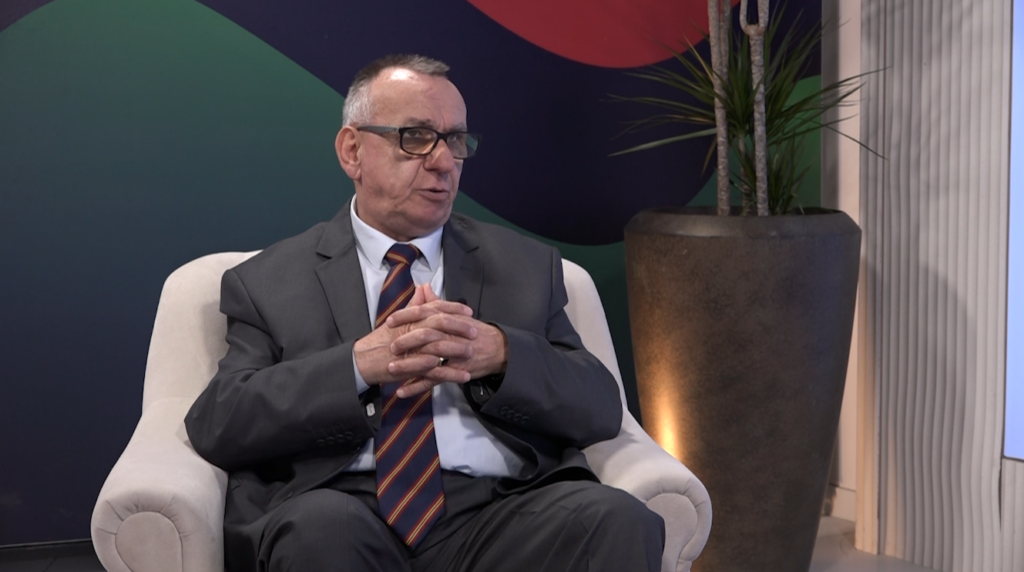
Former head of the Constitutional Court, Enver Hasani, stated that Kosovo does not automatically go to early elections if a president is not elected by March 5.
In an interview with KosovaPress, Hasani explained that the procedure to elect a president only begins once at least two candidates, each with the required signatures, are placed on the parliamentary session agenda. From that moment, a 60-day period starts within which the president must be elected. Only if no president is chosen within this timeframe does the country automatically proceed to elections.
So far, there is no official candidacy with the required 30 signatures, despite Vjosa Osmani expressing her intention for a second term. Leaders from AAK and Nisma—Ramush Haradinaj and Fatmir Limaj—as well as academic Arsim Bajrami, have also declared their readiness to run.
“The election procedure, when the mandate is regular, should start 30 days before the current president’s term ends. In any situation—whether it starts tomorrow, in a week, or a month—if the president is not elected within 60 days from the start of the procedure, elections automatically follow. The procedure begins when at least two candidates, proposed with signatures, are added to the agenda. There is no constitutional obligation—as clarified in the last Constitutional Court ruling on the presidential case of Thaçi—that elections are triggered simply because there are fewer than 30 days left in the current president’s term,” Hasani said.
He added that if the president’s mandate ends without a new president elected, the Speaker of the Assembly—currently Albulena Haxhiu—assumes the role of acting president the day after the term of the current president, Vjosa Osmani, expires.
“Whenever the procedure starts, with at least two candidates on the agenda, it is considered initiated. Once 60 days pass, elections must automatically be announced. In this case, it would be Speaker Albulena Haxhiu who announces them, because she automatically becomes acting president the day after Osmani’s mandate ends,” Hasani explained.
The law and international relations professor describes the presidential election as deeply political, emphasizing that the opposition has the right to refuse to vote for the ruling party’s candidate without a political agreement.
“Opposition parties have the political right to assess and vote—or not vote—for the ruling party’s candidate without a coalition or political agreement. If Kurti manages to capture the presidency through party militants, as he clearly aims to, institutional life in Kosovo will die. The only future recourse would be political change through elections. If the presidency is seized by party militants, it will have chain effects across all institutional life,” Hasani said.
He also noted that opposition deputies have no constitutional obligation to participate in the presidential vote. According to him, the president does not represent executive power in the classic sense but functions as a legitimizing, balancing, and guarantor body for the proper operation of institutions.
Recommended
Rafuna: In order to have economic stability, the government should be in coordination with the USA
“No, because the president is not executive power. The president is a legitimizing and balancing body for all other institutions. Power resides with the legislature, executive, and judiciary. The Thaçi ruling makes it clear that deputies have no such obligation. The opposition should understand this and confront the installation of a personalized autocracy with dignity. No deputy is required to stay in the chamber or abstain—they can choose to be present and even submit a ballot, as long as it is not counted in favor,” he added.
Based on these points, Hasani is skeptical that a president will be successfully elected. According to him, lack of transparency and the delay of the process until the last moment leave little room for optimism regarding political consensus.
“The logic suggests we should not be optimistic, because everything has been left until the last day and remains opaque and non-transparent. There is little chance the president will be elected tomorrow. I see this more as Kurti maneuvering to shift blame, following the same scenario he used last year to capture the presidency,” he concluded.