Yup. One year ago, I wouldn’t consider decoupling from Azure. They just add too much value for our use cases. We have been moving away slowly and are finally done. Nothing wrong with Microsoft but I can’t trust their government.
VicenteOlisipo on
At about the same pace as its physically separating from the US, but sure
darealmoneyboy on
correction: it wants to.
we are far from “is”. This will take years probably decades to pull this off. i think people (politicians) are vastly underestimating how difficult it is to “swap” enterprise solutions.
we are 300 employees and the sheer obstacles when we switched from offline storage to the cloud solution of microsoft was insane. it was only related to sync-errors. now imagine if you have to switch to a completely new system…
DurangoGango on
Let me know when the governments are willing to do the capital markets union and digital services market union. Without both, growing and operating a large-scale tech company in Europe remains so handicapped that we will always be behind the US.
DemonOfOldDays on
Non military I hope
djazzie on
I just want my government to ditch Palantir. Last I read, they have a 3-year contract with them.
RJ_MacreadysBeard on
Nothing Phone is UK based I believe. But I’m still waiting for a bulletproof product to compete with the top flagship phones.
RenaKenli on
I need os that can support professional software. Or good competitive software that can run well on something that is not windows. Unfortunately linux is way behind of def tools and I cannot simply ditch windows as well as many other developers and other professions.
EizanPrime on
Now we need the commission to go after those fucked up app install restrictions put on smartphones by apple and google.
dat_9600gt_user on
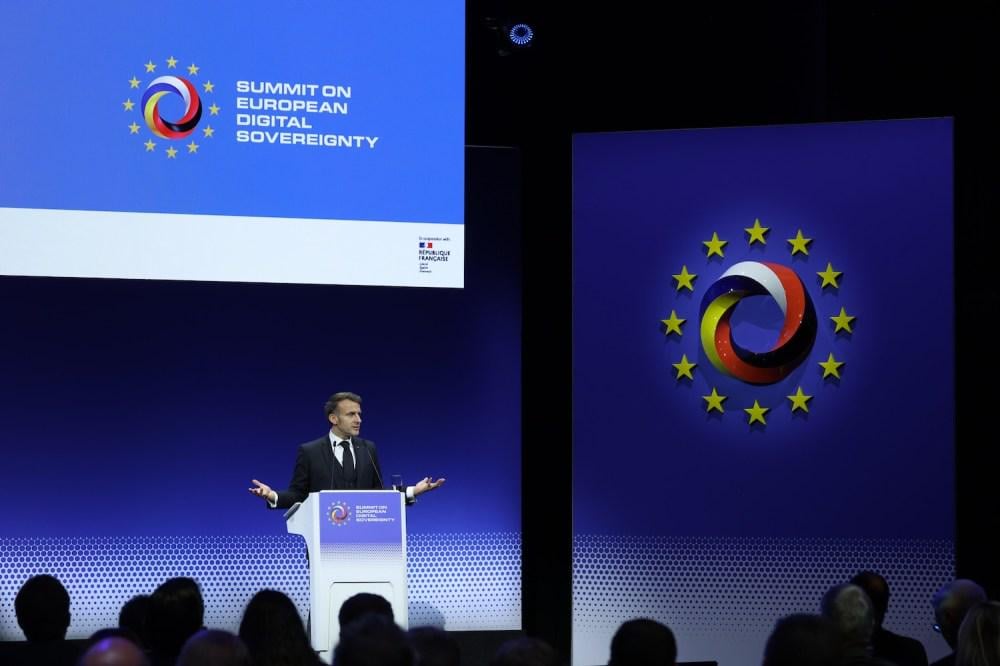
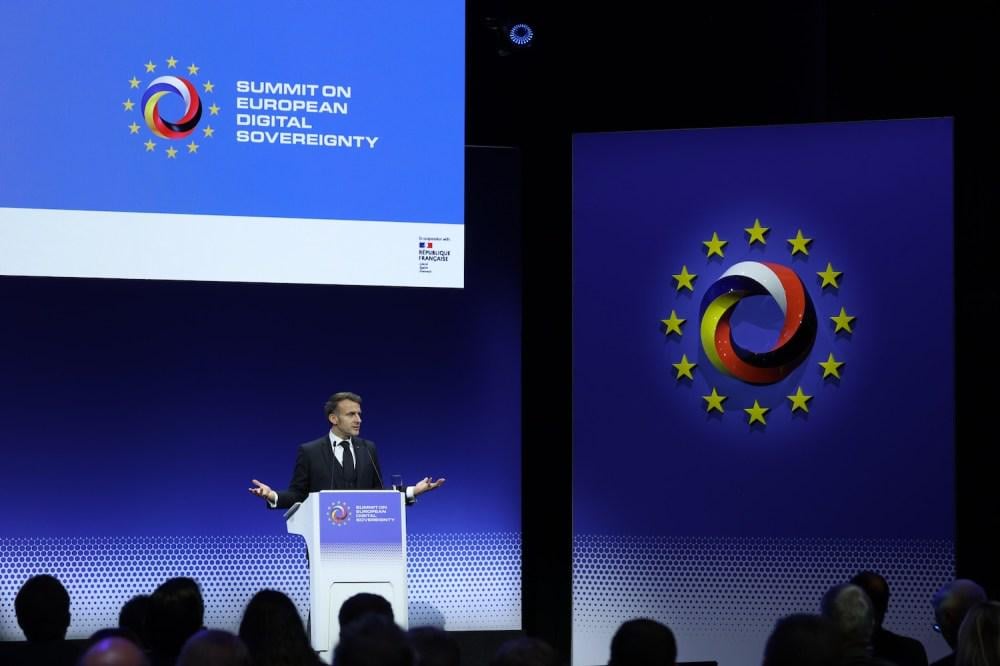
# The European Union is serious about technological sovereignty, but it’s aware that it won’t be easy.
By **Anchal Vohra**, a columnist at *Foreign Policy*.
February 27, 2026, 4:15 AM
Tech sovereignty is the new buzzword in Europe as the scale of the continent’s dependence on U.S. tech companies dawns upon its leaders. Europeans are worried that U.S. President Donald Trump, who has exploited trade and defense dependencies, may weaponize tech next— threatening to disrupt or cut off digital services, for example—to extract concessions. None of the researchers, European officials, and experts that *Foreign Policy* spoke with deemed that possibility to be overly far-fetched.
The European Union has thus begun its tech decoupling from the United States. It will take time, money, and consistent cooperation by EU members who are often split—which means the outcome remains uncertain.
There are three different strands to Europe’s tech decoupling: the creation of an attractive European social media alternative, where debate can be held freely without bots and manipulative algorithms; support for domestic manufacturing of semiconductor chips; and the creation of sovereign cloud services that offer computing resources such as physical data storage infrastructure.
Amazon, Google, and Microsoft currently fulfill more than two-thirds of Europe’s cloud computing needs. Most of the continent’s advanced chips come from U.S. companies like Nvidia, and the social media platforms that most Europeans use are also based in the United States. That includes X, which is owned by Elon Musk, who has called for the EU to be abolished and openly amplifies Europe’s far-right voices.
“We need tech sovereignty to take our destiny in our own hands,” said Thomas Regnier, a spokesperson for the European Commission. Regnier is often the person who deals with difficult questions on how the EU plans to protect children from addictive social media and European democracy from algorithmic manipulation.
Regnier said the EU’s flagship Digital Services Act (DSA) has put an end to the “wild, wild west online.” FP has learned that many countries, including South Korea and India, have discussed digital regulations aligned with the DSA to regulate social media companies. But while it’s a matter of pride for Eurocrats like Regnier, the law has opened a new front line between the EU and the U.S. government, with the latter often supporting X.
The EU has launched several investigations against X under the DSA. These have dealt with allegations about deceptive blue check marks, which offer public verification to anyone who pays—even those with false identities; a lack of advertisement transparency, which European regulators believe is necessary to ascertain if content is authentic or sponsored; and a failure to share relevant information with researchers on systemic risks, such as algorithm manipulation to boost certain types of political content.
Last December, the EU imposed a fine of 120 million euros (approximately $140 million) on X for breaching its obligations under the DSA. One expert described that as pocket change for Musk, but his company is indignant. X recently challenged the fine and accused the regulators of “an incomplete and superficial investigation.”
David Chavalarias, a French academic and researcher, said that the denial of access to researchers like him was a part of the reason why authorities fined X. “EU law says academia should be able to access when working on systemic risks that threaten our society and democracy due to the design of the platform,” Chavalarias said, adding, “That is not to say the error is intentional.”
In solidarity with Musk, U.S. Secretary of State Marco Rubio said that the European Commission’s fine “isn’t just an attack on X,” but “on all American tech platforms and the American people by foreign governments.” And in further assurance to a private company, he added, “The days of censoring Americans online are over.”
Regnier was at pains to explain that the DSA was not targeting X or any other U.S. tech firm specifically. His cautious tone, however, is a part of European strategy: an attempt to avoid open conflict before having achieved a semblance of technological independence.
In January, a new investigation was ordered under the DSA after X’s chatbot, Grok, allowed users to strip images of women without consent and of children. Grok’s response has done little to assuage the EU’s concerns. “They have replied to us and limited the service to premium subscribers,” Regnier said. “Child sex abuse, including digital undressing of women without their consent, is not a premium privilege. We have told them that this is not enough.”
The recent scandal has unnerved Europeans already seeking an age majority to reduce the impact of social media on children. In January, France’s National Assembly approved a bill that would ban social media use for children under 15 years old; the bill now needs approval from the French Senate. Earlier this month, Spain announced plans to ban social media for children under 16 years old. Several European countries are mulling doing the same, as well.
“Enough is enough. The ongoing Grok scandal – which has seen a wave of images of child sexual abuse material, and image-based sexual violence against women, published on X – is a disgrace,” according to a letter signed by 51 EU legislators. “Now is the moment to back European alternatives to the dominant social media platforms.” The letter called on the European Commission and European governments to support European social media innovation.
“We must also make sure that Europeans have portability rights that are not a burden on them but on the gatekeepers – so they can move their content and data easily to another platform and are never again locked-in to one platform and vulnerable to harm,” the letter continued.
Alexandra Geese, an EU lawmaker with the Green party and a signatory on the letter, said that the EU was finding it difficult to enforce its laws on big U.S. tech companies because of the U.S. government. “Trump has become a lobbyist for Big Tech,” she said. “As a result, what we have is Trump threatening tariffs on countries, on our industry. [U.S. Commerce Secretary Howard] Lutnick threatened tariffs on steel, [U.S. Vice President] J.D. Vance threatened to pull troops out of NATO if the EU enforced its digital law.” In such an environment, Geese argued, the EU must at least offer seed money to domestic innovators.
At this year’s World Economic Forum in Davos, Switzerland, a new social media platform called W was launched. But W’s CEO, Anna Zeiter, said all investment thus far was private, dismissing reports that said the project was funded by the EU. “Our goal is to build a platform like the old Twitter,” she said. “A global platform made in Europe, owned by Europeans, to make sure our data is stored in Europe, especially at a time of geopolitical tensions. We have no backdoor with U.S. law enforcement.” She added that verification via a passport and other IDs will root out bots and create a genuine “European market square.”
It remains to be seen whether W is successful in being a European alternative to X, especially since others before it have struggled to compete. Mastodon, formed by Eugen Rochko, a German software developer, is a free, nonprofit, and open-source social media site that is crowdfunded and does not harvest data. According to Rochko, Trump’s Truth Social platform is built with Mastodon’s open-source software.
Mastodon, however, lags far behind X in terms of users and is seen as an echo chamber, lacking diversity of views. “Mastodon doesn’t want a business model,” Geese said. “But we need sites that are also able to attract users” to move from X.
Chavalarias said that for alternatives to succeed, a critical mass of people needs to join. But since X doesn’t allow its users to move with their communities, most prefer to stay where they are. “If X wants to operate in the EU, it must allow users to move to other sites with their data and audience as stated by EU law,” he said.
Others in the tech realm, like Google, have expressed some sympathy for European concerns. Kent Walker, chief legal officer at Google told the *Financial Times* that the EU would be better off if it adopted an “open digital sovereignty” instead. The EU was “erecting walls that make it harder to use some of the best technology in the world.” Walker added that U.S. companies could work together with European counterparts to ensure, “local control, local storage of information, local ability to make sure that we are complying with European requirements.”
European officials are aware that decoupling will not happen overnight. Regnier, for his part, said the EU isn’t seeking to decouple from the United States, but it wants to stay “strategically autonomous.” However, there appears to be a quiet consensus in the EU that any tech company that is active in the bloc must adhere to European laws—and that Europeans can’t abide by Trump having his finger on a de facto kill switch for digital services in Europe.
**Anchal Vohra** is a Brussels-based columnist at *Foreign Policy* who writes about Europe, the Middle East, and South Asia. She has covered the Middle East for the *Times of London* and has been a TV correspondent for Al Jazeera English and Deutsche Welle. She was previously based in Beirut and Delhi and has reported on conflict and politics from over two dozen countries.
X: anchalvohra
J-96788-EU on
At the moment I don’t see any real examples of decoupling around myself, however it might be some change happening in the deep parts of the technology stack.
Marcipans on
Wuhuu
fasz_a_csavo on
Good luck with that, I don’t really see any real will from the governments.
masi0 on
why these well paid analytics or polititians spend last 5-10 years sitting on their four letters doing nothing? why EU blocked funindng for PL/Baltics data center clound project recently?
why EU not supporting EU IT firms?
why there is not yet talks with Taiwaniese firms to setup superconductor factories somewhere in EU?
these kind of conferences means nothing in terms of value
QVRedit on
This is good for Europe, who is freeing itself to develop defence tech independently now.
Prigorec-Medjimurec on
Good riddance!
Excellent_Ad_2486 on
Orly?
My NL is selling our taxes, selling our ID…. they are selling us out to US TECH.
Fucking idiot D66/VVD/CDA
0neZer0ne on
Everyone but the current Swedish goverment wants to, they are publicly talking about strengthening the use of american tech, ordering more palantir services that our police are happily using to monitor civilians
Its surreal to read about what is being discussed openly from our politicians, knowing that our head of state had a secret meeting with Peter Theil not to long ago
SpaceTrooper8 on
On a personal level, I have decoupled from MS/ Windows. I am giving Linux a try and I really like it so far.
StoneAgeRick on
Not Sweden though, but we are retarded here, we refuse to stop using US Tech for critical systems.
Primary-Effect-3691 on
Lol no we’re not
Quasarrion on
Remember without the common people its not gonna happen. We must stick to buying european.
hipi_hapa on
Sent from my iPhone
A_Brown_Crayon on
thank fuck
Haerdad on
Except Sweden
_segamega_ on
quit reddit?
rebellioninmypants on
Yeah, that’s right, it’s building its own citizen tracking infrastructure
Additional_Horse on
Meanwhile in Sweden just yesterday 🤑🤑🤑
>The Swedish government wants to strengthen ties with US tech giants, despite the Trump administration’s potential influence over these companies. This is according to Minister for Public Administration Erik Slottner (KD) in an interview with Ny Teknik.
>“What is happening in the US is rather proof that we need to have a strong relationship with these technology companies – perhaps even stronger than we have today. Europe is an important market for them, and they are very keen to have a good relationship with us.”
>He mentions Google, for example, as a partner he wants to continue to have on his digitalization council.

30 Comments
Good news
First real competitive smartphone when?
Yup. One year ago, I wouldn’t consider decoupling from Azure. They just add too much value for our use cases. We have been moving away slowly and are finally done. Nothing wrong with Microsoft but I can’t trust their government.
At about the same pace as its physically separating from the US, but sure
correction: it wants to.
we are far from “is”. This will take years probably decades to pull this off. i think people (politicians) are vastly underestimating how difficult it is to “swap” enterprise solutions.
we are 300 employees and the sheer obstacles when we switched from offline storage to the cloud solution of microsoft was insane. it was only related to sync-errors. now imagine if you have to switch to a completely new system…
Let me know when the governments are willing to do the capital markets union and digital services market union. Without both, growing and operating a large-scale tech company in Europe remains so handicapped that we will always be behind the US.
Non military I hope
I just want my government to ditch Palantir. Last I read, they have a 3-year contract with them.
Nothing Phone is UK based I believe. But I’m still waiting for a bulletproof product to compete with the top flagship phones.
I need os that can support professional software. Or good competitive software that can run well on something that is not windows. Unfortunately linux is way behind of def tools and I cannot simply ditch windows as well as many other developers and other professions.
Now we need the commission to go after those fucked up app install restrictions put on smartphones by apple and google.
# The European Union is serious about technological sovereignty, but it’s aware that it won’t be easy.
By **Anchal Vohra**, a columnist at *Foreign Policy*.
February 27, 2026, 4:15 AM
Tech sovereignty is the new buzzword in Europe as the scale of the continent’s dependence on U.S. tech companies dawns upon its leaders. Europeans are worried that U.S. President Donald Trump, who has exploited trade and defense dependencies, may weaponize tech next— threatening to disrupt or cut off digital services, for example—to extract concessions. None of the researchers, European officials, and experts that *Foreign Policy* spoke with deemed that possibility to be overly far-fetched.
The European Union has thus begun its tech decoupling from the United States. It will take time, money, and consistent cooperation by EU members who are often split—which means the outcome remains uncertain.
There are three different strands to Europe’s tech decoupling: the creation of an attractive European social media alternative, where debate can be held freely without bots and manipulative algorithms; support for domestic manufacturing of semiconductor chips; and the creation of sovereign cloud services that offer computing resources such as physical data storage infrastructure.
Amazon, Google, and Microsoft currently fulfill more than two-thirds of Europe’s cloud computing needs. Most of the continent’s advanced chips come from U.S. companies like Nvidia, and the social media platforms that most Europeans use are also based in the United States. That includes X, which is owned by Elon Musk, who has called for the EU to be abolished and openly amplifies Europe’s far-right voices.
“We need tech sovereignty to take our destiny in our own hands,” said Thomas Regnier, a spokesperson for the European Commission. Regnier is often the person who deals with difficult questions on how the EU plans to protect children from addictive social media and European democracy from algorithmic manipulation.
Regnier said the EU’s flagship Digital Services Act (DSA) has put an end to the “wild, wild west online.” FP has learned that many countries, including South Korea and India, have discussed digital regulations aligned with the DSA to regulate social media companies. But while it’s a matter of pride for Eurocrats like Regnier, the law has opened a new front line between the EU and the U.S. government, with the latter often supporting X.
The EU has launched several investigations against X under the DSA. These have dealt with allegations about deceptive blue check marks, which offer public verification to anyone who pays—even those with false identities; a lack of advertisement transparency, which European regulators believe is necessary to ascertain if content is authentic or sponsored; and a failure to share relevant information with researchers on systemic risks, such as algorithm manipulation to boost certain types of political content.
Last December, the EU imposed a fine of 120 million euros (approximately $140 million) on X for breaching its obligations under the DSA. One expert described that as pocket change for Musk, but his company is indignant. X recently challenged the fine and accused the regulators of “an incomplete and superficial investigation.”
David Chavalarias, a French academic and researcher, said that the denial of access to researchers like him was a part of the reason why authorities fined X. “EU law says academia should be able to access when working on systemic risks that threaten our society and democracy due to the design of the platform,” Chavalarias said, adding, “That is not to say the error is intentional.”
In solidarity with Musk, U.S. Secretary of State Marco Rubio said that the European Commission’s fine “isn’t just an attack on X,” but “on all American tech platforms and the American people by foreign governments.” And in further assurance to a private company, he added, “The days of censoring Americans online are over.”
Regnier was at pains to explain that the DSA was not targeting X or any other U.S. tech firm specifically. His cautious tone, however, is a part of European strategy: an attempt to avoid open conflict before having achieved a semblance of technological independence.
In January, a new investigation was ordered under the DSA after X’s chatbot, Grok, allowed users to strip images of women without consent and of children. Grok’s response has done little to assuage the EU’s concerns. “They have replied to us and limited the service to premium subscribers,” Regnier said. “Child sex abuse, including digital undressing of women without their consent, is not a premium privilege. We have told them that this is not enough.”
The recent scandal has unnerved Europeans already seeking an age majority to reduce the impact of social media on children. In January, France’s National Assembly approved a bill that would ban social media use for children under 15 years old; the bill now needs approval from the French Senate. Earlier this month, Spain announced plans to ban social media for children under 16 years old. Several European countries are mulling doing the same, as well.
“Enough is enough. The ongoing Grok scandal – which has seen a wave of images of child sexual abuse material, and image-based sexual violence against women, published on X – is a disgrace,” according to a letter signed by 51 EU legislators. “Now is the moment to back European alternatives to the dominant social media platforms.” The letter called on the European Commission and European governments to support European social media innovation.
“We must also make sure that Europeans have portability rights that are not a burden on them but on the gatekeepers – so they can move their content and data easily to another platform and are never again locked-in to one platform and vulnerable to harm,” the letter continued.
Alexandra Geese, an EU lawmaker with the Green party and a signatory on the letter, said that the EU was finding it difficult to enforce its laws on big U.S. tech companies because of the U.S. government. “Trump has become a lobbyist for Big Tech,” she said. “As a result, what we have is Trump threatening tariffs on countries, on our industry. [U.S. Commerce Secretary Howard] Lutnick threatened tariffs on steel, [U.S. Vice President] J.D. Vance threatened to pull troops out of NATO if the EU enforced its digital law.” In such an environment, Geese argued, the EU must at least offer seed money to domestic innovators.
At this year’s World Economic Forum in Davos, Switzerland, a new social media platform called W was launched. But W’s CEO, Anna Zeiter, said all investment thus far was private, dismissing reports that said the project was funded by the EU. “Our goal is to build a platform like the old Twitter,” she said. “A global platform made in Europe, owned by Europeans, to make sure our data is stored in Europe, especially at a time of geopolitical tensions. We have no backdoor with U.S. law enforcement.” She added that verification via a passport and other IDs will root out bots and create a genuine “European market square.”
It remains to be seen whether W is successful in being a European alternative to X, especially since others before it have struggled to compete. Mastodon, formed by Eugen Rochko, a German software developer, is a free, nonprofit, and open-source social media site that is crowdfunded and does not harvest data. According to Rochko, Trump’s Truth Social platform is built with Mastodon’s open-source software.
Mastodon, however, lags far behind X in terms of users and is seen as an echo chamber, lacking diversity of views. “Mastodon doesn’t want a business model,” Geese said. “But we need sites that are also able to attract users” to move from X.
Chavalarias said that for alternatives to succeed, a critical mass of people needs to join. But since X doesn’t allow its users to move with their communities, most prefer to stay where they are. “If X wants to operate in the EU, it must allow users to move to other sites with their data and audience as stated by EU law,” he said.
Others in the tech realm, like Google, have expressed some sympathy for European concerns. Kent Walker, chief legal officer at Google told the *Financial Times* that the EU would be better off if it adopted an “open digital sovereignty” instead. The EU was “erecting walls that make it harder to use some of the best technology in the world.” Walker added that U.S. companies could work together with European counterparts to ensure, “local control, local storage of information, local ability to make sure that we are complying with European requirements.”
European officials are aware that decoupling will not happen overnight. Regnier, for his part, said the EU isn’t seeking to decouple from the United States, but it wants to stay “strategically autonomous.” However, there appears to be a quiet consensus in the EU that any tech company that is active in the bloc must adhere to European laws—and that Europeans can’t abide by Trump having his finger on a de facto kill switch for digital services in Europe.
**Anchal Vohra** is a Brussels-based columnist at *Foreign Policy* who writes about Europe, the Middle East, and South Asia. She has covered the Middle East for the *Times of London* and has been a TV correspondent for Al Jazeera English and Deutsche Welle. She was previously based in Beirut and Delhi and has reported on conflict and politics from over two dozen countries.
X: anchalvohra
At the moment I don’t see any real examples of decoupling around myself, however it might be some change happening in the deep parts of the technology stack.
Wuhuu
Good luck with that, I don’t really see any real will from the governments.
why these well paid analytics or polititians spend last 5-10 years sitting on their four letters doing nothing? why EU blocked funindng for PL/Baltics data center clound project recently?
why EU not supporting EU IT firms?
why there is not yet talks with Taiwaniese firms to setup superconductor factories somewhere in EU?
these kind of conferences means nothing in terms of value
This is good for Europe, who is freeing itself to develop defence tech independently now.
Good riddance!
Orly?
My NL is selling our taxes, selling our ID…. they are selling us out to US TECH.
Fucking idiot D66/VVD/CDA
Everyone but the current Swedish goverment wants to, they are publicly talking about strengthening the use of american tech, ordering more palantir services that our police are happily using to monitor civilians
Its surreal to read about what is being discussed openly from our politicians, knowing that our head of state had a secret meeting with Peter Theil not to long ago
On a personal level, I have decoupled from MS/ Windows. I am giving Linux a try and I really like it so far.
Not Sweden though, but we are retarded here, we refuse to stop using US Tech for critical systems.
Lol no we’re not
Remember without the common people its not gonna happen. We must stick to buying european.
Sent from my iPhone
thank fuck
Except Sweden
quit reddit?
Yeah, that’s right, it’s building its own citizen tracking infrastructure
Meanwhile in Sweden just yesterday 🤑🤑🤑
>The Swedish government wants to strengthen ties with US tech giants, despite the Trump administration’s potential influence over these companies. This is according to Minister for Public Administration Erik Slottner (KD) in an interview with Ny Teknik.
>“What is happening in the US is rather proof that we need to have a strong relationship with these technology companies – perhaps even stronger than we have today. Europe is an important market for them, and they are very keen to have a good relationship with us.”
>He mentions Google, for example, as a partner he wants to continue to have on his digitalization council.